
Ammonia-free and natural are among the most persuasive words on a hair colour box and among the least regulated. Both describe something real, and neither means what most people assume.
What does ammonia actually do?
It raises the pH of the product so the cuticle swells and lifts, allowing colour molecules into the cortex. It also activates the developer.
Without something performing that function, permanent colour cannot penetrate, so it cannot lift or last. The alkaline agent is not an optional extra.
What people object to is mostly the smell, which is genuinely unpleasant, and irritation to the scalp and eyes.
What replaces it in ammonia-free products?
Usually monoethanolamine, sometimes called MEA, or a similar alkaline compound.
MEA has a much lower odour, which is the main practical benefit. It is not obviously gentler on the hair: because it is less volatile, it stays in the hair longer and some evidence suggests it can cause comparable or greater protein loss than ammonia at equivalent lift.
It also lifts less effectively, so ammonia-free formulations often require a higher volume developer to achieve the same result, which offsets any advantage.
The honest summary is that ammonia-free means less smell rather than less damage.
Does ammonia-free mean allergy-free?
No, and this is the most important misunderstanding in the category. Ammonia is not the ingredient causing severe reactions.
Paraphenylenediamine and related compounds are responsible for the significant allergies, and they are present in ammonia-free permanent colour just as they are in conventional formulations.
An allergy alert test is required for both, forty-eight hours before every application. Choosing ammonia-free does not remove that requirement.
What are natural hair dyes?
The term is unregulated, and products described this way range from pure plant material to conventional dye with a botanical extract added.
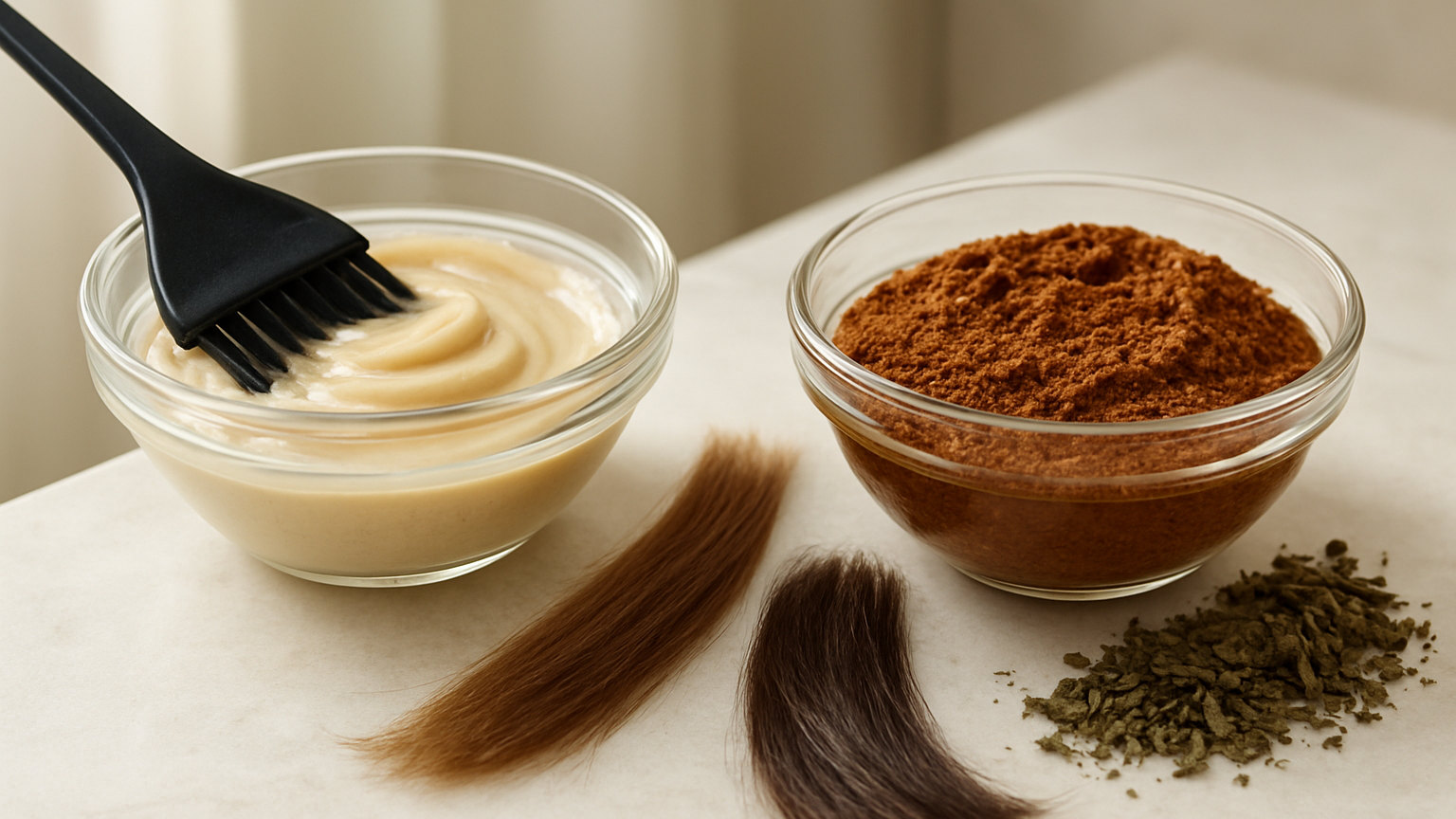
Pure henna, from the lawsonia plant, coats the shaft and produces a red-orange stain. Indigo produces blue-black and is often combined with henna for brown shades. Cassia is sometimes called neutral henna and adds shine with little colour.
These genuinely do not use developer and do not damage the shaft. They also cannot lighten, and they cannot be removed.
What is the problem with henna?
Not pure henna itself, which is safe and effective within its limits. The problem is what is often sold as henna.
Compound hennas contain metallic salts or added synthetic dyes, and they are frequently not labelled clearly. Metallic salts react with peroxide, generating heat and producing damage, breakage and unpredictable colour if the hair is later coloured or bleached.
Black henna is a separate hazard entirely, since it usually contains high concentrations of paraphenylenediamine and can cause severe reactions and lifelong sensitisation.
Pure henna also coats the shaft permanently. It must be disclosed to any colourist, however long ago it was used.
What about PPD-free dyes?
These exist and are genuinely useful for anyone with a diagnosed allergy. Most substitute a related compound, commonly para-toluenediamine sulphate.
That is a meaningful alternative and it is not risk-free, since a proportion of people allergic to paraphenylenediamine also react to it. Anyone with a confirmed allergy should be tested rather than assuming a PPD-free product is safe.
Which should you choose?
If the concern is smell or scalp irritation, ammonia-free is a reasonable preference with modest benefit.
If the concern is damage, the more effective choices are demi-permanent instead of permanent, colouring roots only, going darker rather than lighter, and spacing appointments.
If the concern is chemicals generally, pure henna or a semi-permanent deposit-only colour are the genuinely gentle options, with real limits on what they can achieve.
And if the concern is allergy, the answer is a patch test every time, whichever product is on the shelf.
What do the other label terms mean?
Organic on a hair colour is largely meaningless, since the active dye molecules cannot be organic in the certified sense. It usually refers to one or two botanical extracts in an otherwise conventional formula.
Vegan means no animal-derived ingredients and says nothing about gentleness. Cruelty-free refers to testing policy rather than to the formula. None of these terms indicates less damage or lower allergy risk, and reading the ingredient list remains the only reliable guide.


