
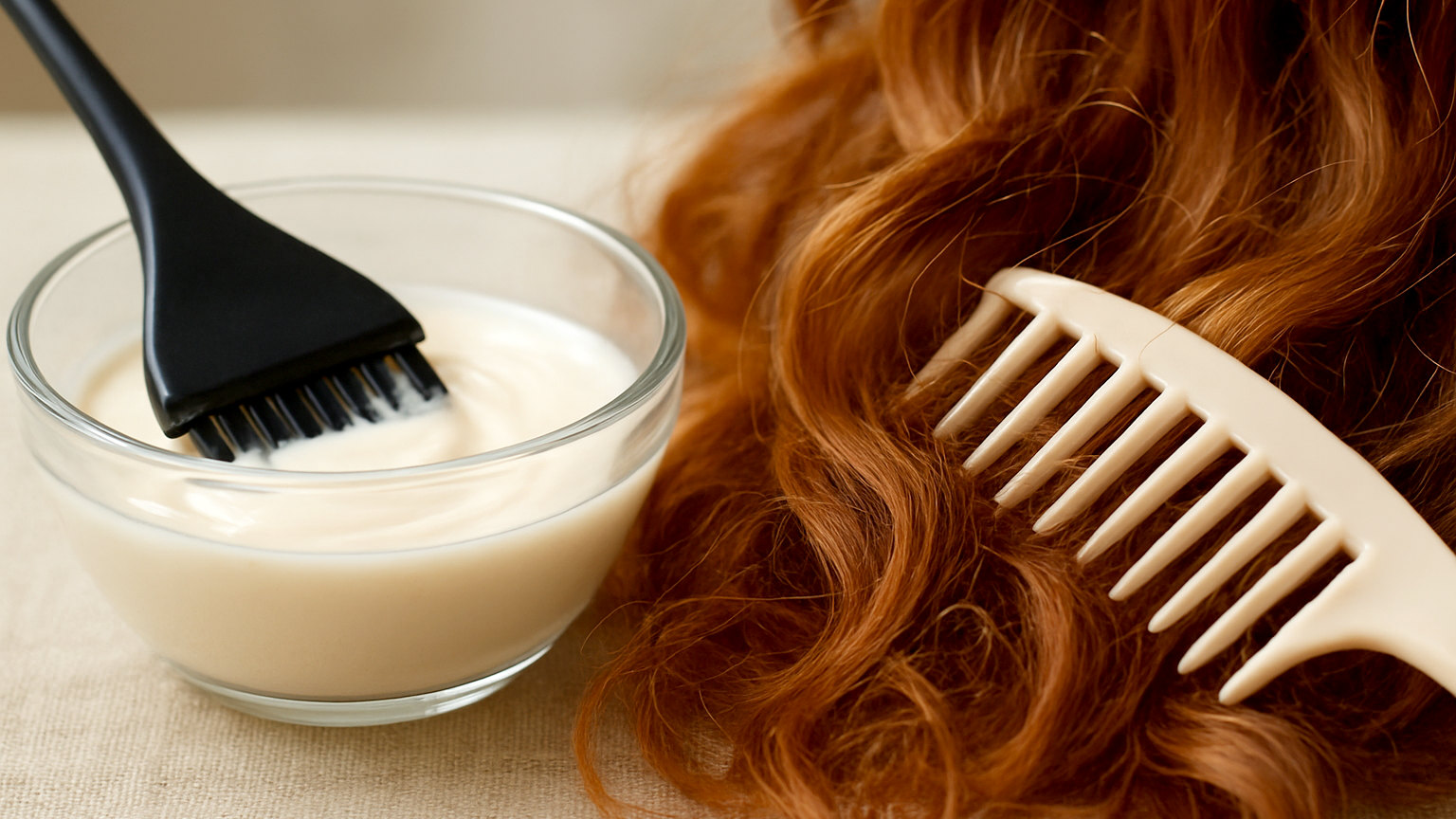
People frequently report that their hair feels like a different hair type after colouring, and they are describing something real. Some of it is temporary, some is permanent, and some is the opposite of what they expect.
Why does coloured hair feel different?
Because the cuticle has been lifted to let pigment in, and it does not close entirely afterwards.
A slightly raised cuticle changes everything about how hair behaves: it catches on itself so hair tangles more, it scatters light so hair looks less shiny, and it absorbs and loses water faster.
That is porosity, and increased porosity is the single biggest change colouring causes.
Does hair actually get thicker?
Slightly, and it is one of the few pleasant surprises here. Permanent colour deposits pigment molecules inside the cortex, which swells the shaft marginally.
Fine hair frequently feels fuller and holds a style better after colouring, and the roughened cuticle adds grip, which helps volume.
The trade is that the same roughness causes tangling and dullness. Whether the exchange is worthwhile depends on what your hair was short of to begin with.
Does bleaching change curl pattern?
It can, permanently, and this is the change people find most distressing.
Curl is determined partly by follicle shape and partly by disulphide bonds within the shaft. Bleach breaks those bonds, so heavily lightened curly hair can lose definition and hang looser or become frizzy rather than curly.
That section will not recover, because the bonds are gone. New growth from the follicle emerges with the original curl pattern, so the change is confined to the bleached length.
Deposit-only colour and demi-permanent shades do not do this, since they involve no meaningful lifting.
Why does coloured hair dry differently?
Because porous hair absorbs water quickly and releases it quickly. Coloured hair often soaks through faster in the shower and air dries faster afterwards, which people notice before they notice anything else.
It also means products absorb differently. A conditioner that used to sit on the surface may now soak in and seem to do less, which is why a routine frequently needs adjusting after a first colour rather than after damage becomes obvious.
Which changes are permanent?
Anything caused by broken disulphide bonds: lost curl, reduced strength and permanently raised porosity in bleached hair.
Cuticle damage from repeated colouring, which accumulates and does not reverse.
What is not permanent is the hair itself. All of it grows out, and new growth from the follicle is unaffected, so the change is to the length rather than to your hair type.
Can you improve how it behaves?
Considerably, without changing its condition. Conditioning and leave-in products smooth the cuticle temporarily and reduce tangling.
Bond builders reconnect some broken disulphide bonds and are the one category acting internally. An acidic rinse or a pH-balanced conditioner helps the cuticle lie flatter.
Protein treatments used sparingly fill gaps and add temporary strength, and overuse makes hair stiff.
Does grey hair colour differently?
Yes, and its texture is already different before any colour is applied. Grey hair is frequently coarser with a more tightly packed cuticle, which is why it resists dye.
Once coloured, that resistance means it often ends up more processed than the surrounding hair, since longer times or stronger developers are used to make it take. That can leave the grey sections drier and more porous than the rest.
Should you change your routine after colouring?
Usually yes, and sooner than most people do. A sulfate-free shampoo, conditioner every wash, a weekly mask and a leave-in on the lengths.
Lower heat, since porous hair conducts and loses moisture faster. And a chelating shampoo occasionally in hard water areas, since coloured hair shows mineral build-up more visibly than uncoloured hair does.
Does it change how hair holds a style?
Usually for the better, at least initially. The roughened cuticle gives hair grip against itself, so curls and blow dries hold longer on coloured hair than on virgin hair, which is slippery by comparison.
Heavily bleached hair eventually loses this advantage, since it becomes so porous and weak that it will not hold tension. But for a single-process colour on fine hair, better hold is a genuine and rarely mentioned benefit.


