
These terms describe how colour is applied rather than what colour it is, and the distinction matters most for how the result grows out. That determines how often you need to go back, which for most people is the deciding factor.
What are traditional highlights?
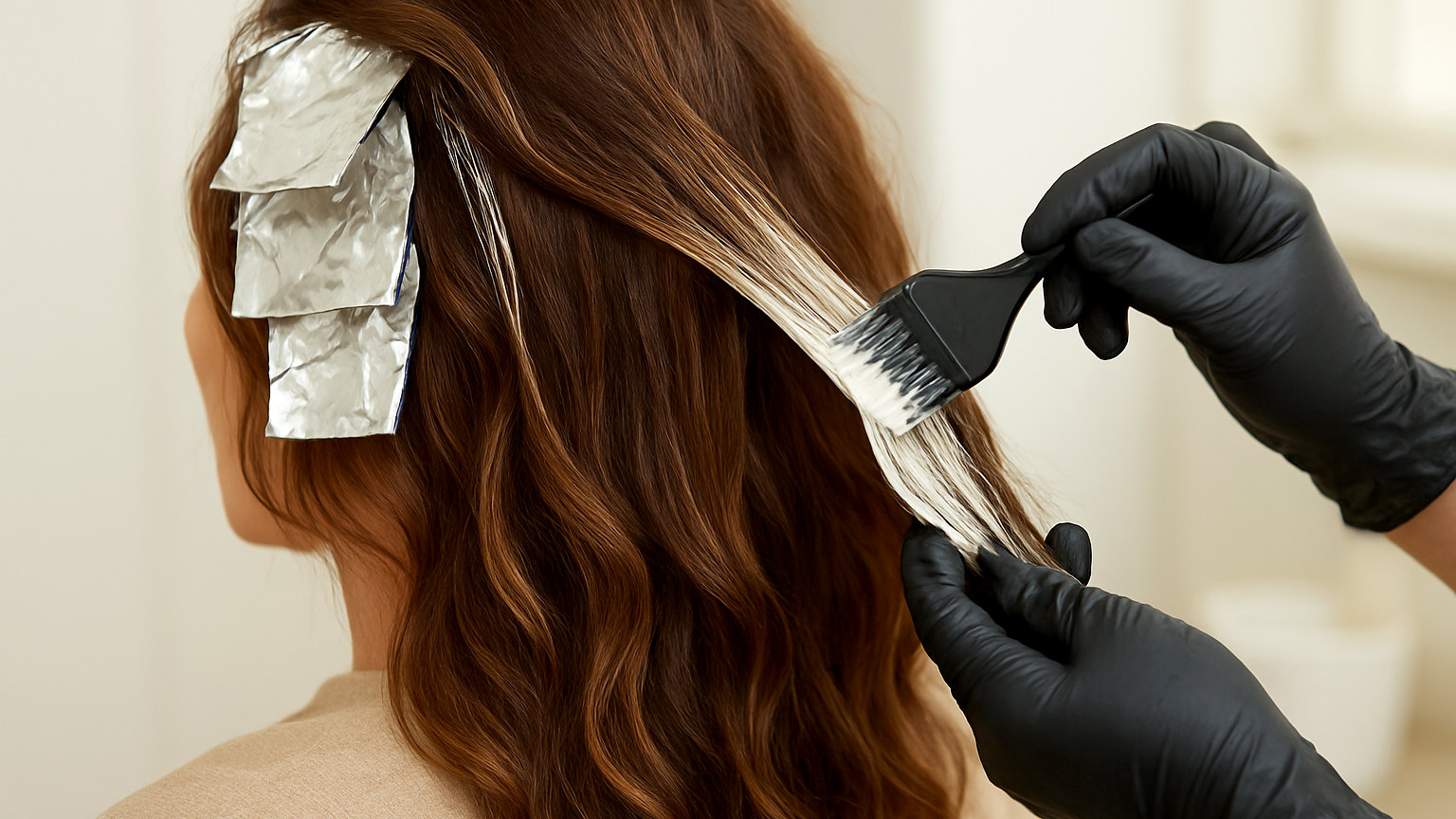
Sections of hair woven out and wrapped in foil, then lightened from root to end. The foil keeps the product off surrounding hair and traps heat, which speeds processing.
Because they start at the root, they produce a uniform lightening throughout and give the most lift. They also grow out with a visible line, so they need redoing every six to eight weeks.
They suit anyone wanting significant overall lightening or full grey blending.
What is balayage?
Colour painted freehand onto the surface of the hair, heavier toward the ends and softer at the roots, without foils.
Because it starts partway down the shaft, there is no line of demarcation, so it grows out gradually. Most people can go three to four months between appointments, and some considerably longer.
It gives a softer, sun-lightened result and is less able to achieve dramatic overall lift, since freehand application processes in open air rather than in foil.
What are babylights?
Very fine highlights taken in small sections, designed to mimic the natural lightness children often have at the hairline and crown.
They are subtle and time-consuming, since the sections are so fine, which makes them among the more expensive options. They blend particularly well and suit anyone wanting brightness without an obvious highlighted look.
They still start at the root, so they grow out with a softer version of the same line as traditional highlights.
What is ombre, and how does it differ?
A more defined graduation from darker roots to lighter ends, with a visible transition zone rather than the blended one balayage produces.
Sombre is the softer version, with less contrast. Dip dye is the sharpest, with a clear line.
All three grow out well, since the colour never approaches the roots.
What is a root smudge or shadow root?
A darker toner applied at the roots after lightening, blurring the line between natural colour and highlighted hair.
It is one of the most useful additions available, because it turns a hard regrowth line into a deliberate gradient and can extend the time between appointments by several weeks. Worth asking for by name.
What about lowlights?
Darker sections added among lighter hair, used to add depth and dimension where highlights have made hair look flat or overly uniform.
They are also useful when transitioning away from heavy highlights or toward natural colour, since they break up the contrast and reduce how much lightening is needed.
How do you choose between them?
By maintenance more than by look. If you want to visit every six to eight weeks, foils give the most impact. If you want three or four months, balayage or ombre.
By starting point: very dark hair needs foils to achieve real lift, since freehand painting will not lighten it far enough.
And by damage tolerance. Balayage applies product to less of the hair overall, which is gentler for anyone whose hair is already fragile.
What should you ask for at a consultation?
Bring photographs, and bring ones of hair with a similar starting colour to yours rather than only the result you want, since the same technique produces different outcomes on different bases.
Ask how many appointments it will take, what the maintenance schedule is, and what it will look like at three months rather than on the day. That last question is the one that most often changes people's minds and saves them from a result they cannot keep up with.
Which is most damaging?
Full head foils, since product reaches the most hair from root to end. Balayage applies bleach to less of the head overall and keeps it away from the scalp, which makes it gentler on both.
Partial highlights, covering only the top layers, sit between the two and are considerably cheaper. For anyone whose hair is already fragile, moving from full foils to partial or balayage reduces damage without abandoning the look entirely.


