
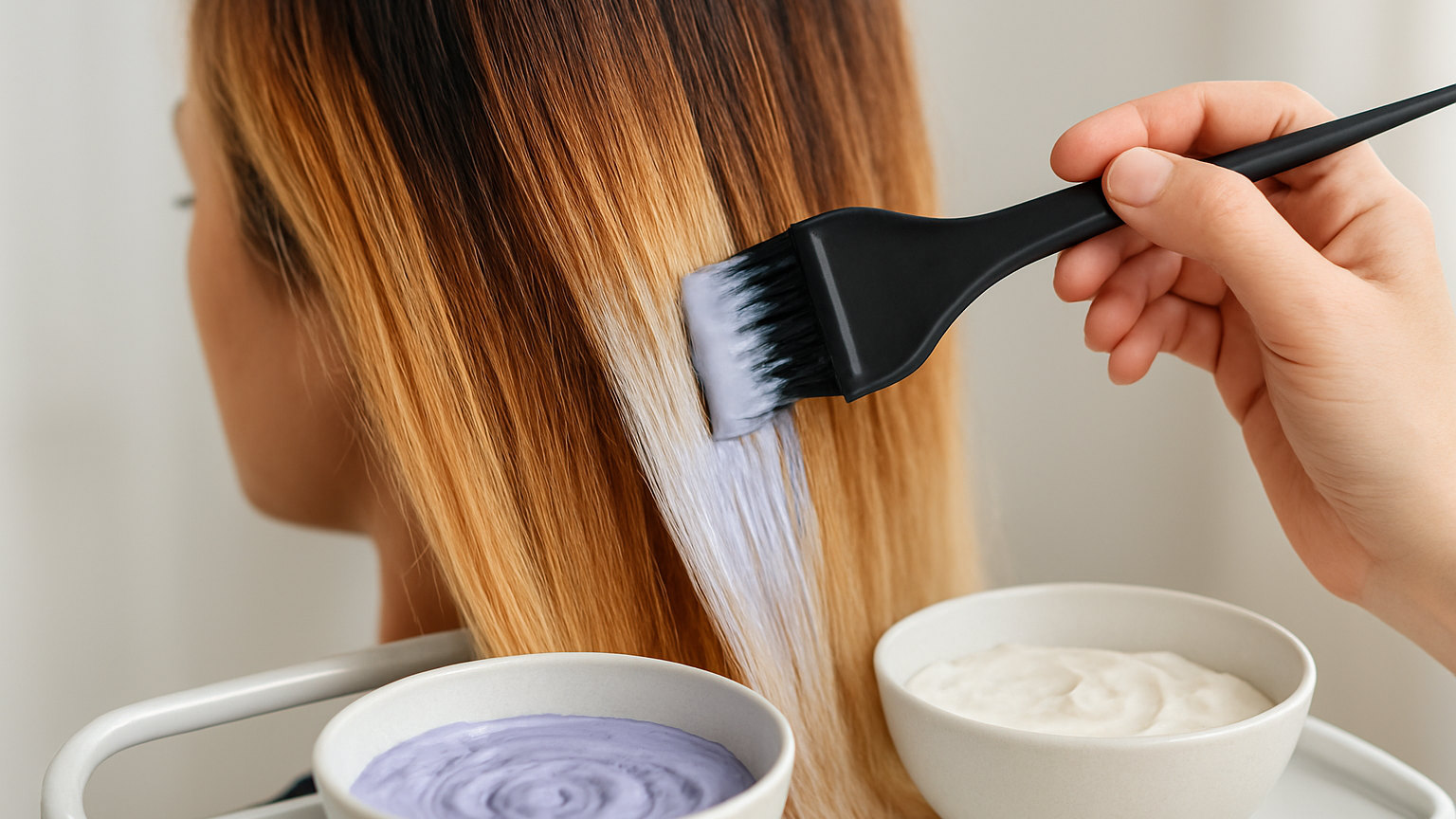
Colour correction is the process of fixing hair colour that has gone wrong, and it is the most technical work a colourist does. It is also expensive, time-consuming and usually preventable, and a large proportion of it is caused by an attempt to fix something at home.
What counts as needing correction?
Banding, where horizontal stripes of different depth run through the hair, usually from repeated root application overlapping onto previously coloured lengths.
Hot roots, where roots are noticeably lighter and warmer than the lengths, because scalp heat sped processing there.
Unwanted tone: green from blue toner on yellow hair or from chlorine, orange from insufficient lift, muddy brown from toning orange hair with purple.
Uneven porosity producing patchy colour. Build-up from years of box dye leaving the lengths considerably darker than intended.
Why is it so difficult?
Because the colourist has to work out what is already on the hair before deciding what to do, and artificial pigment does not behave like natural pigment.
Peroxide lifts natural melanin readily and artificial pigment poorly, so lightening dyed hair produces unpredictable results. Different sections may have different histories, so one product can produce three different outcomes on one head.
And the hair has usually already been through several processes, so it has limited capacity to withstand more.
Why does it cost so much?
Time, mainly. A correction can take four to eight hours and sometimes several appointments, with multiple products applied to different sections.
It also requires the most experienced colourist in the salon, and it carries risk, which is priced in. A quoted figure of several hundred pounds is not opportunism; it reflects a day of skilled work with an uncertain outcome.
Many salons charge for a consultation and a strand test before committing, which is a good sign rather than a bad one.
What does the process involve?
A consultation and a full colour history, followed by strand tests to see how the hair responds.
Depending on the problem: a colour remover to strip artificial pigment, careful lightening of specific sections, filling to even out porosity, and finally toning to unify the result.
It is frequently staged across appointments, because doing it all at once would destroy the hair. Being told it will take three visits is a sign of competence rather than a sales tactic.
What should you not do beforehand?
Apply another colour over the top, which is the instinct and reliably makes things worse. Each additional layer of pigment makes the correction harder and more expensive.
Use a home colour remover, which can swell fragile hair severely and produces unpredictable results.
Bleach it yourself. And wash it repeatedly hoping it will fade, which mostly damages hair without shifting permanent colour.
What should you tell the colourist?
Everything, honestly. Every product used, including brand and shade, and how long ago. Box dye, henna, colour removers, home bleach kits, toners, and anything applied by another salon.
Undisclosed history is the single most common reason a correction goes wrong, and colourists are not judging you. They need the information to predict how the hair will behave.
Henna in particular must be disclosed, since it can react with peroxide and produce heat, damage or unexpected colour.
How do you avoid needing one?
Do not attempt to lift or remove colour at home. Do not apply permanent colour to the full length every time.
Do a strand test before any home colour. Do not try to fix a disappointing result immediately; wait, wash a few times, and see where it settles.
And go to a salon before making it worse rather than after. A colourist correcting one bad box dye is a far simpler job than one correcting three attempts to fix it.
Is cutting it off ever the better option?
Sometimes, and a good colourist will say so. If the hair fails a stretch test, or if correction would require more lifting than the hair can survive, cutting to the point of viable hair is the honest answer.
It is also frequently cheaper and faster than a staged correction over several months. Anyone who promises to correct severely compromised hair in one appointment without mentioning the risk is worth being cautious about, since the alternative outcome is hair that breaks off anyway, at a length you did not choose.


