
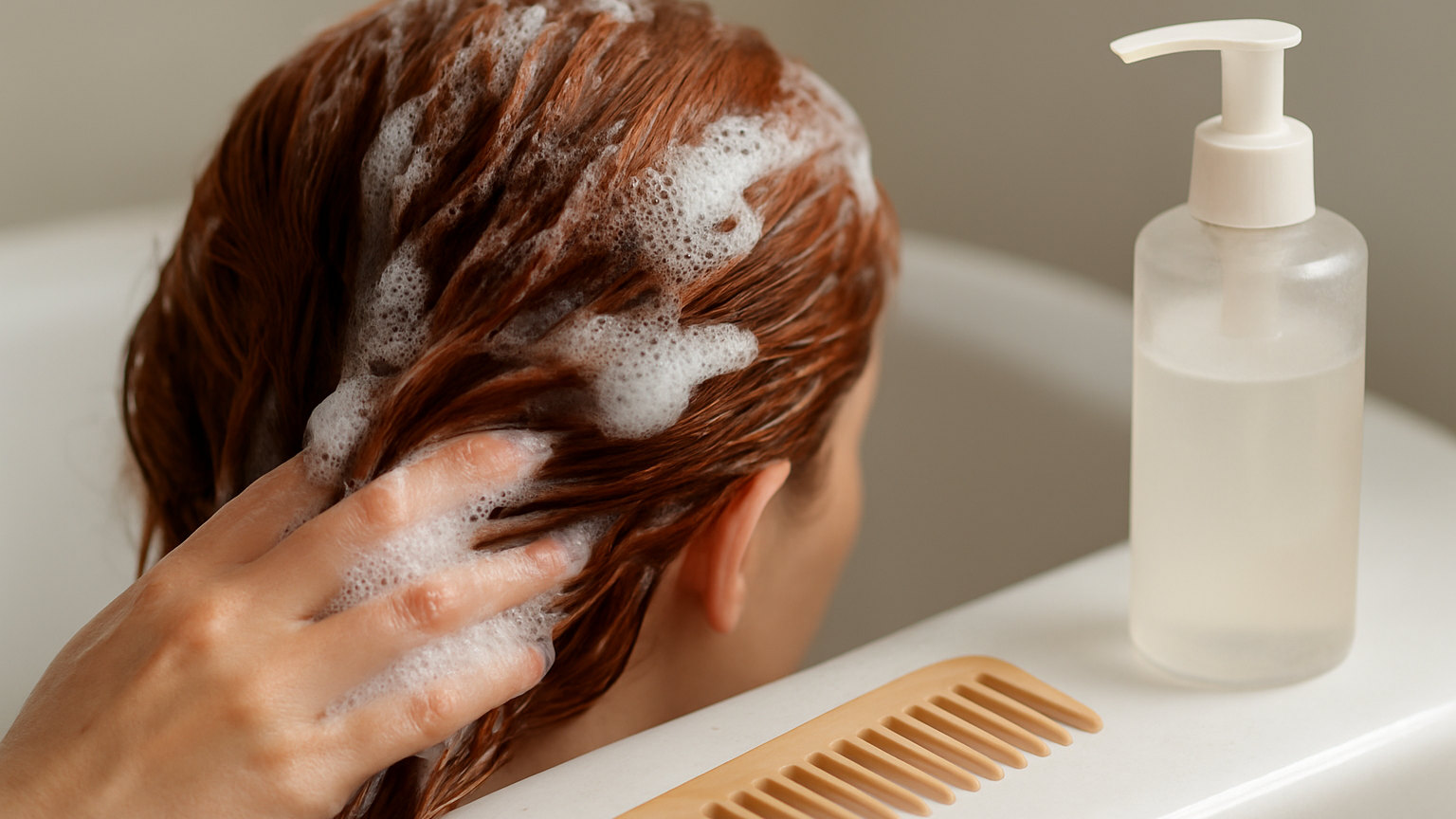
Colour fading is partly chemistry you cannot change and partly a set of habits you can. The habits account for considerably more than most people assume, which is encouraging, because they are all free to alter.
Why does colour leave at all?
Because the cuticle that holds pigment inside the cortex is not sealed. Every time hair gets wet, the shaft swells and the cuticle lifts, and some pigment escapes.
Hair that is porous, whether from bleaching, heat or age, has a cuticle that lifts more readily and closes less well, so it loses colour faster. This is why colour fades quickest on the hair that took it most eagerly.
Which colours fade fastest?
Red, by a clear margin. Red pigment molecules are larger than those of other shades, so they sit less securely inside the cortex and wash out sooner. This is chemistry rather than product quality, and no red is genuinely long-lasting.
Fashion shades, pastels and vivids are usually direct dyes sitting on and just under the cuticle rather than reacting inside it, so they fade within a few washes by design.
Blonde does not fade so much as turn brassy, as toner washes out and underlying warm pigment shows through. Brunette fades warm for the same reason.
What accelerates it?
Washing frequency, which is the largest single factor. Every wash costs pigment, so halving how often you wash roughly halves the rate of loss.
Hot water, which swells the shaft more and opens the cuticle further. Sulfate-heavy shampoos, which strip more effectively and take pigment with them.
Sun, which oxidises artificial pigment as readily as natural melanin. Chlorine and salt water. Hard water, which deposits minerals that dull colour and can turn blonde brassy or greenish.
Heat styling, which degrades pigment directly at high temperatures.
How long should colour last?
Permanent colour does not wash out, and its tone fades over four to six weeks while the depth remains, so the visible issue is usually regrowth rather than fading.
Demi-permanent lasts twenty to twenty-eight washes and fades gradually. Semi-permanent lasts six to twelve washes.
Toner on blonde hair typically lasts three to six weeks, which is why brassiness returns so reliably and is not a failure of the salon.
What actually makes it last?
Waiting seventy-two hours after colouring before washing, which allows the cuticle to close fully. This is the most effective single step and the most often skipped.
Washing less often, using dry shampoo between washes. Lukewarm water and a cooler final rinse.
A sulfate-free shampoo, which is one of the few situations where the sulfate-free label genuinely earns its price.
Reducing heat, and using protection when you do. A hat or a UV-protective spray in summer.
Do colour-protecting shampoos work?
Modestly. Most work by using gentler surfactants and by being slightly acidic, which helps the cuticle lie flat.
Some deposit a small amount of pigment, which genuinely helps maintain tone between colours. Colour-depositing conditioners and masks in matching shades do this more effectively and are worth considering for red and fashion shades particularly.
What they cannot do is stop the underlying process. They slow it.
What about hard water?
An underestimated cause, and one people usually blame on the colourist. Mineral deposits dull colour, and copper and iron in the water can produce brassy orange or greenish tones.
A chelating shampoo every two to four weeks removes mineral build-up, which a colour-protecting or clarifying shampoo will not. In a hard water area this makes a visible difference to how colour reads.
Should you refresh the lengths each time?
No, and doing so is a common cause of over-darkened, damaged ends. Colour builds up with each application.
Apply to the roots for the full processing time, then emulsify the remainder through the lengths for the last five minutes only. That refreshes tone without adding another full layer of pigment.
Do colour-depositing conditioners help?
They are among the more useful products in this category, particularly for red and fashion shades where fading is fastest.
Used once a week in place of conditioner, they top up pigment without any developer and therefore without damage. Match the tone rather than the exact shade, and start with less contact time than the instructions suggest, since porous hair grabs pigment quickly and can go patchy or too dark.


