
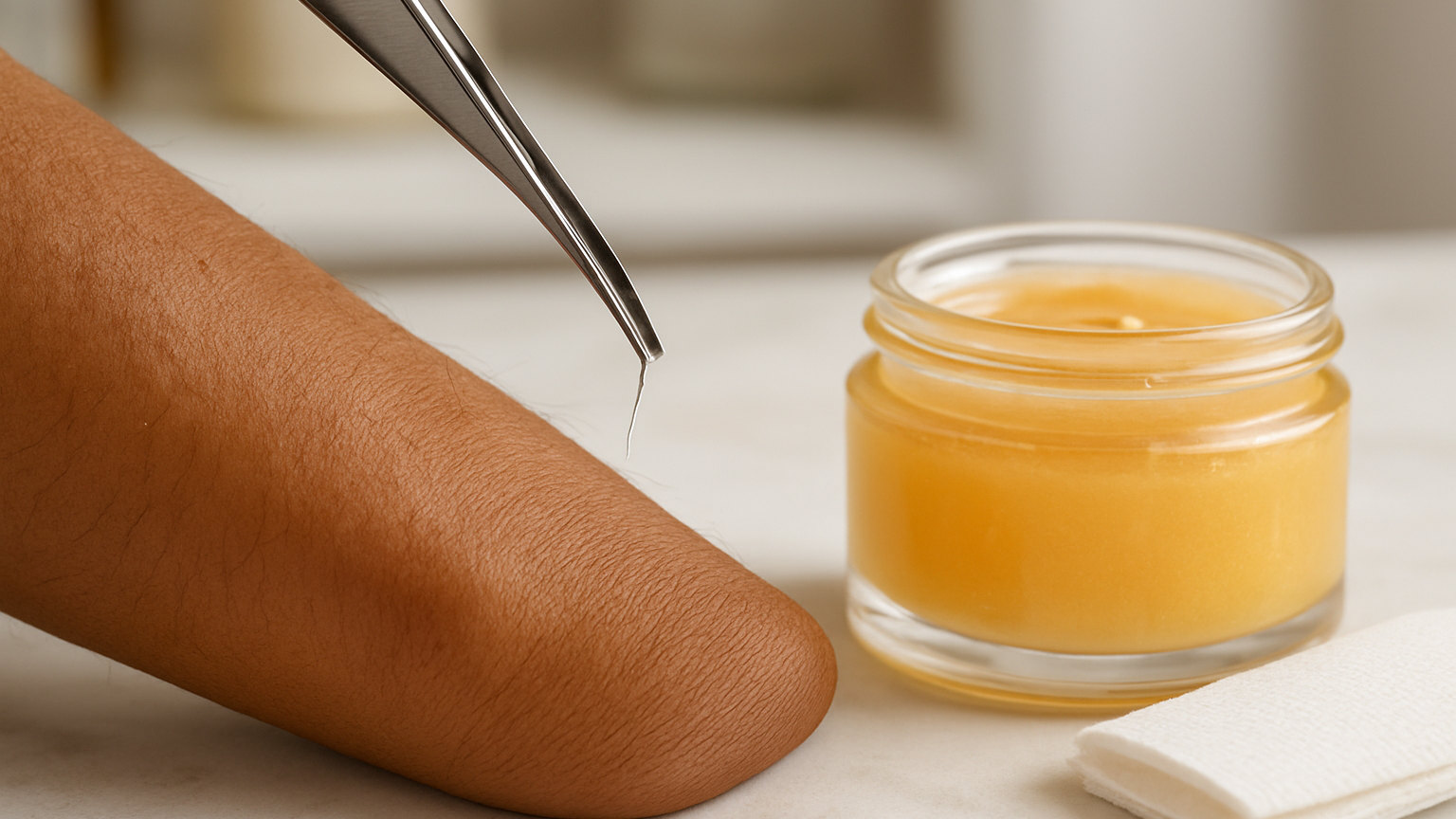
Pulling a hair out removes the shaft and leaves the follicle in place, so it usually grows back. The answer changes with repetition, and that is what separates an occasional pluck from a habit with lasting consequences.
What actually comes out?
The hair shaft and, if the hair was in its growth phase, the root bulb with it. The follicle itself sits below in the dermis and is not removed by pulling.
The white bulb sometimes visible at the end of a plucked hair is the root, not the follicle. Seeing it does not mean you have removed the follicle, which is a common worry.
Because the follicle survives, it produces a new hair, and the cycle continues.
How long does regrowth take?
It depends on where the hair was in its cycle and on the site.
Eyebrows and eyelashes typically regrow within six to twelve weeks, since their growth phase is short. Body hair takes a similar period.
Scalp hair takes longer to become visible simply because it needs more length to notice, though the follicle usually restarts within a few weeks.
Regrowth after plucking often starts slightly delayed, since the follicle needs to re-enter the growth phase.
When does it stop growing back?
With repetition over years. Each pull causes minor trauma and inflammation around the follicle, and repeated inflammation can eventually lead to scarring, at which point the follicle is destroyed.
Eyebrows are the classic example. Over-plucking through the teenage years and twenties frequently produces permanently sparse brows by the thirties, and no product regrows a follicle that is gone.
The timescale is years rather than months, and there is no clear warning that the threshold has been crossed until regrowth stops appearing.
Does waxing cause permanent loss?
Not reliably, and it can reduce growth over time. Repeated waxing over years damages some follicles enough that hair grows back finer and more sparsely.
That is desirable when the aim is removal and a problem when it happens to eyebrows shaped by waxing for decades. It is also unpredictable, so it should not be relied on either as a permanent method or as safe from lasting change.
Epilation works the same way, since both remove hair from the root.
Does plucking a grey hair make more grow?
No. This is one of the most persistent myths in hair care and there is no mechanism for it.
Each follicle operates independently. Pulling a grey hair does not communicate anything to its neighbours, and the follicle that produced it will produce another grey hair, since its melanocytes have stopped working.
What plucking greys does do is damage the follicle over time, which is a reason to cut them at the root instead if they bother you.
What about hair pulling as a compulsion?
Trichotillomania is a recognised condition rather than a habit, and it deserves treating as such.
The pattern is distinctive: irregular patches rather than smooth round ones, hairs broken at varying lengths within the area, and often a particular site such as the crown, eyebrows or eyelashes.
Regrowth follows once pulling stops, and long-standing pulling in the same area can cause permanent scarring. Habit reversal training has the best evidence, and a GP can refer for it. It is common, it is treatable, and it responds considerably better to psychological treatment than to willpower.
What should you do if you have over-plucked?
Stop entirely for at least three months, which is long enough for a full growth cycle, and resist tidying in the meantime.
Brush brows upward daily to see what is actually there. A brow pencil or powder fills gaps convincingly while you wait. Bimatoprost and some peptide-based brow serums have evidence for improving growth, though they work on existing follicles rather than reviving lost ones.
If nothing has returned after six months of leaving them alone, the follicles may be gone, and microblading or brow transplantation are the options that remain.


