
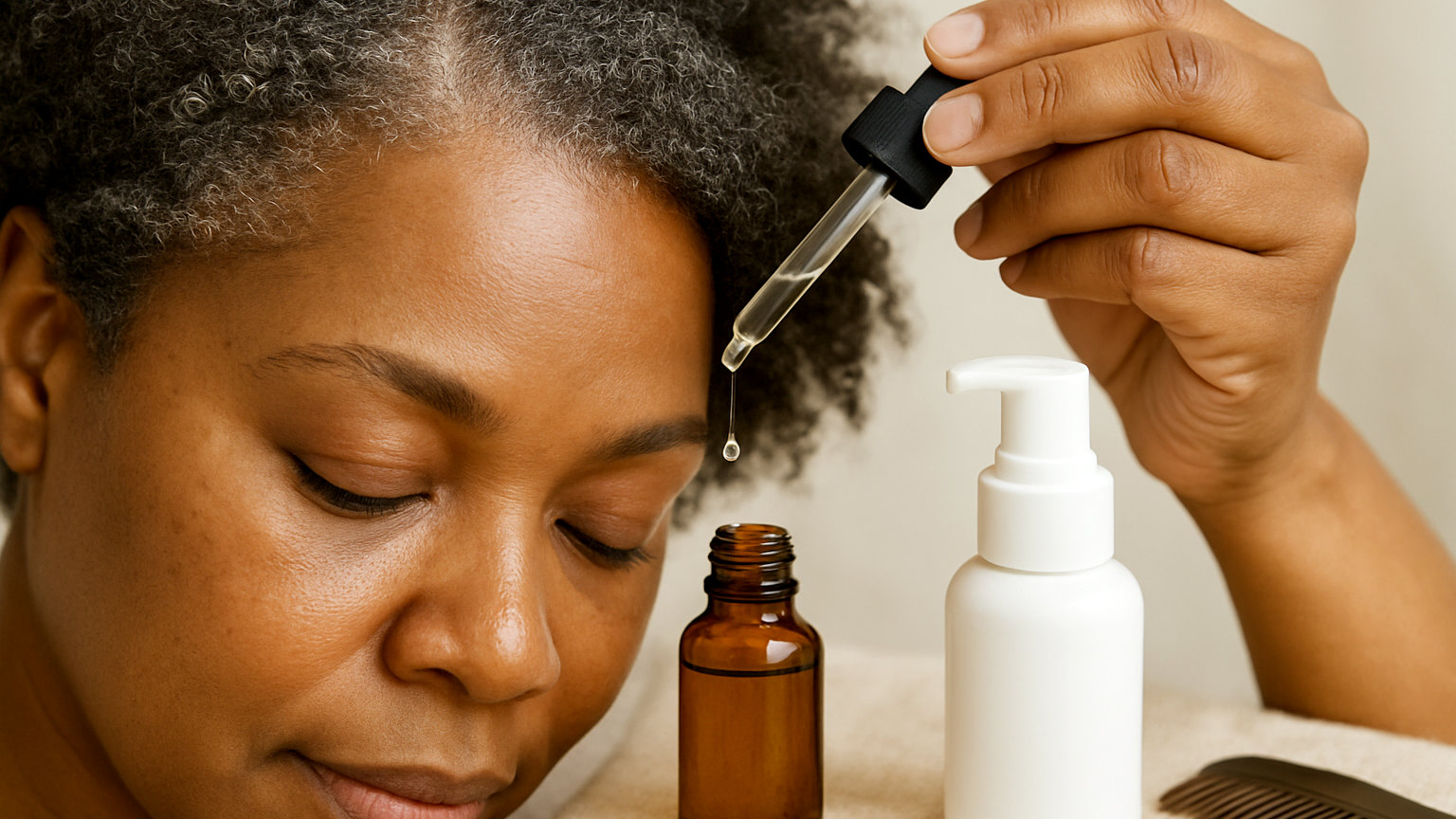
Rosemary oil is unusual among natural hair remedies in having a direct comparison trial against an established treatment. The study is small and has limitations, and it is still a considerably better starting point than most of the category offers.
What did the research actually find?
A 2015 trial in Iran randomised around a hundred men with pattern hair loss to either rosemary oil or two per cent minoxidil for six months.
Both groups showed a significant increase in hair count at six months, with no meaningful difference between them. The minoxidil group reported more scalp itching.
The caveats matter. It was a single trial with about fifty people per group, conducted at one centre, and it used two per cent minoxidil rather than the five per cent formulation now generally recommended. It has not been convincingly replicated.
So the honest position is one promising study rather than an established equivalence.
What is the proposed mechanism?
Two suggestions, neither firmly established in humans.
Improved circulation to the follicle, which rosemary has demonstrated in other contexts. And some laboratory evidence that carnosic acid, a component of rosemary, may inhibit the enzyme converting testosterone to dihydrotestosterone, which is the same target as prescription treatments for pattern loss.
Anti-inflammatory activity is a third possibility, since scalp inflammation is implicated in several forms of hair loss.
How should it be used?
Diluted, always. Essential oils are highly concentrated and undiluted application causes contact dermatitis readily, which will do more harm to a scalp than any benefit the oil provides.
A concentration of around one to three per cent is standard, which works out at roughly five to fifteen drops of rosemary oil in thirty millilitres of a carrier such as jojoba, coconut or almond oil.
Massage into the scalp, leave for at least thirty minutes or overnight, then shampoo out. Two or three times a week is the pattern most people use.
Patch test on the inner forearm for several days first, since rosemary is a recognised contact allergen.
Who should avoid it?
Anyone pregnant, since rosemary essential oil is generally advised against in pregnancy. Anyone with epilepsy, as it has been associated with seizure risk at high doses.
Anyone with an inflamed, broken or infected scalp, where adding an essential oil to compromised skin is a poor idea. Anyone prone to seborrhoeic dermatitis, since oil on the scalp can feed the yeast involved and worsen flaking.
Children, without advice.
What about the shampoos and sprays?
Rosemary-containing shampoos are rinsed off within a minute, which is unlikely to reproduce the conditions of the trial, where the oil was left on the scalp.
Pre-mixed rosemary scalp oils and sprays are more plausible, though concentration is often unstated. If a product does not say how much rosemary it contains, it is difficult to know whether it delivers anything meaningful.
How long before you would know?
Six months, matching the trial. Hair growth is measured in months regardless of what is applied, and no visible change should be expected before three.
Photographs in consistent light every eight weeks are the only sensible way to judge it, since the change measured in the study was in hair count rather than anything dramatic.
What about peppermint and other oils?
Peppermint oil has some supporting evidence from mouse studies, where it outperformed minoxidil in one comparison. Mouse hair biology differs enough from human that this is suggestive rather than persuasive.
Lavender and cedarwood appear in a small trial for alopecia areata using a blend, which makes it impossible to attribute the effect to any one oil. Castor oil has no meaningful evidence for growth, despite its popularity, and its thickness makes it difficult to wash out.
Is it worth trying?
As an adjunct, with realistic expectations and proper dilution, yes. It is cheap, the evidence is more than nothing, and the risks are manageable with a patch test.
As a replacement for investigating why hair is thinning, no. Rosemary oil applied to hair loss caused by iron deficiency or thyroid disease treats the wrong problem, and six months is a long time to spend finding that out.


