
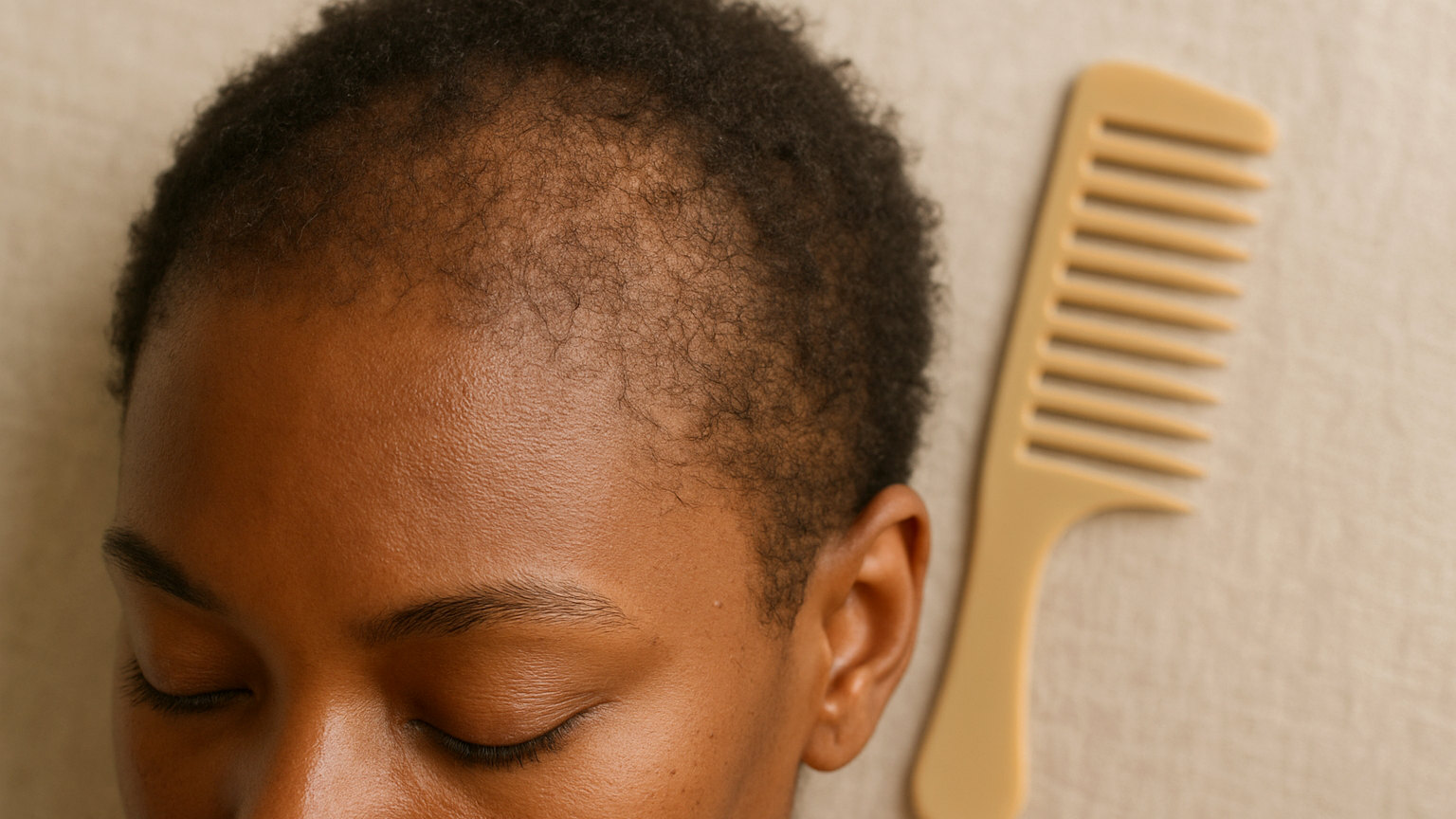
Hair regrowth after chemotherapy follows a reasonably consistent pattern, and knowing the timeline and the likely changes in advance makes it considerably easier to live through. This is general information; your oncology team knows your specific regimen and is the right source for anything particular to you.
Why does chemotherapy cause hair loss?
Because it targets rapidly dividing cells, and hair follicle cells are among the fastest-dividing in the body. The drugs cannot distinguish between cancer cells and follicles.
This is anagen effluvium, which interrupts hair production during the growth phase itself. That is why loss begins within one to three weeks rather than the two to three month delay seen with other causes, and why it is far more extensive.
Not all regimens cause it. Some cause thinning rather than complete loss, and some cause none at all, which depends on the drugs and doses used.
What is the regrowth timeline?
Two to three weeks after the final treatment, a fine downy layer usually appears, sometimes described as duck fluff.
At one to two months, more substantial growth begins, often a centimetre or so. By three to four months, there is generally enough for a very short crop.
By six months, most people have two to three inches. By a year, hair is usually a manageable short style, and by two years it is often close to its previous length.
Eyebrows and eyelashes typically return within a few months, sometimes slightly ahead of scalp hair.
Why does it come back different?
The phenomenon of chemo curls is real and common. Hair frequently returns curlier than before, and often with a different texture and sometimes a different colour, most commonly greyer or darker.
The likely explanation is temporary disruption to the follicle, which affects the shape of the shaft produced. Since follicle shape determines curl, a temporarily altered follicle produces temporarily altered hair.
For most people this settles over one to two years and hair returns to something close to its previous character. For a minority, some change is permanent.
How should you care for new growth?
Gently, and with less than you might expect. New hair is fine and the scalp has often been sensitive during treatment.
A mild, fragrance-free shampoo, used no more than two or three times a week initially. A light conditioner on the lengths as they appear. Avoid heat styling, chemical treatments and colouring for the first few months.
Most guidance suggests waiting around six months after treatment before colouring, and using a gentler option such as a vegetable or semi-permanent colour when you do. Your team can advise on timing for your situation.
Protect the scalp from sun while hair is sparse, since it has had no exposure and burns easily.
Is regrowth ever permanently affected?
Uncommonly, and it does happen. Persistent alopecia after chemotherapy is recognised with certain regimens, particularly some taxane-based treatments, where regrowth is incomplete or considerably thinner.
If regrowth has not begun by around six months after treatment, or is very patchy at a year, that is worth raising with your team rather than waiting.
What about scalp cooling?
Cold caps reduce blood flow to the follicles during infusion, limiting drug exposure, and they are offered at many UK centres.
Success varies with the regimen and between individuals, and they add time to each session and are uncomfortable for some people. Where they work, they can preserve enough hair to avoid needing a wig. It is worth asking about before treatment starts, since it has to be arranged in advance.
What help is available?
Wigs are available on the NHS in many circumstances, and the criteria vary, so it is worth asking rather than assuming. Charities including Macmillan and Look Good Feel Better provide practical support, including sessions on head coverings and eyebrow shaping.
The emotional impact is substantial and well recognised, and it is a legitimate thing to raise with your clinical nurse specialist, who will have had the conversation many times before.


