
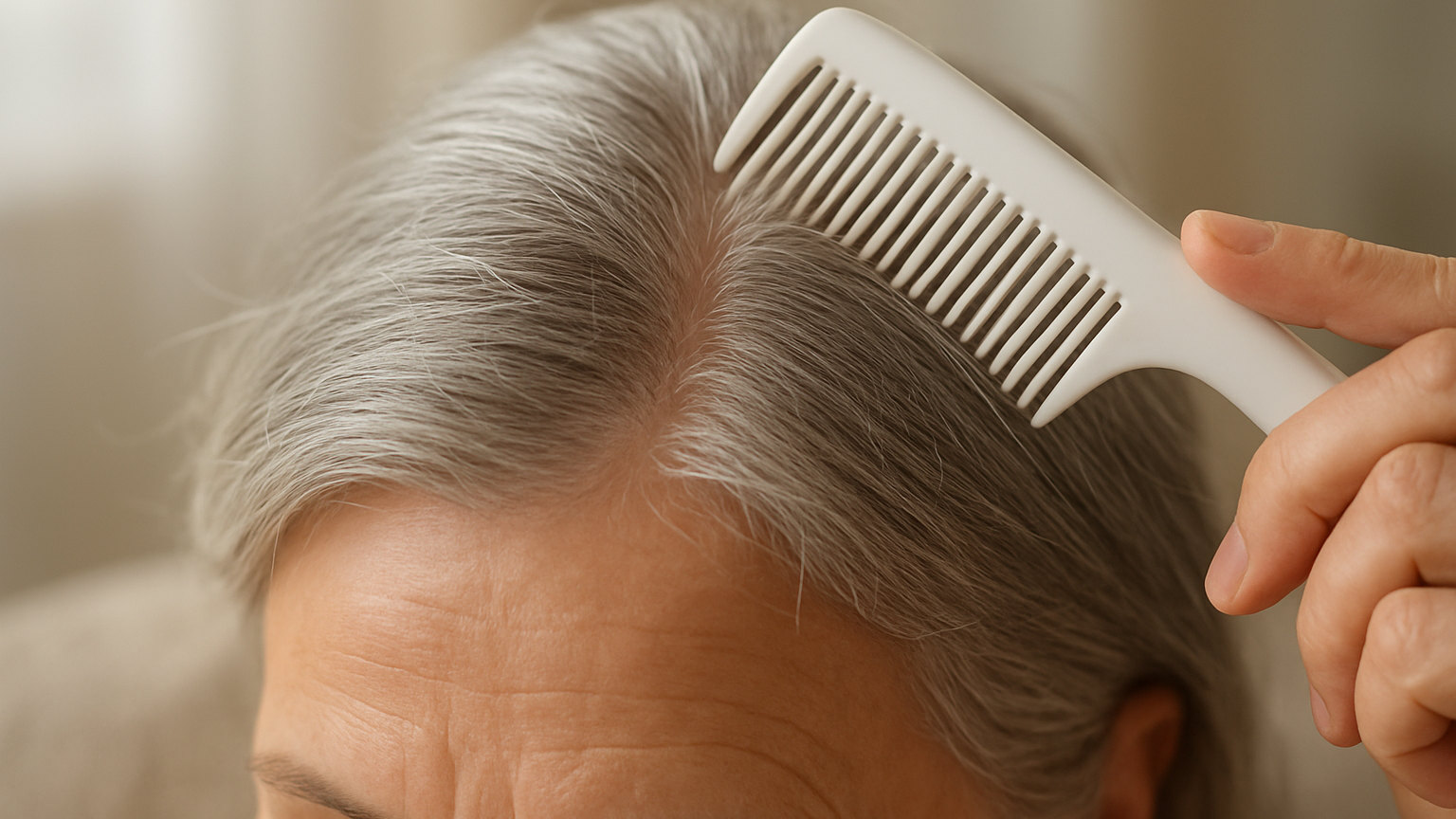
Hair changes with age in several ways at once, and they compound. Growth slows, each strand becomes finer, the growth phase shortens and fewer follicles are active, so the same routine stops producing the same result.
What happens to the growth rate?
It falls gradually. The often-quoted figure of a centimetre a month applies best to young adults, and the rate declines steadily from around the thirties.
The change is small year to year and substantial across decades. In practical terms it means growing hair out takes noticeably longer at fifty than it did at twenty-five, with everything else equal.
What happens to the growth phase?
It shortens, which matters more than the rate does.
Terminal length is set by growth rate multiplied by the duration of the growth phase. If the phase shortens from five years to three, maximum achievable length falls proportionally even if the rate held steady.
This is why people frequently find they can no longer grow their hair to a length they managed easily in their twenties. It is not damage or poor care; the ceiling has moved.
Does each hair get thinner?
Yes. Individual strand diameter reduces with age, independently of any pattern hair loss.
Since apparent thickness of a head of hair depends on both the number of hairs and the diameter of each, this produces visible thinning even when the follicle count is unchanged. Fine hair also breaks more readily, so retention becomes harder at the same time.
What about the number of follicles?
Follicle density reduces gradually across adult life, and some follicles stop producing hair entirely.
Superimposed on that is pattern hair loss, which is a separate genetic process affecting sensitive follicles specifically. The two are often conflated, and distinguishing them matters because one is treatable and the other is largely not.
Why does grey hair feel different?
Because the melanocytes that produce pigment also influence the structure of the shaft. When they stop, the hair produced is often coarser, drier and more wiry.
Grey hair also produces less sebum protection and has a more open cuticle, so it absorbs and loses moisture more readily and can appear dull. It is more susceptible to yellowing from sun, smoke and product build-up.
It frequently needs a different routine rather than more of the old one: richer conditioning, gentler cleansing and occasional use of a purple-toned product to counter yellowing.
What changes around menopause?
The sharpest single shift. Falling oestrogen shortens the growth phase, reduces scalp sebum and thins the scalp skin itself.
The changing ratio of oestrogen to androgens accelerates miniaturisation in sensitive follicles, which is why female pattern loss so often becomes apparent at this point. Texture changes are common and sometimes permanent.
What can actually be influenced?
Retention, mainly, which becomes more important as growth slows. Finer, more fragile hair breaks more easily, so gentle detangling, lower heat and less tension deliver more at fifty than at twenty.
Treating scalp health as skin care, since the scalp thins and dries with age like any other skin. Correcting deficiencies, since absorption and intake both often decline.
And treating pattern loss early if it appears, since preserving follicles is far easier than reviving them.
What cannot be changed?
The genetic ceiling on growth phase length, the gradual reduction in strand diameter, and the change in texture that comes with greying.
Recognising that is not defeatism. It redirects effort toward what works, which is protecting what grows rather than pursuing a rate that is no longer available.
Does it affect men and women differently?
The underlying changes are similar and the timing differs. Men experience a gradual decline, since testosterone falls slowly across decades.
Women experience a sharper transition around menopause, when oestrogen falls over a few years. That is why hair change in women is often experienced as a sudden event and in men as something that crept up, even though the biology overlaps considerably.
When is a change worth investigating?
When it is faster than gradual. Age-related change happens over years and is symmetrical. Anything that appears over weeks or months, affects one area, or comes with scalp symptoms is not ageing and deserves a GP appointment.


