
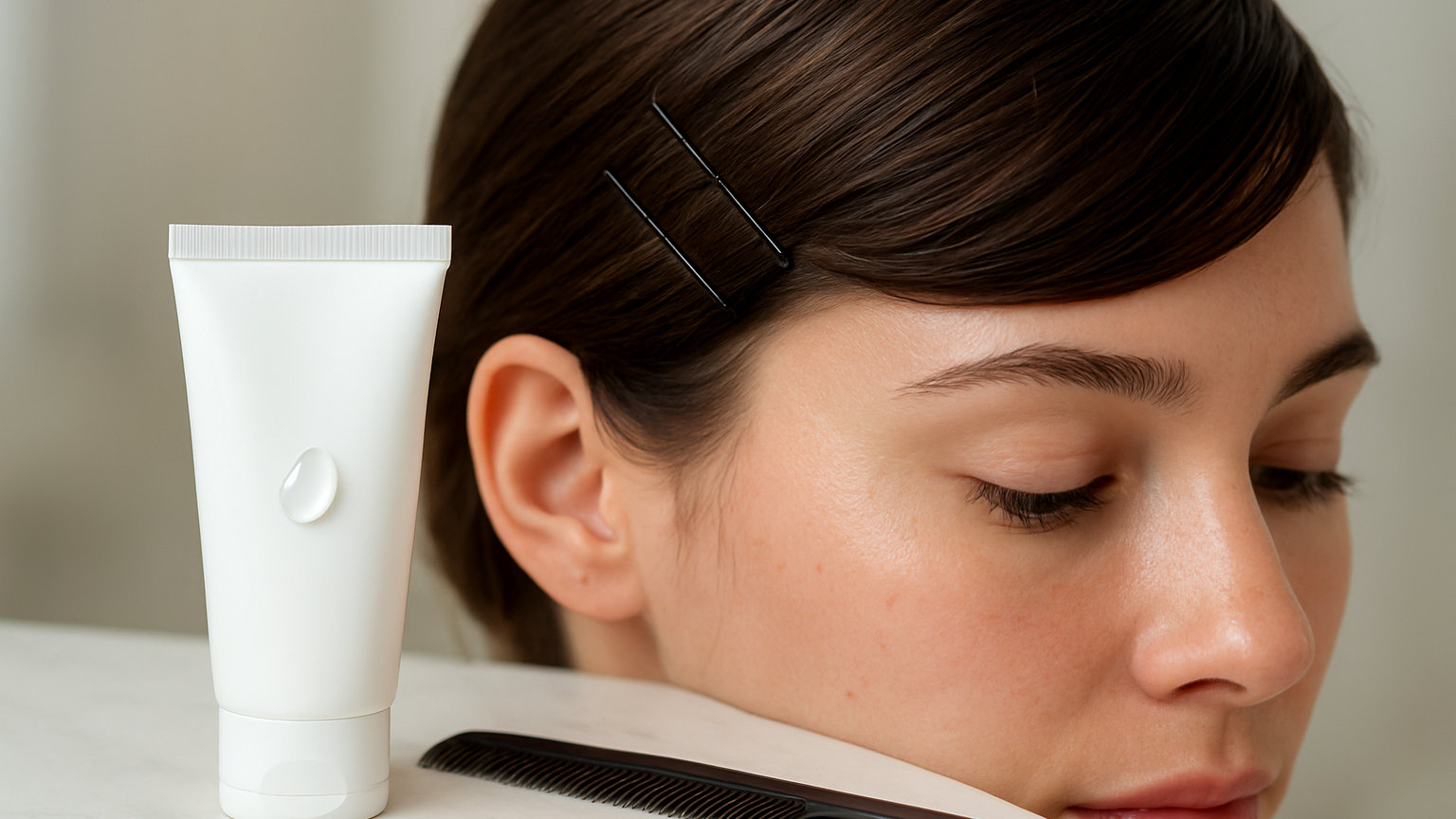
Growing out a fringe is one of the few hair projects with a genuinely predictable timeline, and it is also one where the difficulty is entirely in the middle stretch rather than at either end.
How long does it take?
At roughly a centimetre a month, a full fringe reaching the eyebrows needs about four to six months to reach the cheekbone, and eight to twelve months to blend into the rest of the hair.
The awkward phase, where it is too long to sit as a fringe and too short to tuck behind an ear, generally runs from around month two to month five. That is the stretch where most people give up and cut it again.
Knowing the length of that phase in advance makes it considerably easier to sit through.
What happens at each stage?
Months one to two: the fringe reaches the eyes and becomes irritating. This is when it is worth a small trim to keep it out of your eyes rather than cutting it back to a proper fringe.
Months two to four: the worst of it. Too long to lie flat, too short to pin securely, and prone to separating in the middle.
Months four to six: long enough to sweep to one side and to pin behind an ear. Considerably more manageable.
Months six to twelve: blending into face-framing layers, at which point it stops being a fringe you are growing out and starts being part of the cut.
Should you keep trimming it?
Not the fringe itself, and yes to the sides. This is the counterintuitive part.
Cutting the fringe shorter restarts the process. What helps is having a stylist point-cut and thin the ends and blend the sides, which makes an in-between length sit as though it were intended.
Asking for it to be shaped into curtain bangs at around month three is the single most effective intervention, since curtain bangs are essentially a well-managed growing-out fringe and they suit most face shapes.
What styling helps?
A deep side parting, which gives the length somewhere to go and sweeps it naturally away from the face.
Blow-drying it back and to the side rather than forwards, using a round brush to set the direction. Doing this while damp sets the shape far more effectively than trying to persuade dry hair.
A little texture paste or dry shampoo at the roots gives grip, since freshly washed hair slips out of place.
What about pins and accessories?
Genuinely useful, and worth using thoughtfully rather than only on bad days.
Small clips and grips work once the fringe reaches the cheekbone. Before that they slip. Twisting the fringe back and securing behind the ear holds better than pinning it flat.
Headbands and scarves cover the whole issue and are the reliable option for the worst weeks. Avoid tight styles pulling at the hairline daily, since the front hairline is the area most vulnerable to traction damage.
Does anything make it grow faster?
No, and the fringe grows at the same rate as everything else. It simply feels slower because you are looking at it constantly and because a centimetre matters far more at that length than it does at the ends of long hair.
What you can influence is breakage, and the front sections take a good deal of heat styling, so easing off there helps.
When should you accept and reshape?
If you reach month four and hate it, a stylist can usually blend it into layers that look deliberate rather than transitional, which stops it looking like a mistake while it continues to grow.
That is a better outcome than cutting a fresh fringe out of frustration, which resets the whole process and is the most common way people end up with a fringe they did not want for another two years.
Does it depend on your hair type?
Considerably. Straight hair shows the awkward stage most obviously, since there is nowhere for an in-between length to hide and it falls directly into the eyes.
Wavy and curly hair generally has an easier time, because the texture blends a growing fringe into the surrounding hair more naturally and holds a side-swept shape without much persuasion. Very fine hair struggles most with pins and clips, which slip, so a headband or a deliberate reshape is usually the better route.


