
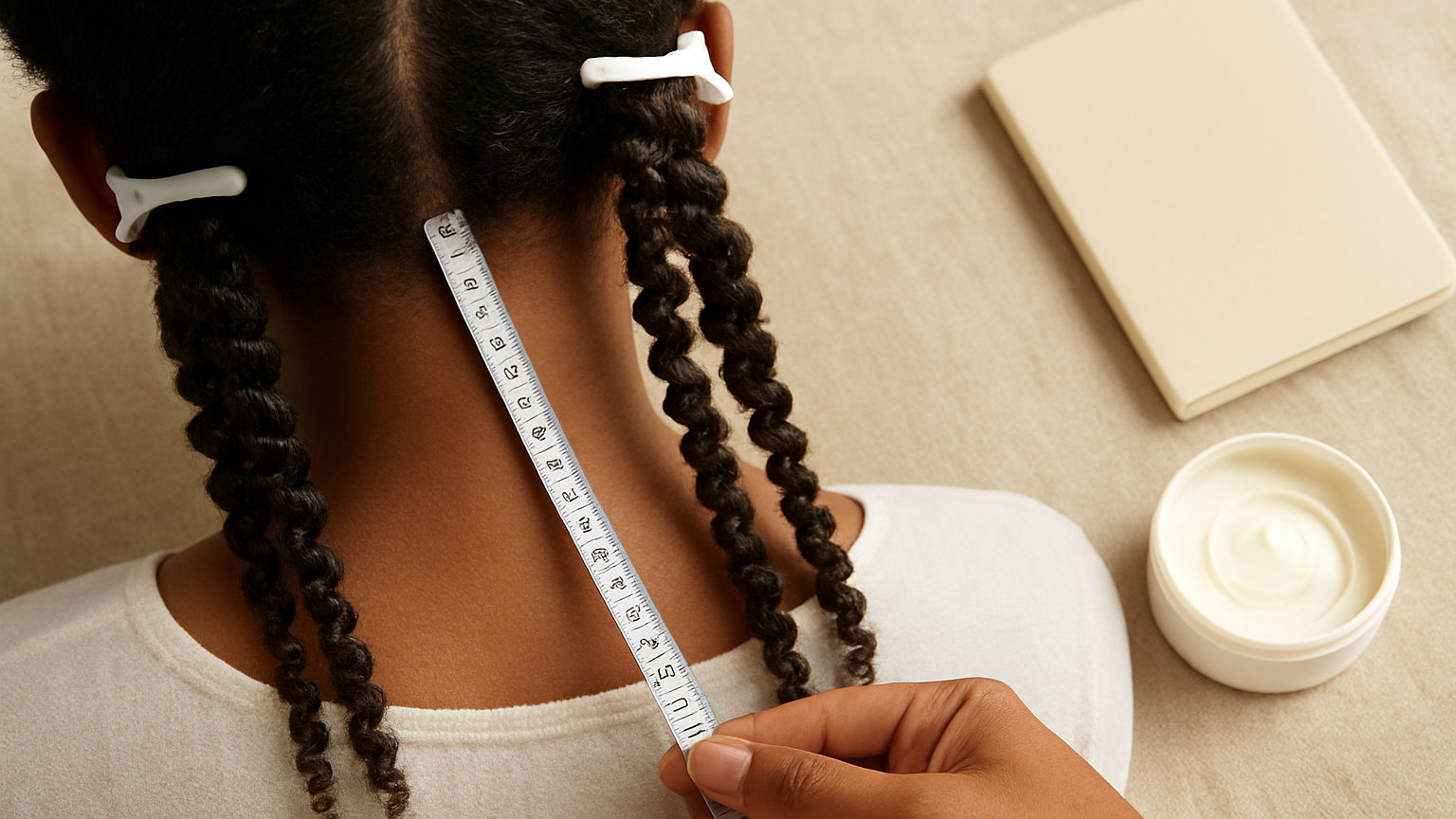
Hair changes at a rate well below what daily observation can detect, and the mirror is an unreliable narrator that notices bad days and ignores gradual improvement. Tracking properly is the difference between judging a treatment and guessing at it.
Why is the mirror misleading?
Because you see your hair daily and change of a centimetre a month is imperceptible over any single day.
Worse, perception is affected by lighting, whether hair is clean or dirty, how it was styled, and mood. People routinely conclude a treatment has failed at week six, which is before any treatment could show anything.
The most common outcome of poor tracking is abandoning something that was working.
How should you photograph it?
Consistency matters more than quality, and the same four variables need controlling every time.
Same lighting, ideally daylight from the same window at the same time of day, and never overhead bathroom lighting, which exaggerates scalp visibility dramatically.
Same hair state: clean, dry, unstyled, with the parting in the same place. Wet hair makes thinning look far worse and is not comparable.
Same angles: top of head looking down, crown from behind, parting from directly above, and hairline from the front. The crown needs a second person or a mirror.
Same distance and camera settings, with no filters and no portrait mode.
How often?
Every eight weeks. Monthly is too frequent to show meaningful change and encourages anxious comparison; quarterly risks missing a trend.
Keep them in a dedicated folder with dates in the filenames, and resist looking at them between sessions.
What can you measure?
Length, from a fixed anatomical point rather than from the shoulder, since posture varies. The centre of the parting to the ends is reliable if the parting stays consistent.
Parting width, using a ruler at a fixed point, which is the single most useful measurement for female pattern loss.
Ponytail circumference, measured with a tape at the same distance from the roots, which tracks overall density better than any photograph.
Shed count, if you must, though counting hair is a habit that tends to increase distress and encourage pulling. Weekly rather than daily is enough.
What should you write down?
What you started, the dose or strength, and the date. What you stopped, and when. Any illness, medication change or major stress, since these appear in the hair two to three months later.
Three lines in a notebook is enough. Reconstructing a year of changes from memory when a doctor asks is close to impossible, and the timeline is what makes a diagnosis.
What timescales should you expect?
Nothing visible before three months, whatever the treatment. Reduced shedding at three to four months. Visible regrowth at six. Meaningful change in density at nine to twelve.
Minoxidil causes increased shedding in the first two months, which is expected and not failure. Knowing that in advance prevents most people from stopping during it.
What should you avoid doing?
Checking daily, which reveals nothing and increases anxiety. Pulling to test how much comes out, which dislodges hairs that were not ready.
Comparing against photographs from ten years ago rather than from the start of treatment, which measures ageing rather than the treatment.
And changing several things at once, which makes any result uninterpretable.
What is the tracking actually for?
Two things. Judging whether to continue, which is impossible without a baseline.
And a medical appointment, where photographs over time are considerably more useful than a description. A GP seeing a clear progression over a year has something to act on that ten minutes of examination cannot provide.
Should you use an app or a clinic scan?
Clinics offer trichoscopy and standardised photography, which measure hair density and diameter properly and are genuinely more accurate than anything you can do at home.
They are also priced accordingly and rarely necessary for someone simply deciding whether a treatment is working. Phone apps offering hair analysis from a photograph have no established accuracy. For most people, consistent photographs and a tape measure provide everything the decision requires.


