
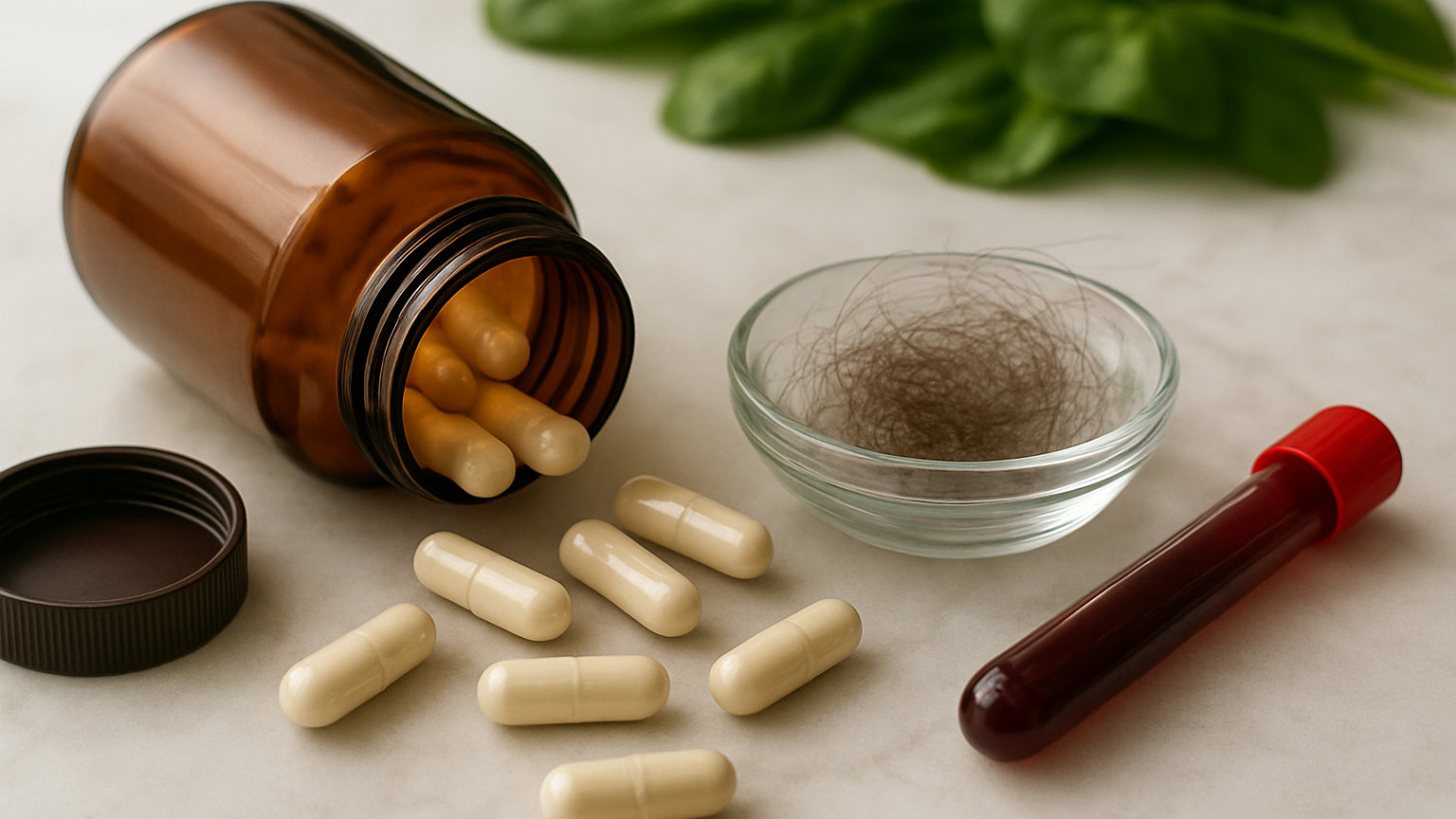
Hair supplements are a large and growing market with a simple underlying truth: they work when you are deficient in something and do very little when you are not. The packaging is not designed to help you tell which applies.
What does biotin actually do?
Biotin, vitamin B7, is genuinely necessary for keratin production, and genuine biotin deficiency does cause hair loss and brittle nails.
Genuine biotin deficiency is also rare. It occurs in specific circumstances, including certain genetic conditions, long-term use of some anti-epileptic drugs, and prolonged consumption of raw egg whites. It is not common in people eating an ordinary diet.
In someone who is not deficient, supplementing biotin has not been shown to improve hair growth. The evidence supporting its use is largely from case reports of people who were deficient.
Is there a risk to taking it?
One that matters and is rarely mentioned on the packet. High-dose biotin interferes with a wide range of laboratory immunoassays.
It can produce falsely abnormal results for thyroid function tests and, importantly, falsely low troponin results, which is the test used to diagnose a heart attack. Regulators including the MHRA and FDA have issued warnings about this.
Anyone taking a high-dose biotin supplement should tell their doctor before blood tests, and stop it for several days beforehand where possible. Given the weak evidence of benefit, that is a poor trade for most people.
When do supplements genuinely help?
When correcting a documented deficiency, which is the entire useful case.
Iron is the most common relevant one, particularly in women with heavy periods. Vitamin D is widely deficient in the UK. Vitamin B12 matters for vegans and anyone with absorption problems. Zinc deficiency causes hair loss and is uncommon but real.
In all of those, the supplement is treating a cause rather than providing a general boost, and it should follow a blood test rather than precede one.
What about the branded hair supplements?
Most combine a long list of vitamins and minerals with some marine collagen or plant extracts, at doses that are unremarkable individually.
Some have small manufacturer-funded trials behind them. The evidence is generally weak, the studies are small, and independent replication is thin. That does not mean they never help, and it does mean the confidence of the marketing is not matched by the data.
They are also expensive relative to a single tested supplement addressing an identified deficiency.
Can you take too much?
Yes, and some are genuinely harmful in excess. Vitamin A and its derivatives cause hair loss at high doses, which is an unfortunate irony given how often it appears in hair products.
Selenium in excess causes hair loss and brittle nails. Excess zinc interferes with copper absorption and can itself contribute to hair problems. Iron accumulates and is harmful without a deficiency to correct.
Taking several supplements simultaneously makes exceeding safe limits easier than people expect.
What about saw palmetto and other plant extracts?
Saw palmetto is proposed to inhibit the enzyme that converts testosterone to dihydrotestosterone, the same target as prescription treatments for pattern hair loss.
Some small studies suggest modest benefit. The effect is considerably weaker than prescription options, the studies are limited, and quality varies enormously between products since supplements are not verified for content.
It is a reasonable thing to try if prescription treatment is unsuitable or unwanted, with realistic expectations.
Where should supplements sit?
After investigation, not before it. The sequence that makes sense is blood tests, then correction of anything the tests show, then evidence-based treatment for the underlying cause of the hair loss.
Spending six months on gummies while an untreated thyroid problem or iron deficiency continues is the most common and most costly version of getting this wrong.
What about collagen for hair?
Collagen supplements have some evidence for skin hydration and elasticity, and essentially none specific to hair growth.
The proposed mechanism is that hydrolysed collagen supplies amino acids used in keratin production, which is plausible and also true of any adequate protein intake. Someone eating enough protein already has the raw materials, and someone who is not will not fix it with a scoop of powder alone. It is a reasonable thing to take for other reasons and a weak choice as a hair treatment.


