
Hair loss appointments are often short and can feel unsatisfying, largely because the useful information is spread across history, examination and blood tests, and ten minutes does not cover all three unless you arrive prepared.
Who should you see first?
A GP. They can examine the scalp, order blood tests, prescribe first-line treatments and refer onward, and it costs nothing.
A dermatologist is the specialist for hair and scalp disease, and is the right referral for patchy loss, scarring, anything with scalp symptoms, or loss that has not responded to first-line treatment.
A trichologist is not a medical qualification in the UK, and the title is not protected. Some trichologists are excellent and knowledgeable; the field is unregulated, so anyone can use the term. Anything involving a diagnosis or a prescription should go through a doctor.
What will you be asked?
When it started, whether it was sudden or gradual, and whether it is shedding or thinning, which are different and worth distinguishing clearly.
Whether anything happened two to three months before it started, including illness, surgery, childbirth, weight loss or severe stress. What medications and supplements you take. Family history on both sides.
For women, menstrual history, contraception, pregnancy and menopausal status. Any other symptoms: fatigue, weight change, feeling cold or hot, skin and nail changes.
And how you style your hair, since traction and chemical processing are common contributors that patients rarely volunteer.
What will they look at?
The pattern of loss, which is often diagnostic on its own. Whether the hairline is preserved. Whether the parting is widening. Whether patches are discrete and smooth.
The scalp itself, looking for redness, scaling, pustules, and crucially whether follicular openings are still visible. Their absence suggests a scarring alopecia, which changes urgency substantially.
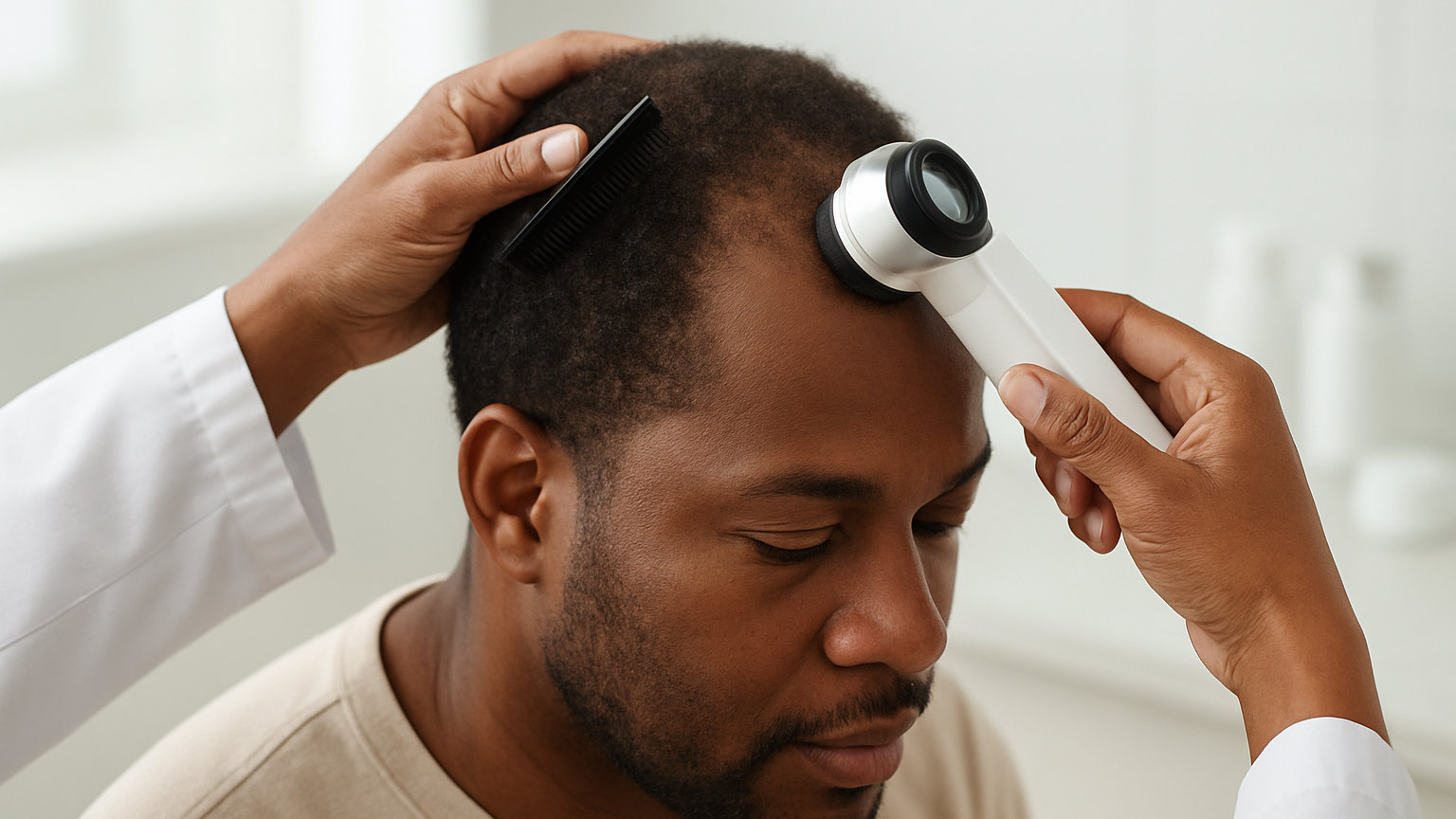
They may perform a pull test, gently tugging a small bundle of hairs to see how many come away, which helps distinguish active shedding from established thinning. A dermatoscope may be used to examine follicles closely.
Which tests should you ask for?
Full blood count, ferritin, and thyroid function including TSH and free T4 as a baseline. Vitamin D, which is widely deficient in the UK.
Ferritin specifically rather than just haemoglobin, since iron stores can be substantially depleted while haemoglobin remains normal.
For women with irregular periods, acne or unwanted facial hair, testosterone and related hormones to investigate polycystic ovary syndrome.
Asking for these by name is reasonable and makes a short appointment more productive.
How should you prepare?
Take photographs over time, in the same light, including the parting and the crown, which is difficult to see and where change is often greatest. Photographs from a year ago are more useful than any description.
Write down when it started, what changed in the months before, and a list of medications and supplements with doses. Note anything you have already tried and for how long.
Do not style over the thinning area for the appointment. Concealer fibres in particular should be washed out, since they obscure exactly what needs examining.
What might you be offered?
Topical minoxidil, which is available over the counter and often recommended rather than prescribed. Treatment of any deficiency identified.
For men, finasteride, which may be through the GP or privately. For women, spironolactone or a change in contraception, usually after discussion.
Referral to dermatology for anything patchy, scarring, rapidly progressing, or unresponsive.
What if you feel dismissed?
It happens, and hair loss is sometimes treated as cosmetic when it is a symptom.
Being specific helps: rather than saying your hair is thinning, say that you are shedding heavily, that it started three months after a particular event, and that you would like ferritin and thyroid function checked. Bring the photographs.
If a scarring process is possible, say so, since that changes the urgency of referral. And you are entitled to ask for a second opinion.
What about private hair clinics?
They vary enormously, and some are essentially sales operations for expensive treatment packages.
Useful signs are a doctor or dermatologist involved in the assessment, blood tests before any treatment is recommended, and a willingness to say that a treatment is unlikely to help. Warning signs are a consultation that ends in a package price on the day, elaborate test panels of unclear relevance, and any promise of a cure. Getting NHS blood tests through a GP first costs nothing and makes any private consultation more useful.


