
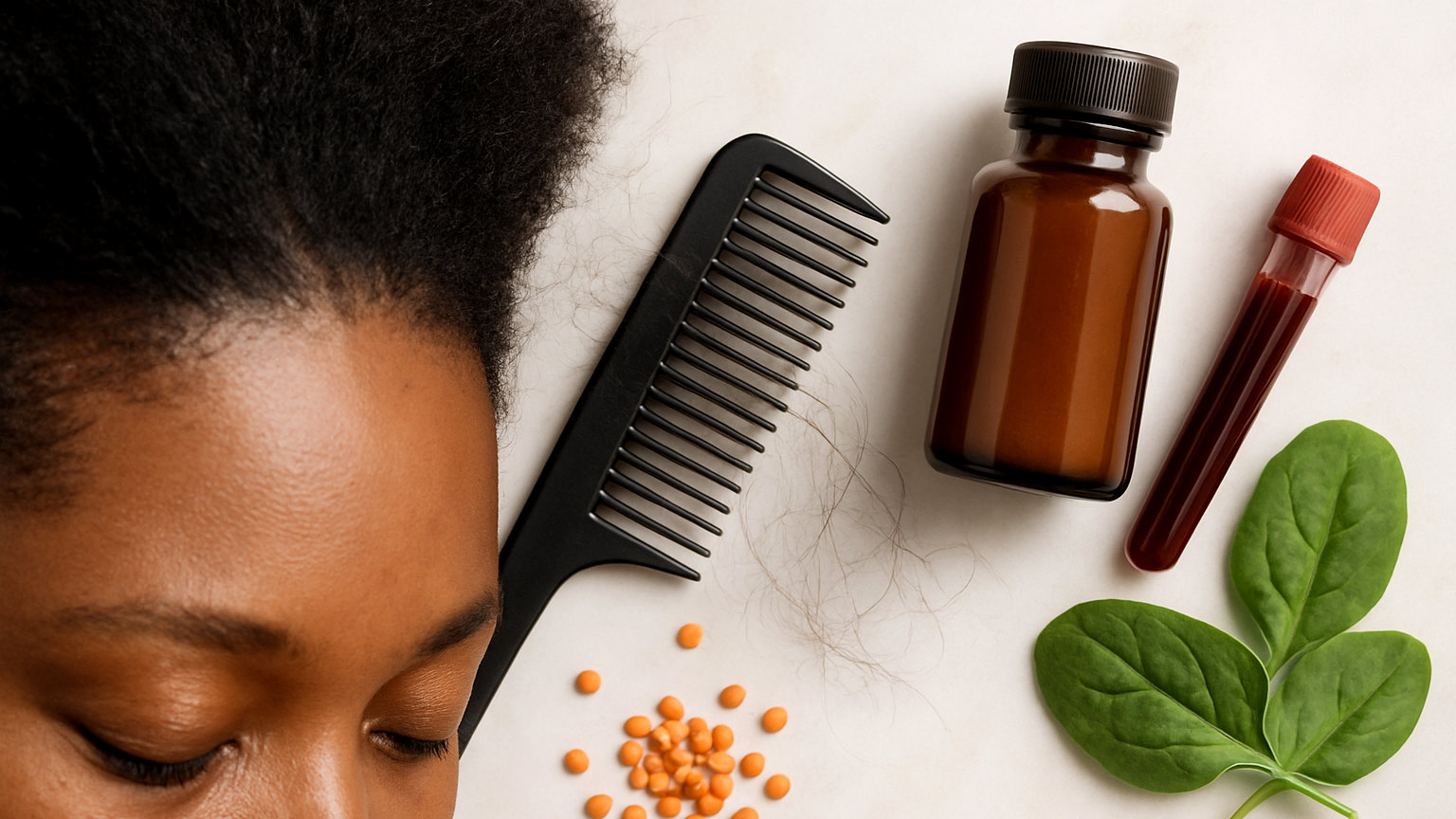
Iron deficiency is among the most common treatable causes of hair shedding and among the most frequently missed, largely because the test most often done can come back normal while the relevant marker is not.
Why does iron matter for hair?
Hair follicles contain some of the most rapidly dividing cells in the body, and rapid cell division has high demands for oxygen and for the enzymes that iron enables.
When iron is short, the body prioritises essential functions. Hair is not essential, so follicles are among the first tissues to be deprived, and they respond by moving into the resting phase.
The result is diffuse shedding across the scalp rather than patches, often alongside hair that feels finer and grows more slowly.
Why can a normal blood test miss it?
Because a standard full blood count measures haemoglobin, which identifies anaemia. Iron stores can be substantially depleted well before haemoglobin falls.
Ferritin is the marker that reflects stored iron, and it is not always included unless specifically requested. Someone can have entirely normal haemoglobin and a ferritin low enough to affect hair.
If you are having blood tests for hair loss, ask for ferritin specifically rather than assuming it is part of the panel.
What level is relevant?
Laboratory reference ranges for ferritin typically start around 15 micrograms per litre, and that threshold is set to identify anaemia rather than hair loss.
A good deal of dermatological literature suggests hair growth is affected at levels considerably above that, with figures around 30 and sometimes 70 discussed as thresholds for optimal hair growth. The evidence is not conclusive and the topic is genuinely debated.
Practically, this means a result reported as normal may still be worth discussing, particularly if it sits at the bottom of the range and there is unexplained shedding.
Who is most likely to be affected?
Women with heavy periods, which is the single largest group and frequently under-recognised. Anyone pregnant or recently postpartum.
Vegetarians and vegans, since plant-based iron is absorbed less efficiently. Anyone with coeliac disease or another absorption problem. Regular blood donors. Endurance athletes.
Anyone with gastrointestinal blood loss, which is why unexplained iron deficiency in men and in postmenopausal women is investigated rather than simply supplemented.
How should it be corrected?
Through a GP rather than by self-supplementing, for two reasons.
First, iron supplementation without testing is a poor idea, since iron overload is harmful and some people carry a genetic predisposition to it. Second, unexplained deficiency needs a cause identified, not just a level corrected.
Where supplementation is appropriate, absorption improves when taken with vitamin C and on an empty stomach, and is reduced by tea, coffee, calcium and antacids. Alternate-day dosing is now often recommended over daily, as it improves absorption.
How long before hair improves?
Longer than levels take to correct. Ferritin may rise within a few months; visible hair improvement typically takes six to twelve.
The sequence is that shedding slows first, then regrowth begins, then that regrowth becomes long enough to see. Judging it at three months is judging an incomplete process.
What else is worth testing?
Thyroid function, since thyroid disease in either direction causes diffuse shedding and is common, particularly in women.
Vitamin D, which is widely deficient in the UK and has some association with hair loss. Vitamin B12 and folate, particularly in vegetarians. Zinc, occasionally.
What is generally not worth testing is the elaborate panels offered by private hair clinics, which frequently measure markers with little relevance and are priced accordingly.
Should you take iron just in case?
No. Taking iron without a documented deficiency provides no benefit to hair and carries real risks, including gastrointestinal side effects and, over time, accumulation.
The same applies to most hair supplements, several of which contain iron. Test first, then treat what the test shows.
Does diet alone fix it?
Sometimes, if the deficiency is mild and the cause is dietary. Red meat provides the most readily absorbed form of iron; pulses, dark leafy greens and fortified cereals provide a form absorbed less efficiently.
Pairing plant sources with vitamin C improves absorption considerably, while tea and coffee with a meal reduce it. For a moderate or severe deficiency, diet alone corrects levels too slowly to be practical, which is why supplementation is usually needed alongside rather than instead of dietary change.


