
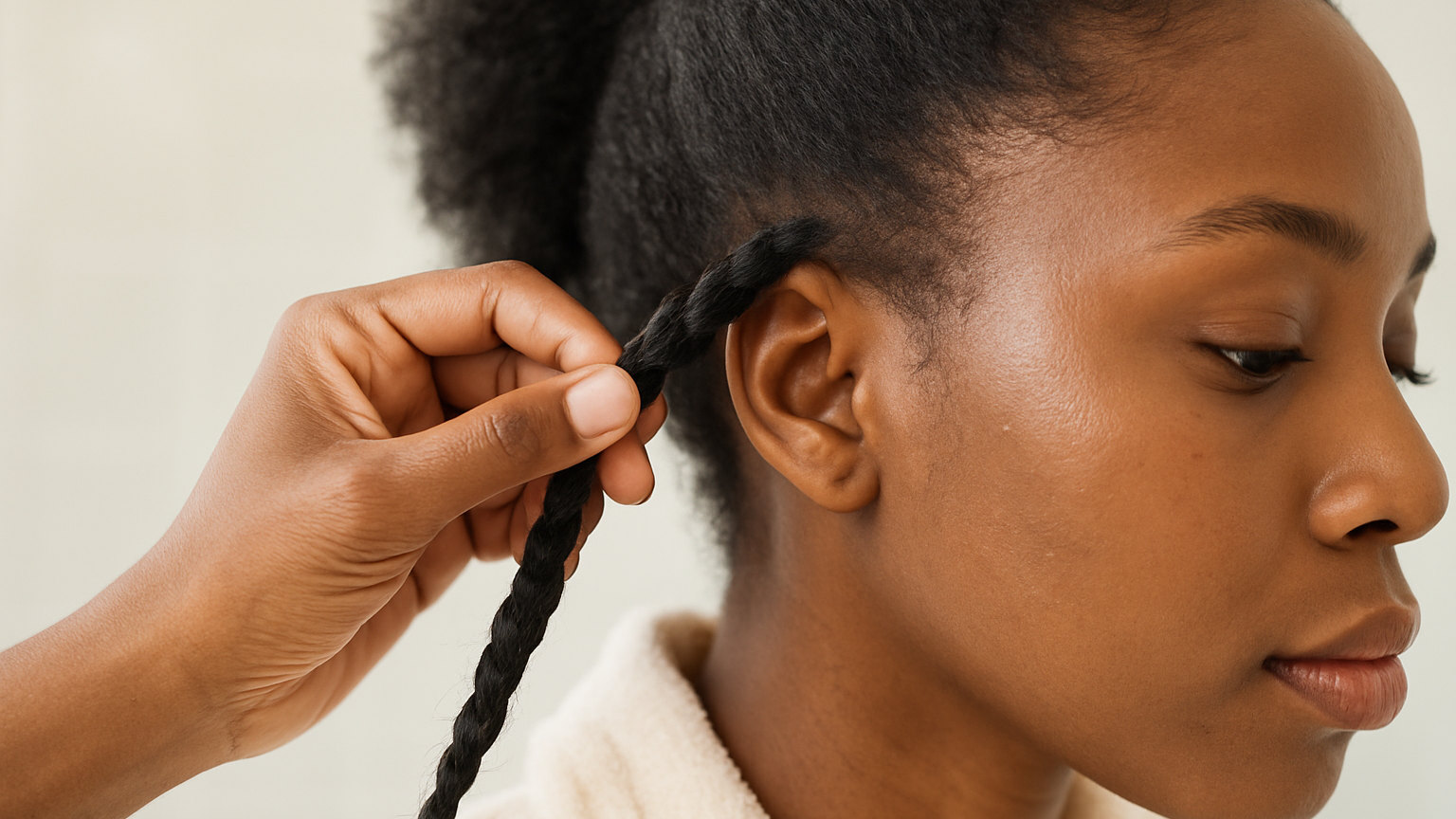
Traction alopecia is caused by sustained pulling on the hair, and it is unusual among the causes of hair loss in being entirely preventable, largely reversible when caught early, and permanent if it is not.
What is happening to the follicle?
Constant tension pulls the hair away from the follicle, causing inflammation around it. Early on, hairs are pulled out or break, and the follicle recovers if the tension stops.
With sustained tension over months and years, the inflammation leads to scarring, and scar tissue replaces the follicle. At that point regrowth is not possible, because there is nothing left to grow from.
The transition from reversible to permanent is gradual and has no obvious marker, which is why early recognition matters so much.
What causes it?
Anything that holds hair under tension repeatedly. Tight ponytails and buns, particularly worn daily in the same position. Braids and cornrows, especially if they pull at the hairline or feel tight when fitted.
Weaves and extensions, where the weight is borne by the natural hair. Hair worn in a tight bun for work, which affects dancers, some military roles and nursing.
Chemical relaxing combined with tension, which is a particularly damaging combination because chemically weakened hair breaks more readily.
Turbans, headscarves and clips worn tightly in the same position, and even prolonged use of hair grips at the same spot.
What are the early signs?
Thinning along the hairline, temples and above the ears, which is the classic distribution. A gradually receding hairline in someone who would not otherwise expect one.
Small bumps or pustules around follicles where the tension is greatest. Tenderness or headache after styling, which is the clearest early warning and is routinely dismissed as normal.
Short broken hairs within the thinning area. Itching or a burning sensation at the scalp.
The single most useful rule: if a style hurts, it is too tight, and pain is not the price of a neat finish.
Who is most affected?
It is substantially more common in Black women, largely because of styling practices involving braids, weaves, extensions and relaxers, often begun in childhood and continued for decades.
That is a matter of practice rather than of hair itself, and it means the condition is both more prevalent and more preventable in that group. It also means it is frequently normalised, with a receding hairline treated as an inevitable consequence of styling rather than as a diagnosable condition.
It also affects ballet dancers, gymnasts, anyone required to wear tight buns for work, and people who wear the same ponytail every day for years.
Is it reversible?
Early, yes. If the tension stops before scarring develops, follicles recover and hair regrows over several months.
Once scarring has occurred, no. The follicle is gone, and topical treatments cannot recreate it. Hair transplantation is the only option, and it requires the underlying tension to have stopped.
The practical implication is that anyone noticing thinning at the hairline should change their styling immediately rather than waiting to see whether it worsens.
How do you prevent it?
Vary the style and the position. A ponytail in the same place daily creates a specific line of tension; moving it changes where the stress falls.
Loosen anything that pulls. If you can feel it after an hour, it is too tight. Fabric-covered bands rather than elastics with metal joins.
Give hair regular breaks between protective styles rather than moving straight from one set of braids to the next. Avoid combining chemical processing with tension. Take extensions out on schedule rather than extending their wear.
For children, keep styles loose, since childhood traction is a common precursor to adult loss.
When should you see someone?
As soon as you notice thinning at the hairline or temples, or if styling causes pain, bumps or persistent tenderness.
A GP can confirm the diagnosis and refer where needed. Topical or injected steroids may be used to reduce inflammation, and minoxidil is sometimes prescribed to support regrowth in non-scarred areas. Both work considerably better before scarring, which is the whole argument for going early.


