
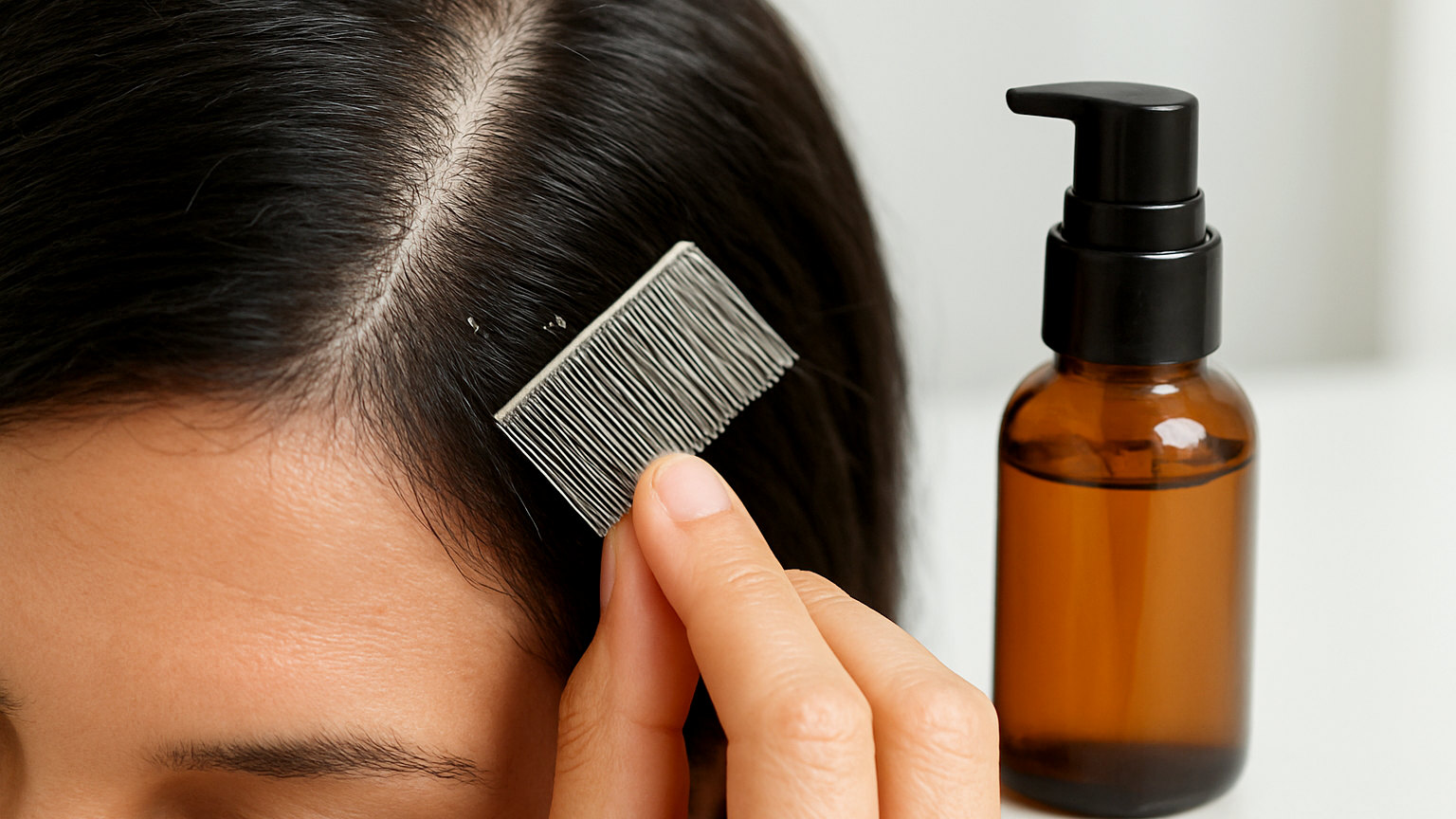
Adults get head lice regularly, usually from children in the household, and the embarrassment attached to it delays treatment far more than any difficulty in treating it. It is worth stating plainly that lice have nothing to do with cleanliness.
How would you know?
Itching is the most common symptom and it is not reliable, since it is an allergic reaction to louse saliva that can take weeks to develop and some people never itch at all.
Other signs: a tickling or crawling sensation, particularly at night when lice are more active. Itching concentrated behind the ears and at the nape, which are the warmest areas. Small red bumps on the neck or scalp. Difficulty sleeping.
The only way to be sure is to find a live louse, which is why detection combing matters more than symptoms.
How do you check properly?
Wet combing with a proper detection comb, which has teeth around 0.2 to 0.3 millimetres apart. An ordinary fine comb is not close enough.
Wash the hair, apply plenty of conditioner and leave it in, which slows the lice and provides slip. Comb from the scalp to the ends section by section, wiping the comb on white tissue after each stroke.
Work systematically over the whole head, and expect it to take ten to fifteen minutes for long hair. Look for moving insects roughly the size of a sesame seed.
How do you tell nits from dandruff?
Eggs are glued firmly to the hair shaft and do not move when you try to slide them. Dandruff, product residue and hair casts flick off easily.
Live eggs are usually within a centimetre of the scalp, since lice lay close to the warmth. Empty shells further down the shaft are evidence of a past infestation rather than a current one, and treating on that basis alone is a common mistake.
Which treatments work?
Physical treatments are now generally preferred, since resistance to older insecticides is widespread.
Dimeticone and other silicone-based lotions coat the louse and suffocate it physically, so resistance is not a factor. These are available from pharmacies and are the usual first choice. Follow the instructions on contact time exactly, since that is where most treatment failures come from.
Wet combing alone works if done properly: every three to four days for at least two weeks, which catches lice as they hatch. It is free and requires genuine persistence.
Repeat any chemical treatment after seven days, since nothing kills all the eggs and the second application catches what hatched.
What does not work?
Tea tree oil, mayonnaise, vinegar and similar home remedies, none of which have reliable evidence behind them.
Treating everyone in a household regardless of whether they have lice, which is unnecessary. Check everyone; treat only those with live lice found.
Extensive cleaning of the house. Lice die within a day or two off a human head, so washing bedding at a normal temperature is sufficient and fumigating is pointless.
Does hair type or cleanliness matter?
Cleanliness is entirely irrelevant, and repeating that matters because the shame is what stops people mentioning it.
Hair type does affect prevalence. Lice grasp the hair shaft with claws suited to round shafts, and infestation is considerably less common in very tightly curled hair, though not impossible.
Long hair is not more susceptible, though it takes longer to comb through.
How do you avoid passing it on?
Head to head contact is how lice spread, and they do not jump or fly. Sharing hairbrushes, hats and pillows is a much smaller route than direct contact.
Tie long hair back during outbreaks at a school. Tell anyone who has had close head contact, which is awkward and considerably more useful than not telling them.
Check the household weekly during an outbreak rather than treating speculatively, since detection combing catches it early when it is easiest to clear.
Does hair dye or bleach kill them?
Bleach can kill live lice, and it does not reliably kill eggs, which are protected by their shell. Colouring is not a treatment and should not be used as one.
Repeatedly bleaching to deal with recurring lice would cause considerably more harm than the infestation, and dye carries its own allergy risk. Use a licensed product from a pharmacy, which is designed for the purpose and considerably cheaper.


