
Dandruff and scalp psoriasis are frequently confused, look similar at a glance, and need different treatment. Three features separate them reliably, and knowing which you have determines whether an over-the-counter shampoo will be enough.
What is the difference in the flakes?
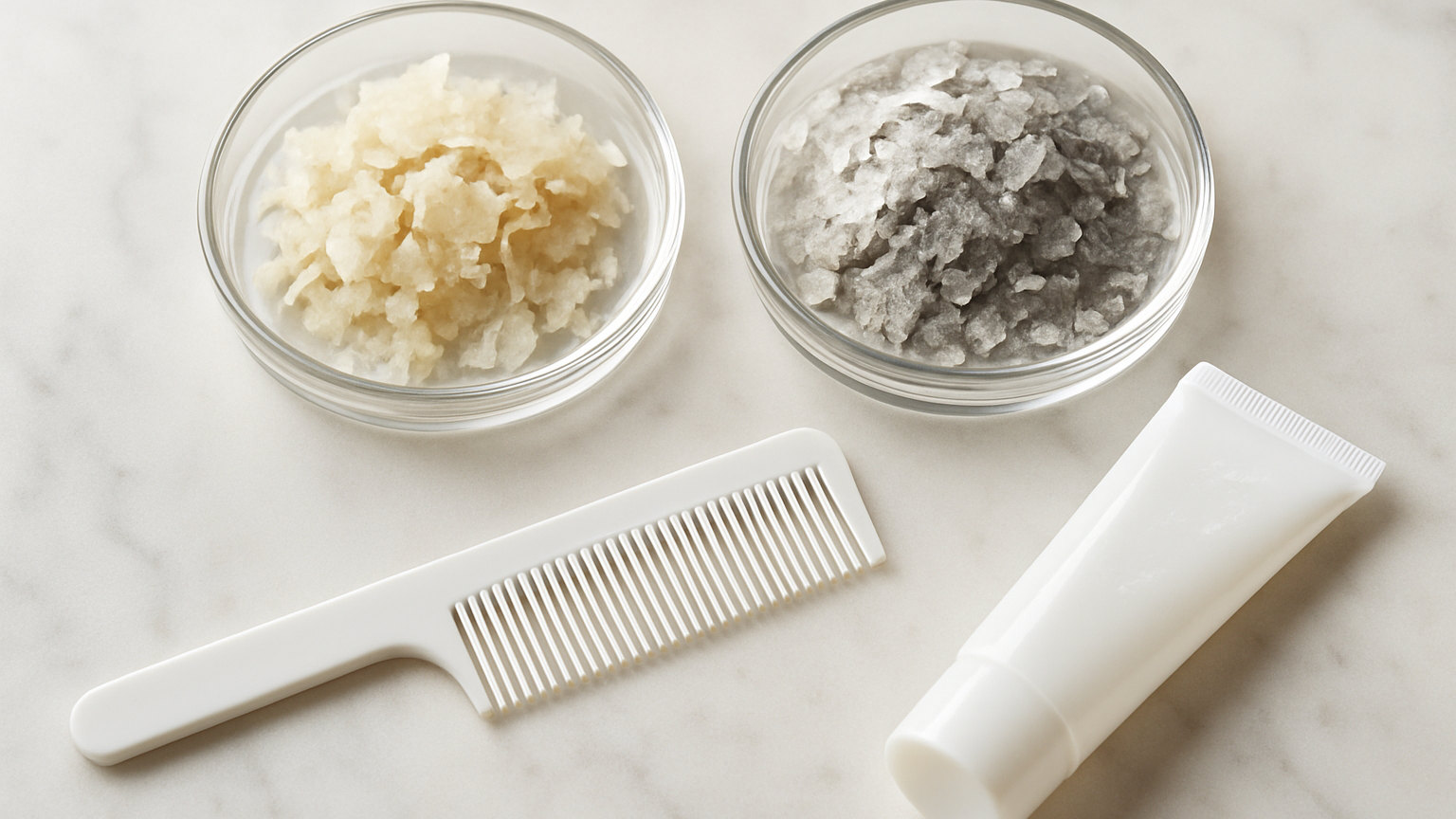
Dandruff produces flakes that are smaller, greasy, and white to yellowish. They tend to fall away readily and scatter on clothing.
Psoriasis produces scale that is thicker, drier and distinctly silvery, adhering firmly to the skin and coming away in larger pieces. Removing it can reveal tiny points of bleeding, which is a recognised sign.
The texture is the most useful single distinction: greasy and fine suggests dandruff, dry and silvery suggests psoriasis.
What is the difference in the skin underneath?
Dandruff sits on skin that is mildly pink and flat.
Psoriasis produces plaques: raised, well-defined patches with clear borders that you can feel with a fingertip. The edge between affected and unaffected skin is sharp rather than gradual.
Running a hand over the scalp with eyes closed often distinguishes them more effectively than looking.
Where does each appear?
Dandruff, being seborrhoeic dermatitis, favours oily areas: the scalp, the sides of the nose, the eyebrows, behind the ears and sometimes the chest.
Psoriasis characteristically extends beyond the hairline onto the forehead, the back of the neck and behind the ears, which is a genuinely useful clue since dandruff usually stops at the hairline.
It also commonly appears elsewhere: elbows, knees, the lower back and the nails. Nail changes, particularly pitting or lifting from the nail bed, are a strong indicator.
Can you have both?
Yes, and there is a recognised overlap called sebopsoriasis, which has features of each and can be difficult to distinguish even for a clinician.
Practically, if a scalp responds partially to antifungal shampoo but never clears, that overlap is worth considering and worth mentioning at an appointment.
What treats dandruff?
Antifungal shampoos: ketoconazole, zinc pyrithione, selenium sulfide or coal tar, used two or three times a week and left on for five minutes.
Most cases respond within four weeks, and maintenance with a weekly wash prevents recurrence. It is controlled rather than cured, since the yeast involved is a normal part of the scalp.
What treats scalp psoriasis?
More, and usually with a prescription. Coal tar and salicylic acid preparations help remove scale and are available over the counter.
Topical corticosteroids, often as a scalp application or foam, reduce inflammation and are the mainstay. Vitamin D analogues such as calcipotriol are used alone or combined with a steroid.
Severe or extensive psoriasis may need phototherapy or systemic treatment, which is dermatology territory.
Removing scale first matters, since topical treatments cannot reach the skin through a thick layer of it. A salicylic acid preparation or oil left on before washing helps considerably.
Does either cause hair loss?
Both can, and usually temporarily. Inflammation and scratching cause hair to shed, and scale removal takes loose hairs with it.
Hair generally regrows once the condition is controlled, since neither is typically scarring. Persistent loss from an affected area, or smooth shiny skin without visible follicle openings, suggests something else and needs assessment.
When should you see a GP?
If four to six weeks of antifungal shampoo has not helped, which suggests it was not dandruff. If there are raised plaques, silvery scale or involvement beyond the hairline.
If it is painful, bleeding or infected, or if it is affecting sleep or daily life. Psoriasis is also associated with joint symptoms and with cardiovascular risk, so a diagnosis has implications beyond the scalp and is worth having formally rather than assumed.
What triggers a flare of each?
Both worsen with stress, cold weather and illness, which is part of why they are confused.
Dandruff is additionally driven by sebum, so it flares in oilier periods and with hormonal change. Psoriasis has its own recognised triggers: skin injury, including scratching or a scalp scratch from a comb, which can produce a new plaque at the site; certain medications including lithium and beta blockers; infections, particularly streptococcal throat infections; and alcohol and smoking.


