
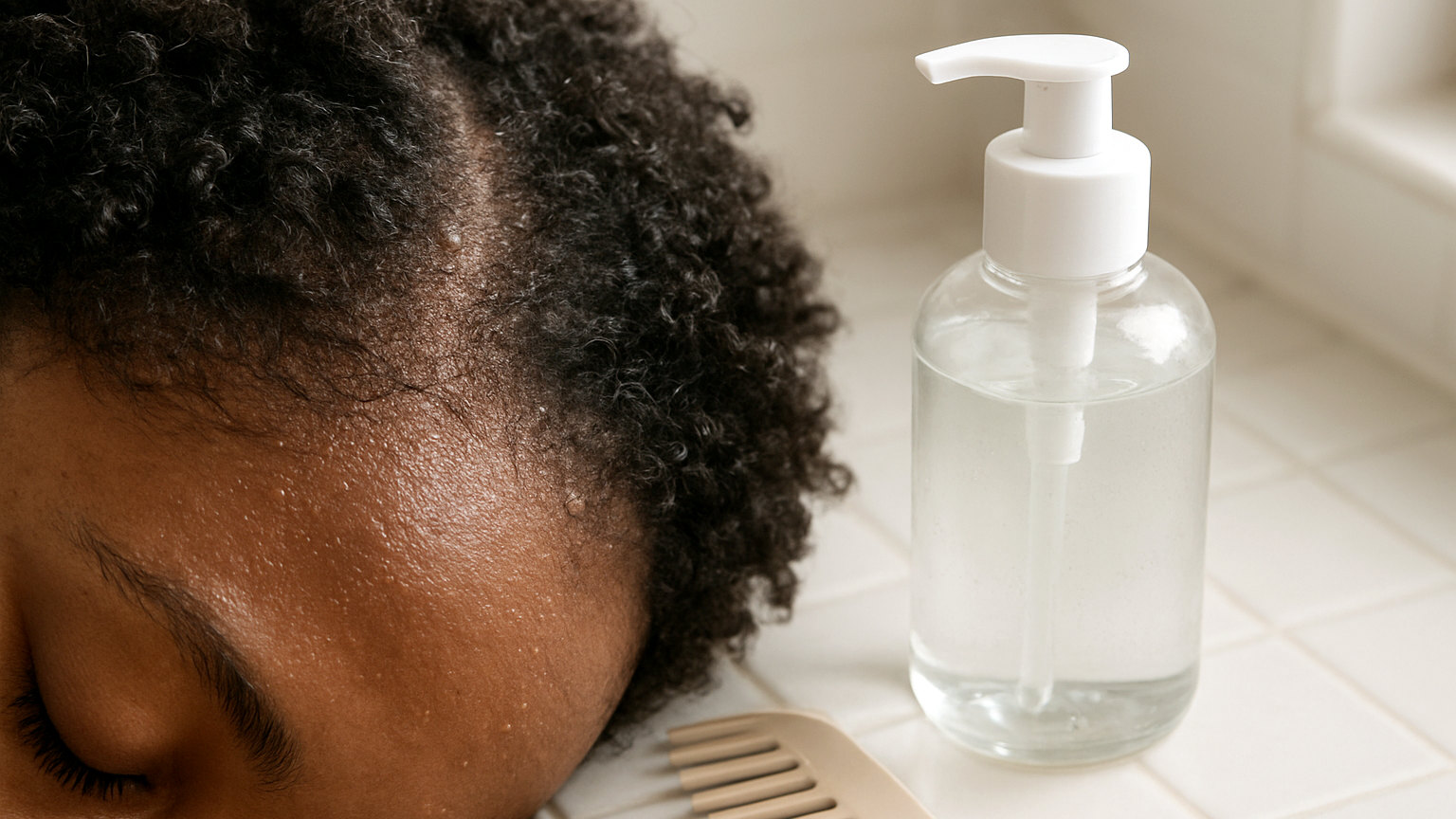
Sweat itself does very little to the scalp. What matters is what happens to it afterwards, and the common responses of washing aggressively every day or not washing at all both cause problems.
What does sweat actually do?
Sweat is mostly water and salt, and on its own it is not damaging. It is slightly acidic, which is compatible with a healthy scalp.
The problems come from what it does in combination. Sweat left to dry creates a warm, humid environment that suits the malassezia yeast involved in dandruff. Salt left behind is drying to the hair shaft. And sweat mixes with sebum, product residue and dead skin to form the build-up that blocks follicle openings.
Occlusion adds to it: hats, headbands, helmets and hair tied tightly all trap heat and moisture against the scalp.
Should you wash after every workout?
Not necessarily with shampoo. Rinsing thoroughly with water removes most sweat and salt and is considerably gentler than a full wash.
A reasonable pattern for someone exercising most days is a proper shampoo every second or third session, with a water rinse in between, and conditioner on the lengths each time.
What is worth avoiding is leaving sweat to dry in the hair and going about the day, which is where the flaking and itching come from.
What about co-washing?
Washing with conditioner alone can work for dry or curly hair, and it is a poor choice for a sweaty scalp on its own.
Conditioner has limited cleansing ability and adds material to a scalp that already has residue to shift. Used between proper washes it is reasonable; used exclusively it tends to produce build-up.
Does sweat cause hair loss?
Not directly, and this worry is common enough to address plainly. There is no mechanism by which sweat damages follicles.
What can contribute indirectly is prolonged scalp inflammation from untreated seborrhoeic dermatitis, or traction from tight styles worn for exercise. Both are manageable.
Exercise itself is associated with better circulation and lower stress, both of which are favourable for hair.
How should you tie hair for exercise?
Loosely, and not always in the same place. Tight ponytails worn daily for training are a recognised cause of traction alopecia at the hairline.
Use fabric-covered bands rather than elastics with metal joins. A loose plait distributes tension better than a ponytail. Vary the position between sessions.
Take hair down promptly afterwards rather than leaving it tied for the rest of the day, which extends the tension unnecessarily.
What about swimming?
Chlorine and salt water both strip lipids from hair and can irritate the scalp.
Wet hair with clean water before entering the pool, so it absorbs less chlorinated water. Apply a leave-in conditioner as a barrier. Wear a cap if you swim regularly.
Rinse immediately afterwards, and use a chelating shampoo every two to four weeks during a swimming season to remove accumulated chlorine and minerals.
What if your scalp flares with exercise?
Frequent flaking and itching after training usually points to seborrhoeic dermatitis rather than to sweat itself, since heat and humidity encourage the yeast involved.
An antifungal shampoo used two or three times a week, left on for five minutes, generally settles it. Washing more promptly after sessions helps considerably.
If a headband or helmet is involved, wash it regularly, since it holds sweat and bacteria against the skin at every session.
What about washing hair before rather than after?
Worth considering if you exercise in the evening and would rather not wash at night. Sebum offers some protection to the hair shaft, and washing beforehand removes it just before the hair is exposed to sweat and friction.
Rinsing afterwards without shampoo, then washing properly the following morning, suits many people better than a full wash at the end of a session. What matters is that sweat is not left in place for a full day and night.
Does dry shampoo work after a workout?
For appearance, briefly. It absorbs oil and adds texture, and it does nothing about sweat, salt or the bacteria acting on them.
Used to stretch a day it is fine. Used for several consecutive days after training, it accumulates on a scalp that has also had sweat left on it, which is a reliable route to itching and folliculitis.


