
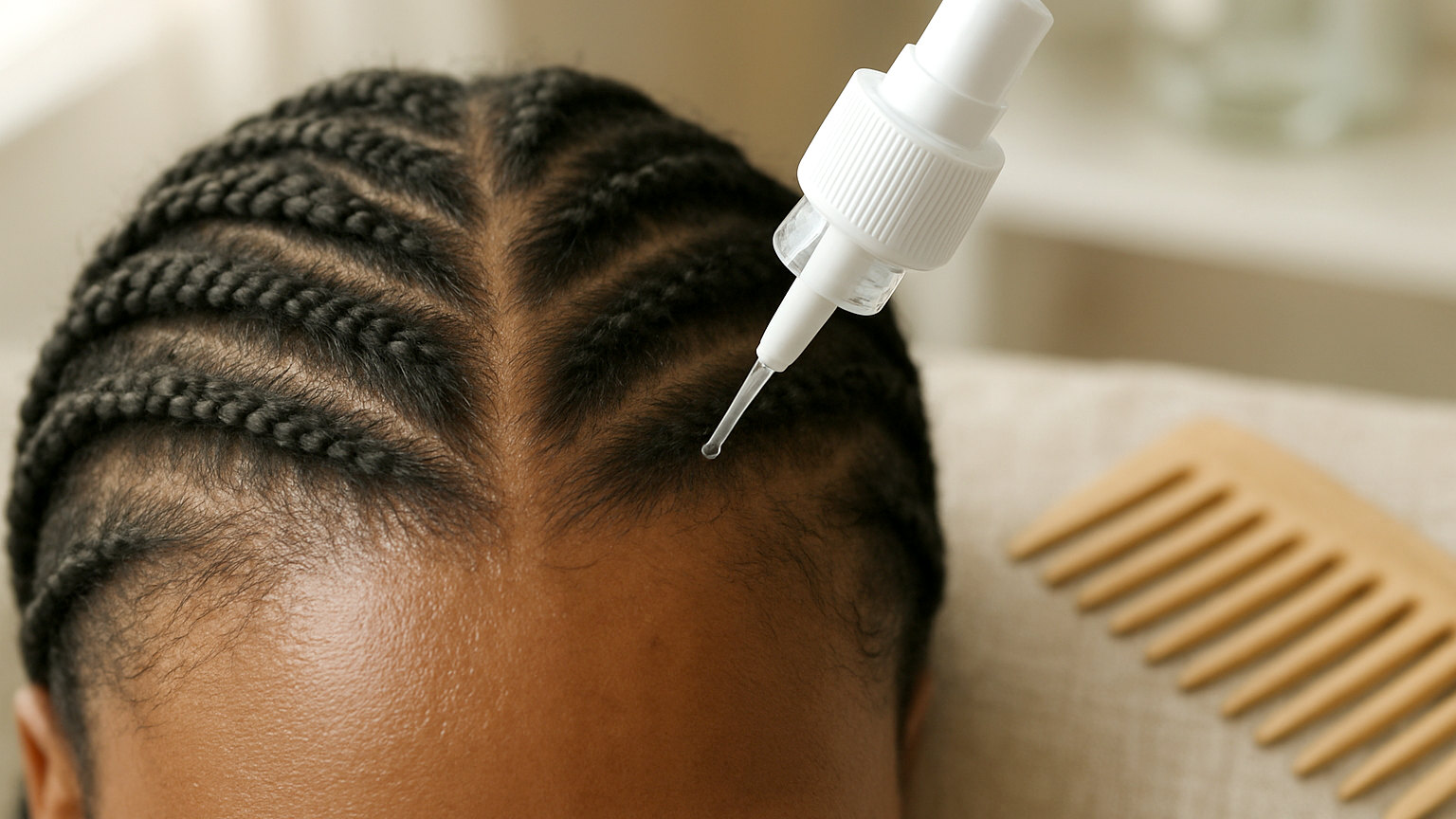
Protective styles reduce handling of the hair and can be demanding on the scalp, which is the part most often neglected while a style is in. The two most common problems, build-up and tension, are both preventable.
Should you wash while the style is in?
Yes, and this is the step people most often skip for fear of disturbing the style or causing frizz.
The scalp continues producing sebum and shedding skin cells regardless of what the hair is doing. Left for six or eight weeks unwashed, that accumulates, which causes itching, flaking and in some cases folliculitis.
Every one to two weeks is a reasonable interval, adjusted for how oily your scalp is and how active you are.
How do you wash without ruining the style?
Dilute shampoo with water in an applicator bottle, which lets you apply it directly to the scalp in sections rather than lathering the whole head.
Use the pads of your fingers to massage the scalp, not your nails. Rinse thoroughly, for longer than feels necessary, since residue trapped under a style is worse than residue on loose hair.
Squeeze water out with a microfibre towel rather than rubbing, and dry the scalp properly. A hooded dryer or a blow dryer on cool helps, since a damp scalp under a style for hours encourages the yeast involved in flaking.
What should you use between washes?
A light leave-in spray or a diluted witch hazel or astringent applied to the scalp can relieve itching without adding weight.
A small amount of light oil, such as jojoba, on a genuinely dry scalp. Heavy oils and butters are the common mistake, since they sit on the scalp, attract lint and feed the yeast that causes flaking.
Avoid dry shampoo, which accumulates rapidly and is difficult to remove from a braided scalp.
How do you deal with itching?
First, work out whether it is dryness, build-up or tension, since the treatments differ.
Itching from a newly fitted style is usually tension and settles within a few days. Itching that develops after two or three weeks is more likely build-up and responds to washing. Itching with visible flaking and pink skin is likely seborrhoeic dermatitis and responds to an antifungal shampoo used in the same diluted, targeted way.
Scratching with nails or a comb end damages the scalp and can cause folliculitis. A cotton bud with a little astringent, or gentle pressure with a fingertip, is safer.
How tight is too tight?
If it hurts, it is too tight. That is the whole rule, and it is worth saying plainly because tenderness after fitting is often treated as normal.
Small bumps or pustules along the hairline within days of fitting, a headache that arrives with the style, or visible tension on the skin at the roots all mean it is too tight and should be loosened or taken out.
Sustained tension causes traction alopecia, which becomes permanent, and the hairline is where it appears first.
How long should a style stay in?
Six to eight weeks as a maximum for braids and twists, and less for anything heavy.
Beyond that, new growth creates tension where it meets the braided section, and shed hairs accumulate and matt at the base. Take-down becomes considerably more damaging the longer it is left.
Locs are a different case with their own maintenance schedule, though the same principles apply to retwisting: too tight and too frequent causes traction damage at the root.
What should happen between styles?
A break of one to two weeks, with the hair washed thoroughly, deep conditioned, detangled gently and trimmed if needed.
This is also the moment to look at the scalp and hairline properly in a mirror, checking for thinning, small bumps or areas where the skin looks smooth and shiny. Going straight from one style into the next means nobody ever inspects it, which is how gradual damage goes unnoticed for years.


