
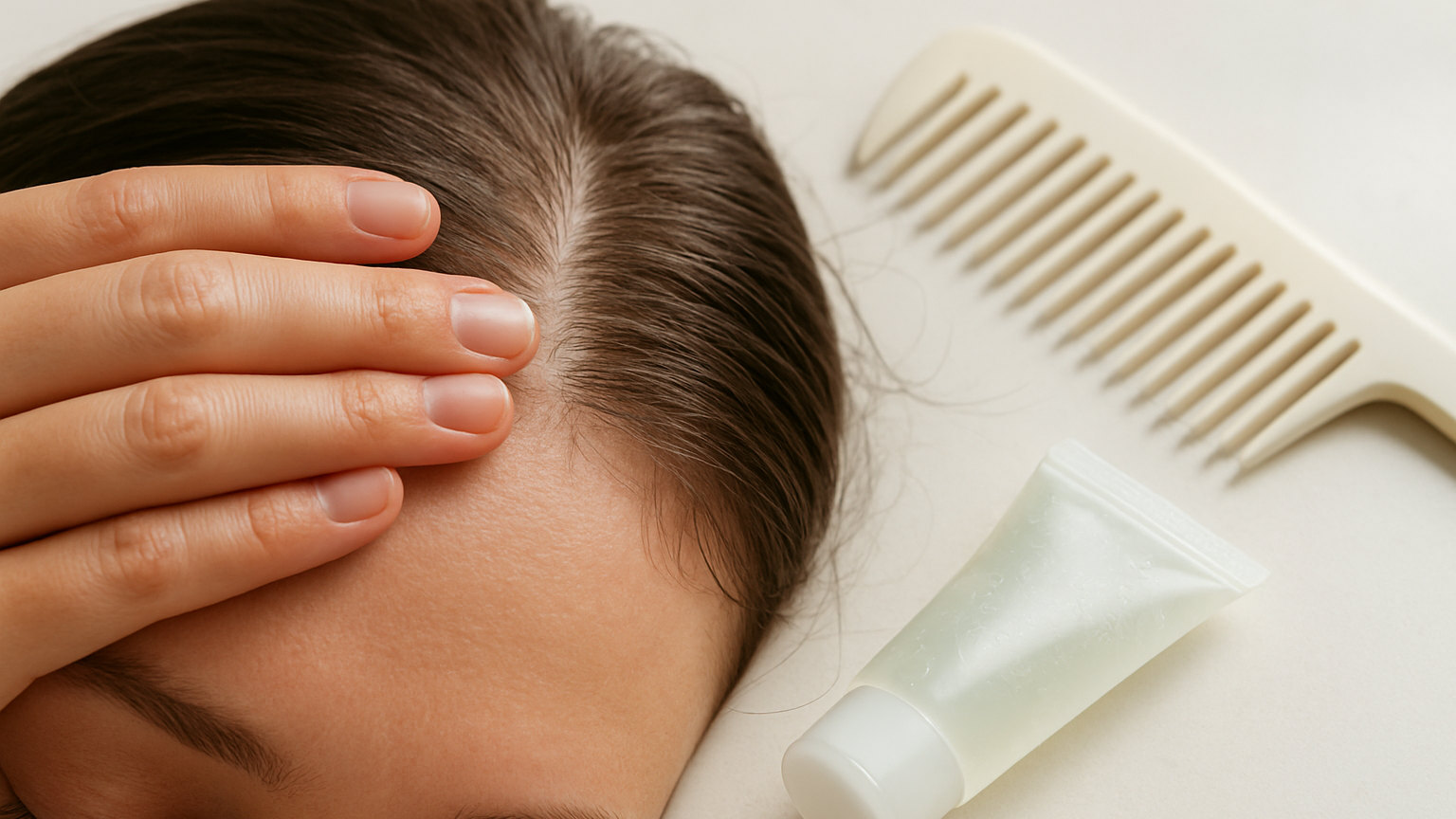
Scalp tenderness without any visible rash is a common complaint and a genuinely under-discussed one. It has several distinct causes, most are straightforward, and the combination of soreness with hair loss is the one worth acting on.
What are the common causes?
Traction from styling, which is the most frequent and the easiest to fix. Tight ponytails, buns, braids and extensions all pull on follicles, and the resulting ache often persists for hours after the style comes down.
Tension headache and neck muscle tightness, which refer pain to the scalp. Anyone who works at a screen or clenches their jaw will recognise this pattern.
Inflammatory scalp conditions: seborrhoeic dermatitis, psoriasis and folliculitis all cause tenderness, usually with visible signs.
Sunburn, which is easily missed on a parting or a thinning crown.
What is trichodynia?
Pain or discomfort in the scalp, often described as burning, tingling or tenderness at the hair roots, without any visible abnormality.
It is strongly associated with hair loss, particularly telogen effluvium and pattern hair loss, and is reported by a substantial proportion of people experiencing shedding. The mechanism is not settled; theories include inflammation around the follicle and altered nerve signalling.
It is real rather than imagined, and it frequently improves as the underlying hair loss settles.
Why does it hurt when you change your parting?
Because hair held in one direction for a long period develops a habitual lie, and the follicles are used to that angle. Moving the parting pulls each follicle the other way.
The discomfort usually settles within a day or two. Changing the parting periodically is worth doing anyway, since it distributes wear and prevents one area of scalp taking all the sun exposure.
Can hair products cause it?
Yes, and it is a common cause of tenderness with no obvious rash.
Contact dermatitis from a shampoo, dye or styling product can produce a burning or stinging sensation before any visible redness appears. Methylisothiazolinone and fragrance are the usual culprits.
Hair dye is a particular one to watch, since a reaction to paraphenylenediamine can begin as scalp tenderness and progress to significant swelling. Any tenderness after dyeing should be taken seriously.
Is it linked to hair loss?
Often, and this is the association worth knowing. Many people report scalp tenderness in the weeks before or during a shedding episode.
It is also a feature of some scarring alopecias, where inflammation around the follicle causes both pain and permanent destruction of the follicle. Frontal fibrosing alopecia and lichen planopilaris both commonly present with burning, itching or tenderness.
That is why soreness combined with hair loss should be assessed rather than waited out, since scarring conditions are irreversible once established and early treatment preserves what remains.
What can you do about it?
Loosen everything. Wear hair down or in loose styles for a fortnight and see whether it settles, which will identify traction as the cause quickly.
Stop any product introduced in the preceding weeks. Massage gently, which relieves tension-related soreness. Address neck and jaw tension if that is contributing.
Use a gentle fragrance-free shampoo while working out the cause, and avoid heat styling on tender areas.
When should you see a GP?
If soreness comes with hair loss, redness, scaling or pustules. If it follows hair dye, particularly with any swelling. If it is severe, persistent beyond a few weeks, or getting worse.
If there is any area where the scalp looks smooth and shiny with loss of visible follicle openings, that suggests scarring and warrants prompt referral.
Scalp pain with sudden severe headache, visual changes or jaw pain when chewing needs urgent attention, since giant cell arteritis presents this way in older adults and is a medical emergency.
Does washing help or hurt a sore scalp?
Usually helps, provided the product is gentle. People often reduce washing when the scalp is tender, which allows sebum and residue to accumulate and generally makes matters worse.
Use lukewarm water, a fragrance-free shampoo, and fingertips rather than nails. Avoid hot water, which increases inflammation, and avoid scrubbing at the tender area. If washing itself causes pain rather than relieving it, that points toward an inflammatory condition and is worth mentioning at an appointment.


