
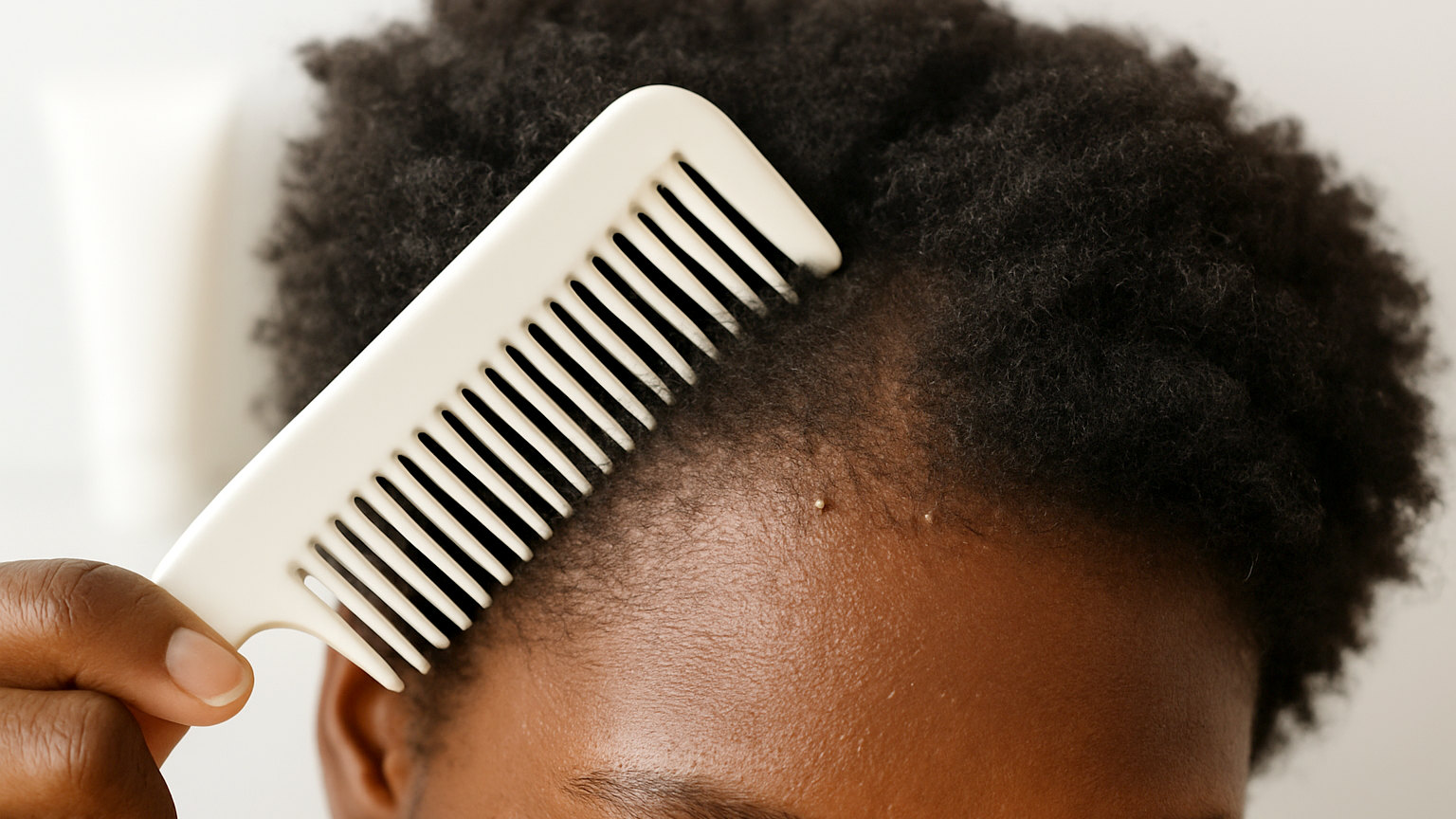
Spots on the scalp are common and frequently misidentified. Most are folliculitis rather than acne, some are fungal rather than bacterial, and the treatments differ enough that guessing wastes months.
What is the difference between scalp acne and folliculitis?
Acne involves a blocked follicle: sebum and dead cells form a plug, bacteria multiply behind it, and inflammation follows. It produces a mix of blackheads, whiteheads and deeper spots.
Folliculitis is inflammation of the follicle itself, usually from bacterial or fungal infection, often after damage from friction, scratching or shaving. It produces small pustules centred on hair follicles, frequently itchy or tender.
On the scalp, folliculitis is considerably more common, and the giveaway is that each spot has a hair emerging from it.
What causes it?
Occlusion and friction. Hats, helmets, headbands and sweatbands worn for long periods. Sleeping on unwashed pillowcases. Tight styles that pull and irritate.
Product build-up blocking follicle openings, particularly from heavy oils, waxes and dry shampoo. Sweat left to dry after exercise.
Scratching, which breaks the skin and introduces bacteria. And shaving or clipping, which is why folliculitis is common on the back of the neck and on shaved heads.
How do you know if it is fungal?
This matters, because fungal folliculitis does not respond to antibacterial treatment and is frequently treated for months as if it were acne.
The signs are bumps that are strikingly uniform in size, itchy rather than sore, clustered rather than scattered, and without any blackheads or whiteheads mixed in. It worsens in heat and humidity, and after antibiotic treatment, which removes competing bacteria.
It responds to antifungal treatment, and ketoconazole shampoo used as a scalp treatment two or three times a week often clears it within a few weeks.
What can you do at home?
Wash more often, particularly after exercise, since sweat and sebum left in place are a large part of the problem.
Use a shampoo containing salicylic acid to keep follicle openings clear, or an antifungal such as ketoconazole or zinc pyrithione if fungal involvement is suspected.
Keep heavy products off the scalp. Wash pillowcases weekly, and hats and headbands regularly. Avoid tight styles while it settles.
Do not pick or squeeze, which spreads the infection to adjacent follicles and can leave scarring, which on the scalp means permanent bald spots.
When should you see a GP?
If spots are large, painful, or filled with pus rather than small pustules. If they are spreading. If there is swelling, warmth or fever, which suggests a deeper infection.
If there is hair loss from the affected areas, which is the most important sign. Some forms of folliculitis are scarring and destroy follicles permanently, so persistent inflammation with hair loss should be assessed promptly.
And if four to six weeks of sensible home treatment has changed nothing.
What are the more serious forms?
Folliculitis decalvans, a chronic scarring condition producing pustules, crusting and permanent hair loss in expanding patches, which needs dermatology input.
Dissecting cellulitis, which produces deep, boggy nodules and interconnected tracts, and also scars.
Acne keloidalis nuchae, causing firm bumps at the back of the neck that can develop into keloid scars, most common in men with tightly curled hair and often triggered by close clipping.
All three need medical treatment, and all three are better addressed early.
Does hair type change the risk?
Tightly curled hair is more prone to ingrown hairs, since a curved follicle makes it easier for a hair to re-enter the skin, and ingrown hairs at the nape are a common starting point for folliculitis.
Close clipping increases this considerably, which is why the back of the neck is such a frequent site. Leaving hair slightly longer, and clipping with the grain rather than against it, reduces it.
Do scalp spots cause hair loss?
Ordinary folliculitis usually does not, and the hair regrows once the inflammation settles. Repeated or deep infection is a different matter.
Inflammation that persists around a follicle for months can lead to scarring, and a scarred follicle is destroyed permanently. That is why a spot that keeps recurring in the same place, or an area where spots have left smooth shiny skin without visible follicle openings, should be assessed rather than treated with another shampoo.


