
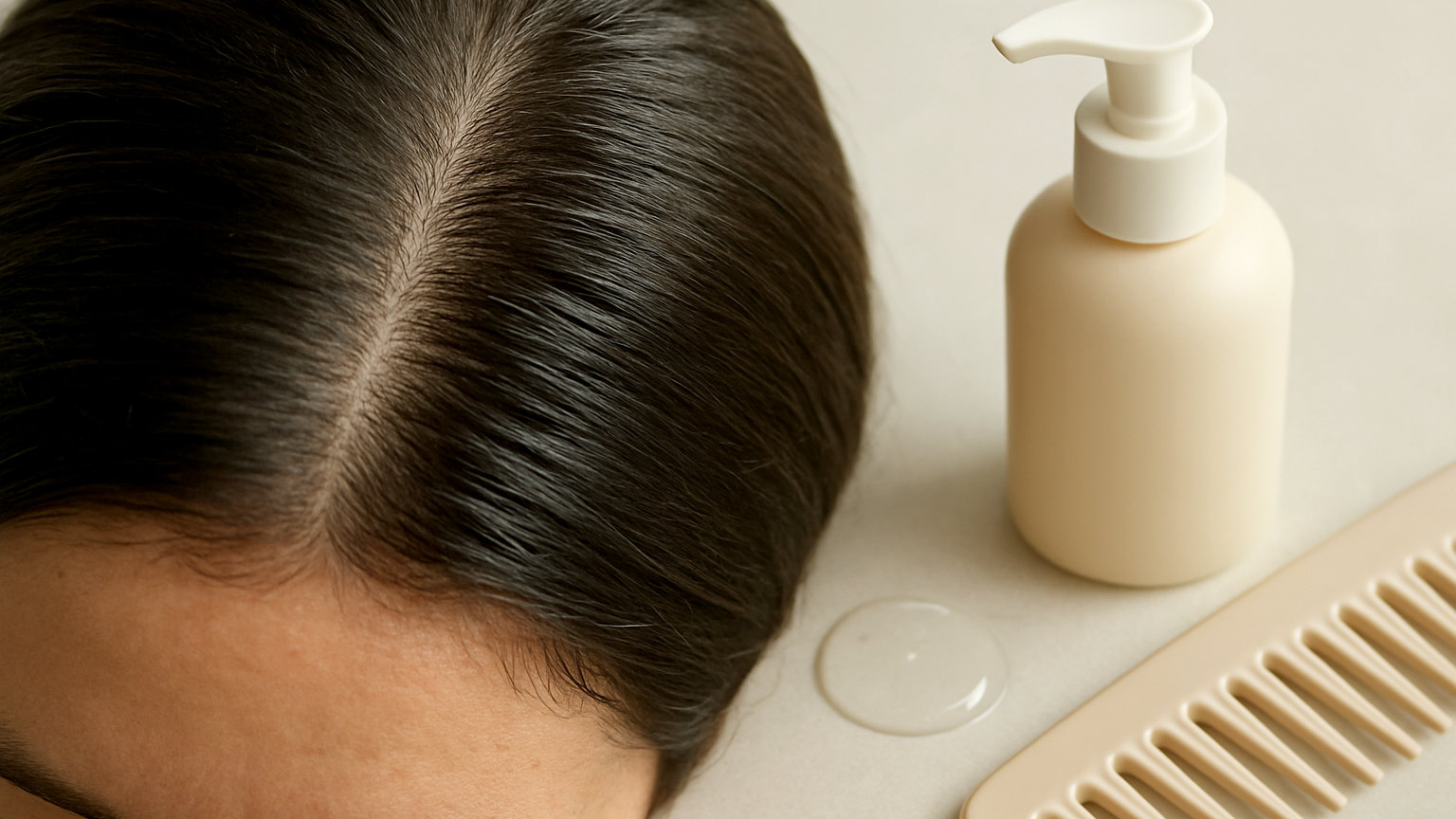
An oily scalp is largely determined by things you cannot change, and the most widely repeated advice about it is wrong. Washing less does not retrain your scalp, and believing that it does keeps a great many people uncomfortable for months.
What determines how much oil you produce?
Genetics first: the number and size of your sebaceous glands are inherited.
Androgens, which stimulate the glands directly. This is why oiliness peaks in the late teens and twenties, fluctuates across the menstrual cycle, and declines with age.
Temperature and humidity, which increase output measurably, so most people are greasier in summer. Stress, through cortisol. And to a modest extent diet, particularly a high glycaemic load.
Does washing less reduce oil production?
No. Sebaceous glands respond to hormonal signals, not to how recently the surface was cleaned. There is no feedback mechanism by which a gland detects clean skin and produces more.
What happens when people stretch their washes is that oil accumulates and becomes more visible, they endure an unpleasant fortnight, then adapt to the new appearance and conclude their scalp has rebalanced.
The exception is that harsh shampoo can damage the scalp barrier, and a damaged barrier does increase oil production. That is an argument for a gentler shampoo, not for washing less often.
Why does hair look greasy so quickly?
Because of how oil travels rather than how much is produced.
Sebum moves down the hair shaft, and it moves easily along straight, fine hair. Someone with straight fine hair looks greasy within a day at the same sebum output that leaves someone with coily hair looking dry at the ends.
Fine hair also has more strands per square centimetre, so there is more surface for the oil to coat.
What actually helps?
Washing as often as you need to, with a gentle shampoo applied to the scalp rather than the lengths. Daily washing with a mild formula is entirely reasonable and better than every third day with something stripping.
Niacinamide and zinc in scalp products, both of which have some evidence for reducing sebum. Salicylic acid two or three times a week to keep follicle openings clear.
Keeping conditioner off the roots, which is one of the most common self-inflicted causes of greasy roots.
Blotting or dry shampoo between washes, with dry shampoo limited to two consecutive days.
What makes it worse?
Stripping shampoos and alcohol-heavy products, which damage the barrier and prompt compensatory production.
Touching your hair frequently, which transfers oil from the hands and distributes scalp oil down the lengths. Heavy conditioners and oils near the roots.
Hats and helmets worn for long periods, which trap heat and increase output. And dry shampoo used for days on end, which accumulates and requires more aggressive washing to remove.
Is an oily scalp bad for hair?
Not inherently, and there are some advantages. Sebum conditions the hair as it travels down the shaft, which is why oily scalps rarely accompany dry, brittle lengths.
The problems come from what accompanies it. Malassezia yeast feeds on sebum, so dandruff and seborrhoeic dermatitis are more common. Follicle openings can become blocked, causing spots. And build-up accumulates faster.
When does oiliness suggest something else?
If it arrives suddenly in adulthood without an obvious cause, particularly alongside acne, irregular periods or unwanted facial hair, which can suggest a hormonal condition worth investigating.
If it comes with flaking and redness around the nose and brows as well as the scalp, that is seborrhoeic dermatitis and needs antifungal treatment rather than oil control.
And if the scalp is simultaneously oily and tight or sore, the barrier is likely damaged from over-washing with something harsh, and the answer is a gentler product rather than a stronger one.
Does it change with age?
Substantially, and usually in one direction. Sebum production peaks in the late teens and twenties and declines steadily afterwards, more sharply in women after menopause as oestrogen falls.
Many people who spent decades managing an oily scalp find it becomes normal or dry in their forties and fifties. The routine needs to change with it, and continuing to use products for oily hair on a scalp that no longer produces much oil is a common cause of self-inflicted dryness and flaking.


