
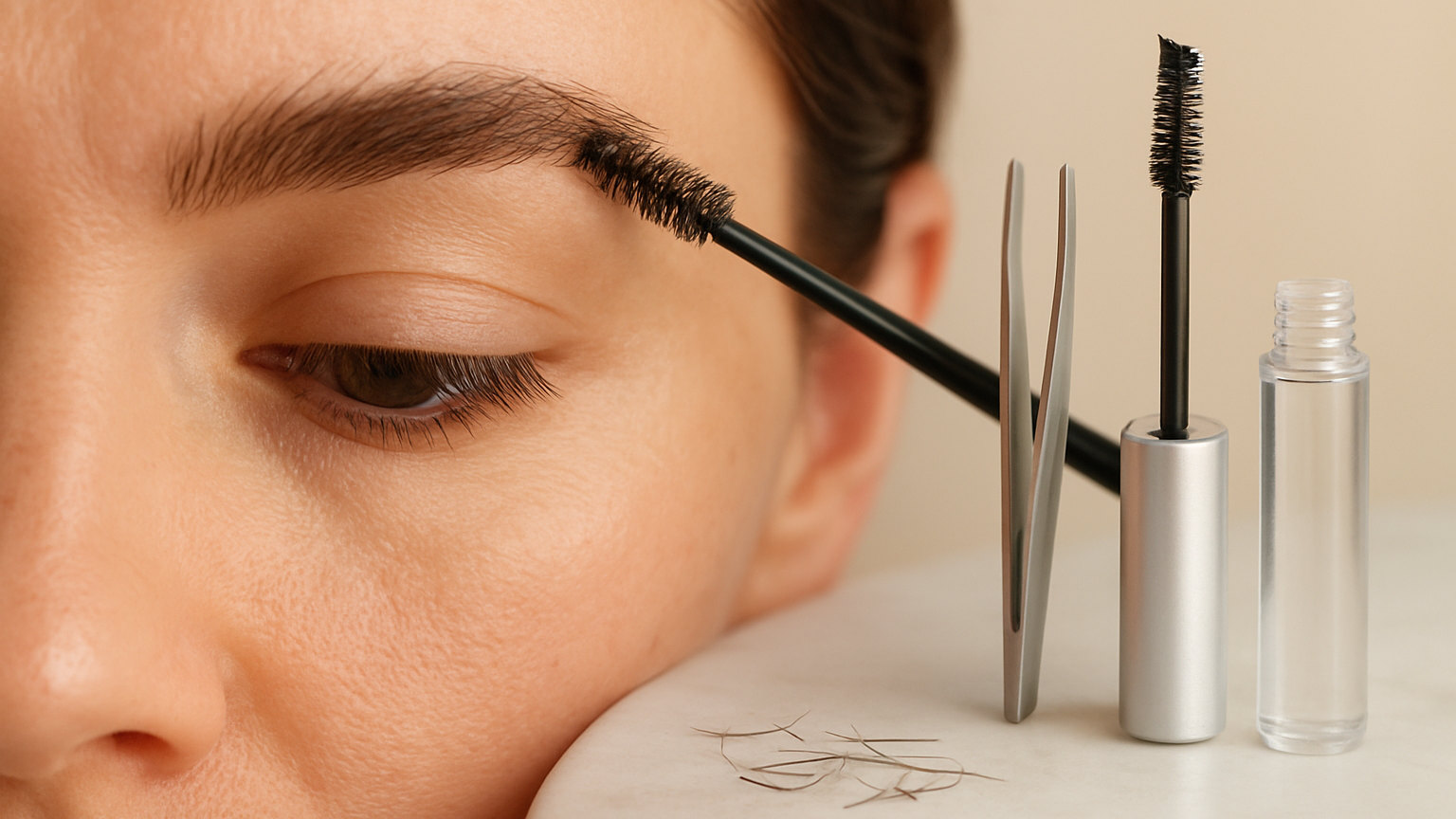
Brows need less regular attention than most makeup areas and benefit more from consistency. The daily part is short and the weekly part is mostly about not doing too much.
What is the daily routine?
Brush upward with a spoolie, which takes ten seconds and reveals the shape.
Fill any gaps with short strokes, working from the arch outward then back to the front.
Brush through again to blend.
Set with a clear or tinted gel, brushing upward at the front and outward along the tail.
Around ninety seconds, and the two brushing steps matter as much as the filling.
What is weekly?
Trim any hairs sticking out above the natural line, brushing upward and cutting only what protrudes.
Tidy obvious strays well outside the natural shape, sparingly.
Clean the angled brush, particularly if you use a pomade.
Look at both brows together in daylight and check the tails are level, which is what tends to drift.
What is occasional?
A professional shape every two to three months if you have one, which is more accurate than home tidying and reduces the temptation to over-pluck between times.
A brow tint every three to four weeks if you use one, which removes the colour step daily.
Re-mapping every year or two, since brows drop with age and a shape that suited at thirty may not at fifty.
Replacing pomades and gels around twelve months, since both dry out and start flaking.
What should you use at night?
Remove brow product properly, since pomade and long-wear formulas accumulate at the root and along the skin.
A brow oil, castor oil or plain facial oil brushed through, which keeps hairs flexible and reduces breakage.
Brushing them through before bed, which distributes natural oil.
None of this is essential, and it makes a visible difference over months for anyone with sparse or brittle brows.
What should you own?
One filling product matched properly to your colouring: powder, pencil or pomade depending on how much hair you have.
A brow gel, clear or tinted.
A spoolie and an angled brush.
Small scissors and decent tweezers for the weekly tidy.
Six items in total, four of them one-off purchases.
What should you leave alone?
Plucking, beyond obvious strays. Over-plucking is the one brow error that cannot be undone the next morning, and brow hair regrows slowly and sometimes not at all.
Anything above the brow line, since removing hair there changes the shape in ways that are difficult to correct.
Waxing at home, which removes more than intended.
Following a trend with hair removal rather than with product.
How does it change with age?
Brows thin and lose pigment, so a lighter product applied more carefully.
The tail drops, so lifting it becomes the most valuable adjustment.
Occasional coarse wiry hairs appear, which should be trimmed rather than plucked since density is the scarce commodity.
Loss of the outer third specifically, rather than general thinning, is worth mentioning to a GP, since it is a recognised sign of an underactive thyroid.
What matters most?
Getting the shade right, which does more than any technique.
Brushing through, before and after, which costs nothing.
Setting them, since brows that move undo the work by mid-morning.
And leaving the hair alone, which keeps every option open and is the only part of this that is irreversible if you get it wrong.
What is the minimum that still works?
Brushing them through with a spoolie and nothing else, which takes ten seconds and visibly improves most brows.
Adding a tinted gel makes it twenty seconds and covers colour, shape and hold in one product.
Anyone who finds brows a chore is better served by owning one gel and using it daily than by owning a palette and using it occasionally.
How do you know if it is working?
Photograph your brows every couple of months, particularly if you are growing them out, since progress is invisible day to day.
Check in daylight rather than bathroom light, from a metre away rather than close up.
And judge them as part of the whole face rather than in isolation, since brows that look sparse in a magnifying mirror frequently look correct in conversation.


