
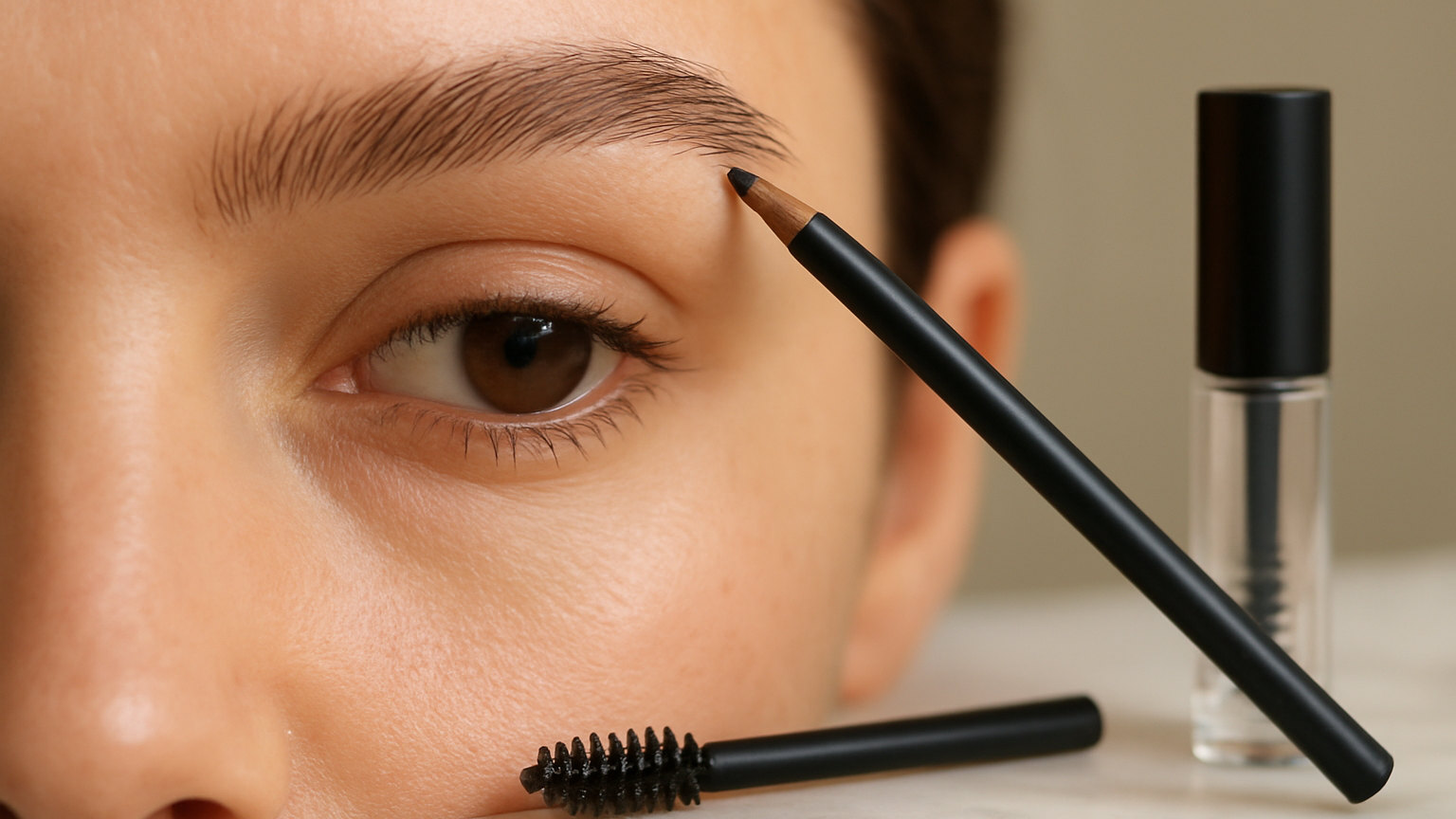
Over-plucked brows are extremely common, largely because a generation thinned them heavily in the nineties and early two thousands. Some regrowth is usually possible, and the timescale is longer than people expect.
Why do brows stop growing back?
Repeated plucking damages the follicle over time. Each removal causes trauma, and after enough repetitions the follicle can stop producing hair permanently.
How many repetitions varies considerably between individuals and between follicles.
Age also plays a part, since brows thin naturally from around the forties as hormone levels change.
Areas plucked occasionally usually recover; areas plucked consistently for years frequently do not.
How long does regrowth take?
Brow hair has a growth cycle of around four months, considerably shorter than scalp hair, which is why brows never grow long.
Visible improvement takes three to four months of not plucking at all.
A full assessment of what will return takes six to twelve months.
Most people give up somewhere in the first six weeks, when the brows look untidy and nothing much has appeared yet.
How do you get through the growing-out phase?
Do not pluck anything, including hairs that appear in unwanted places. Removing them restarts the clock on that follicle.
Trim rather than pluck if hairs are long or unruly.
Fill and shape with makeup, which covers the untidiness entirely.
Brush upward and set with gel, which makes patchy regrowth look considerably more even.
Photograph them monthly, since progress is invisible day to day and obvious across three months.
What actually helps regrowth?
Leaving them alone, which is the largest factor by a distance.
Brushing daily with a spoolie, which stimulates the area and distributes natural oils.
Castor oil, which is the traditional remedy. The evidence for growth is weak, and it conditions the hairs, reduces breakage and makes what is there look better.
Peptide brow serums, which have modest evidence for improving thickness and condition.
Bimatoprost, available on prescription, which has genuine evidence for stimulating growth and works only where follicles still exist.
What does not help?
Anything applied to a follicle that has stopped producing hair, since no topical product revives a dead follicle.
Shaving or trimming to make hair grow back thicker, which is a myth. Cutting a hair does not change the follicle.
Aggressive scrubbing or exfoliating the brow area.
Excessive tinting or lamination during the growing phase, both of which can cause breakage on fine regrowing hairs.
How do you cover the gaps meanwhile?
Two layers: a soft powder base to establish shape, then individual strokes on top with a fine pencil or pomade.
A shade lighter than you think, since gaps show pigment more clearly than filled brows.
Strokes only into bare areas, following the growth direction of the surrounding hairs.
Set with a tinted gel, which blends drawn and real hairs together.
Keep the shape softer than a defined one, since sharp edges on a built brow read as artificial immediately.
What if they do not come back?
Microblading or powder brows, which deposit pigment into the skin and last one to three years. They are tattoos, so practitioner choice matters enormously and the results of a poor one are difficult to remove.
Brow transplants, which move follicles from the scalp. Permanent, expensive and requiring regular trimming since scalp hair keeps growing.
Semi-permanent tinting, which darkens fine invisible hairs and makes sparse brows look denser.
And continuing with makeup, which is what most people do and is entirely reasonable.
When is it worth seeing a GP?
Brow loss that is sudden rather than gradual, or that affects a defined patch.
Loss of the outer third of the brows specifically, which is a recognised sign of an underactive thyroid.
Brow loss alongside scalp hair loss, eyelash loss, fatigue or weight change.
Any redness, scaling or itching in the brow area, which can indicate a skin condition rather than plucking damage.
How do you stop plucking in the meantime?
Remove the tweezers from the bathroom, which sounds trivial and is the most effective measure most people find.
Avoid magnifying mirrors entirely during the growing phase, since they make every stray hair look urgent.
Trim rather than pluck anything that bothers you, which addresses the untidiness without costing a follicle.
Book a professional shape at the three-month mark, which gives a fixed endpoint to hold out for and produces a better result than picking at them weekly.
What can you expect realistically?
Partial recovery is the usual outcome. Areas plucked occasionally generally return; areas thinned consistently for a decade frequently do not.
The tail is often the slowest and least complete, since it is where most plucking concentrates and where brows thin naturally with age anyway.
Most people find they get enough back to change what makeup has to do, which is a meaningful improvement even when it is not full restoration.


