
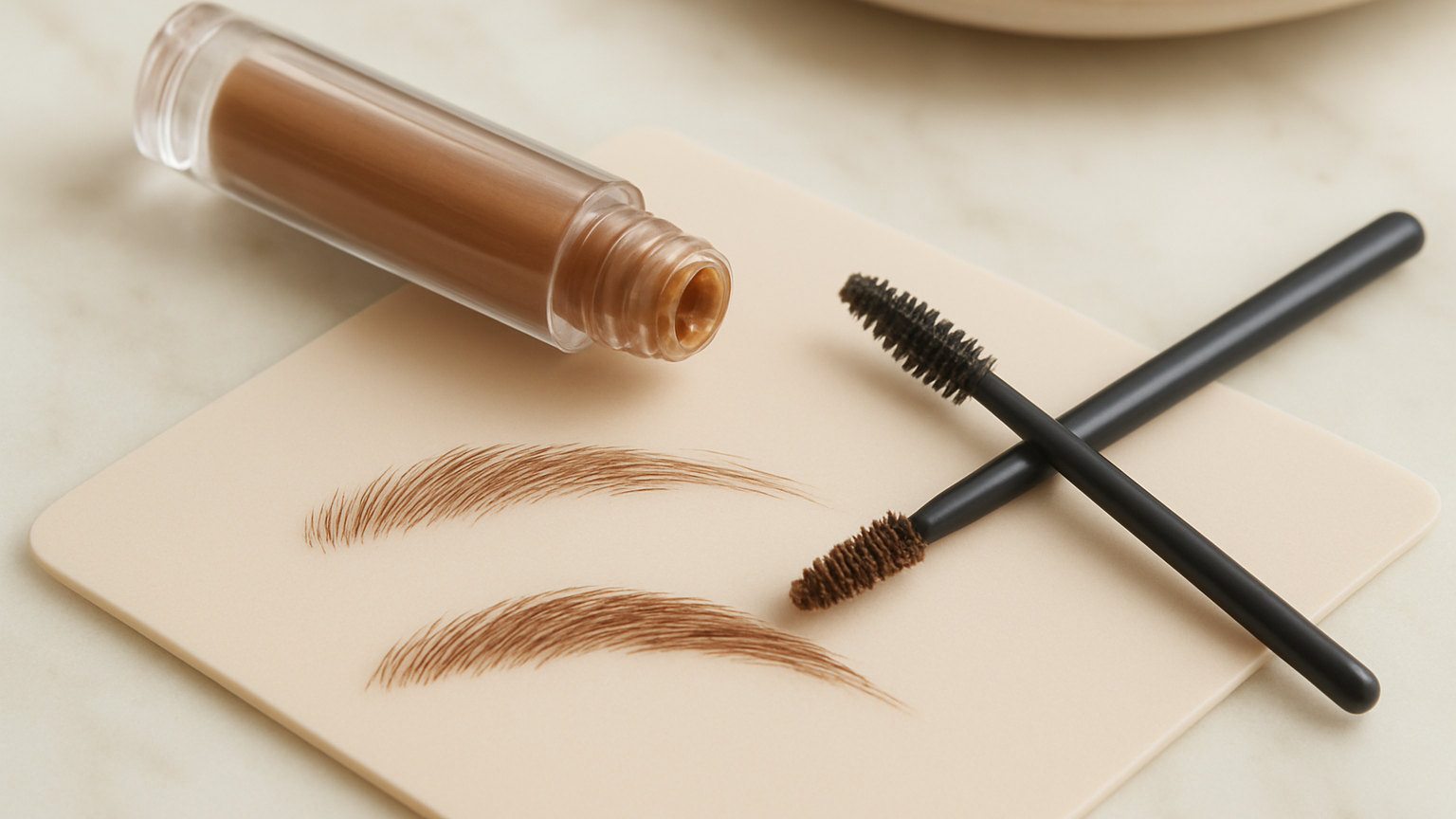
Brows can absorb ten minutes and rarely need to. One product, chosen to match how much hair you have, plus a spoolie, covers almost every ordinary day.
Which single product should you use?
Full brows: a tinted gel. Brushing the hairs into place and darkening them is the whole job.
Medium brows: a powder or a fine pencil, applied only where there are gaps.
Sparse brows: a pencil or pomade with a tinted gel over the top, which is two products and still under two minutes.
Grey or fair brows: a tinted gel, which does a surprising amount alone since the hairs are present and simply pale.
What is the two-minute routine?
Brush the brows upward with a spoolie, which shows the shape and the gaps.
Fill the gaps with short light strokes, starting at the arch and working out to the tail, then back toward the front with whatever remains on the brush.
Brush through again with the spoolie, which blends everything and softens edges.
Set with gel, brushing upward at the front and outward along the tail.
That is four steps and around ninety seconds.
What can you skip?
Mapping, once you know your own shape. It is worth doing properly once and then trusting.
Concealer around the brows, which is a finishing step for photographs rather than a daily one.
Multiple shades, which matter for a built brow and not for filling gaps.
Precision at the front, which should be soft anyway.
Perfect symmetry, which is neither achievable nor noticed.
What matters most in a hurry?
The spoolie. Brushing through before and after does more than the product, and it is the step people skip when rushing.
Getting the tails at the same height, which is what the eye actually notices.
Not going too dark, since a heavy brow applied quickly is more noticeable than a light one.
Setting them, since brows that move out of place by mid-morning undo the effort entirely.
What is the one-product option?
A tinted brow gel, if you have enough hair for it to work.
It fills apparent gaps by darkening pale hairs, holds the shape, and takes twenty seconds.
For anyone who wants to own one brow product, this is generally the one.
The exception is very sparse brows, where a pencil or pomade is doing the actual work.
How do you speed up the shade decision?
Own one shade that works rather than several that nearly do.
Taupe suits the widest range of colouring and is the safest single purchase.
If you are between shades, go lighter, since a light brow is forgiving of a quick application and a dark one is not.
What is worth doing weekly instead of daily?
Trimming any long hairs that stick out above the natural line, which keeps brows tidy for days.
Tidying obvious strays, sparingly.
Applying a brow oil at night, which keeps hairs flexible and easier to brush into place.
A brow tint every few weeks, which removes the colour step from the daily routine entirely.
What about doing nothing?
A legitimate option, particularly for anyone with naturally full even brows.
Brushing them through with a spoolie and nothing else takes ten seconds and makes a visible difference.
Groomed brows without product look considerably better than unbrushed brows with product, which is worth knowing on a morning when the answer is neither.
What makes a quick brow go wrong?
Going too dark, since a heavy brow applied fast is far more noticeable than a light one applied fast.
Skipping the final brush-through, which is what blends product into hair and softens the front edge.
Starting at the front, which deposits the most product exactly where brows should be softest.
Working in poor light, since warmth and heaviness only become obvious in daylight.
What should you keep where you can reach it?
The one product you actually use and a spoolie, in the same place, rather than in a bag that needs searching.
A spare spoolie in a coat pocket or a desk drawer, which handles the mid-afternoon touch-up that consists entirely of brushing them back into place.
The rest of the collection can stay wherever it lives, since a two-minute routine only works if the two items are to hand.


