
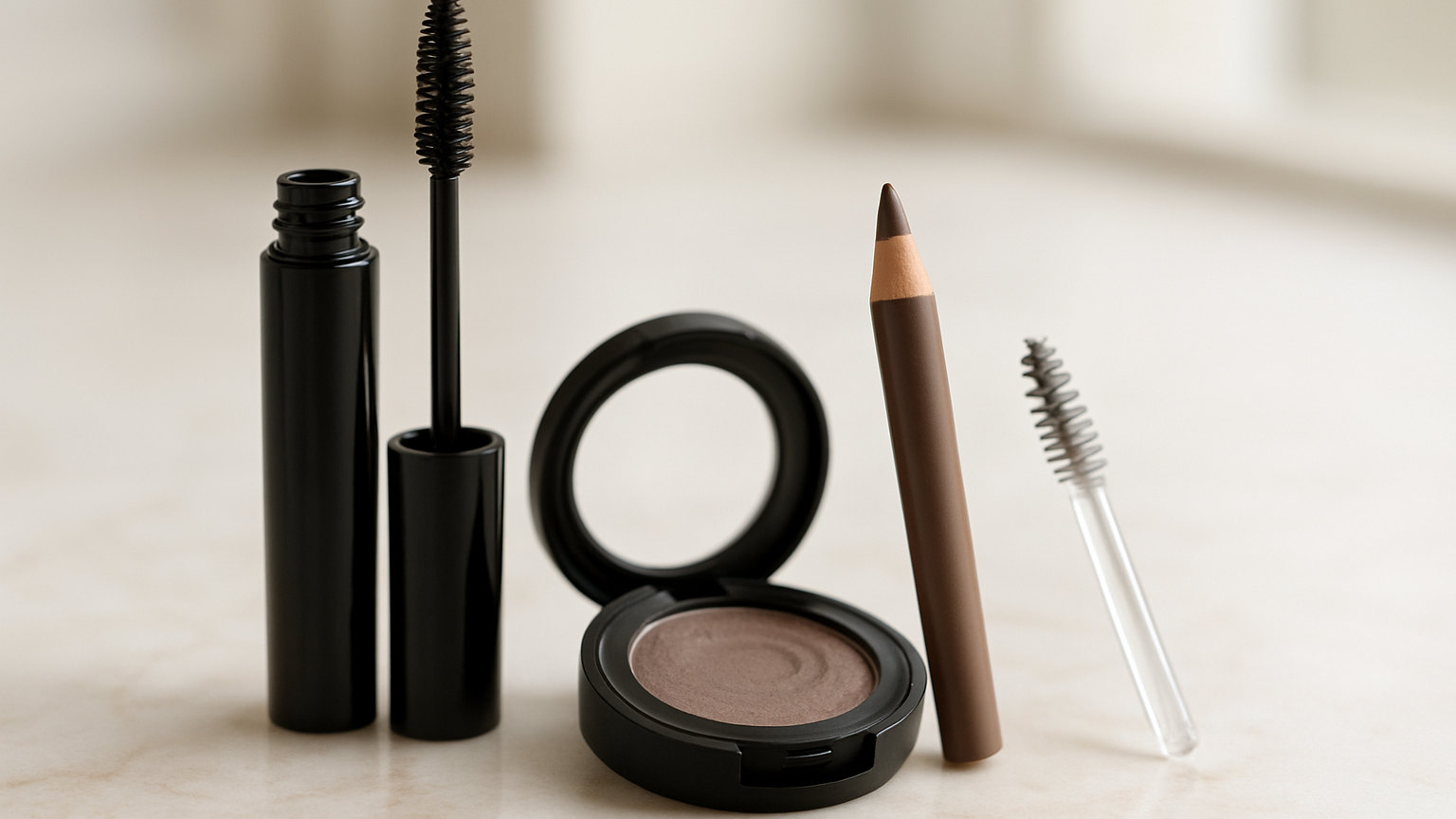
Eye makeup accumulates faster than any other category, largely through palettes. A short list covers almost everything, and knowing what each product is for prevents most of the accumulation.
What is the minimal kit?
Mascara, which does more for the eye than anything else.
A brow product: pencil, powder or tinted gel.
One neutral eyeshadow quad or a cream shadow stick.
A soft pencil liner, which can double as a smudged shadow.
Four products, and they produce everything from a three-minute face to a soft smoky eye.
What is worth adding?
An eyeshadow primer, if your lids are oily or shadow creases within hours.
A nude or beige pencil for the lower waterline, which opens the eye and costs very little.
A liquid or gel liner if you wear a defined line or a wing.
A lash curler, which is arguably the highest-value item in this entire category and is frequently missing.
Each of these should answer a problem you have rather than complete a collection.
What should a palette contain?
Four shades cover a complete look: a light matte, a mid-tone matte transition, a deeper matte crease shade, and one shimmer for the lid.
The most useful palettes are small ones where every shade gets used, rather than large ones with three usable and nine decorative.
Check the matte to shimmer ratio. A palette with no mattes cannot create dimension, which is why all-shimmer palettes disappoint.
Check that the neutrals match your undertone. Cool greys on warm skin read as muddy, and warm golds on cool skin can look sallow.
Which brushes do you need?
A fluffy blending brush, which does most of the work.
A flat shader brush for packing colour onto the lid.
A small pencil brush for the outer corner and lower lash line.
A spoolie for brows and for separating lashes.
A second clean blending brush used with no product, which softens edges and improves almost any eye look.
Five items, and sets of twenty are mostly padding.
How long do things last?
Mascara: three months from opening, without exception, since the wand carries bacteria into the tube with every use and eye infections are the commonest consequence of expired eye makeup.
Liquid and gel liner: three to six months.
Pencil liner: a year or more, and sharpening removes the contaminated surface layer each time.
Powder eyeshadow: two years or more, since it contains no water for bacteria to grow in.
Cream shadow: twelve months.
Anything that has changed texture or smell has gone regardless of the date.
Where is spending more justified?
Brushes, which last years and where cheap ones shed and blend poorly.
A lash curler, where the mechanism and the pad quality genuinely differ.
Where it is rarely justified: eyeshadow and liner, where budget ranges have improved enormously and use the same pigments, and mascara, which needs replacing quarterly regardless of price.
Pigment quality does vary, and the gap between mid-range and premium is far smaller than the gap between very cheap and mid-range.
What causes most of the waste?
Palettes bought for one or two shades.
Products bought for a look seen elsewhere rather than for something you will wear.
Buying a new product instead of learning to use one you own, which is the commonest pattern of all.
Mascara kept past three months, which clumps and flakes regardless of technique.
How do you build a kit that works?
Start with the four items and use them for a month, noting what you reach for.
Add one thing at a time, for a reason you can articulate.
Buy the small size of anything unfamiliar.
Review annually, discarding anything expired, anything unused for a year, and anything whose purpose you cannot explain.
And clean the brushes, which improves application more than any new product would.
Does anything need replacing on a schedule?
Two things beyond mascara. The rubber pad on a lash curler, which develops a groove and starts cutting lashes rather than curling them. Curlers come with spares that almost nobody uses.
Sponges and applicators that came with cream products, which are damp, porous and rarely cleaned.
Brushes last years if washed properly, and should be replaced when bristles shed persistently or the ferrule loosens.


