
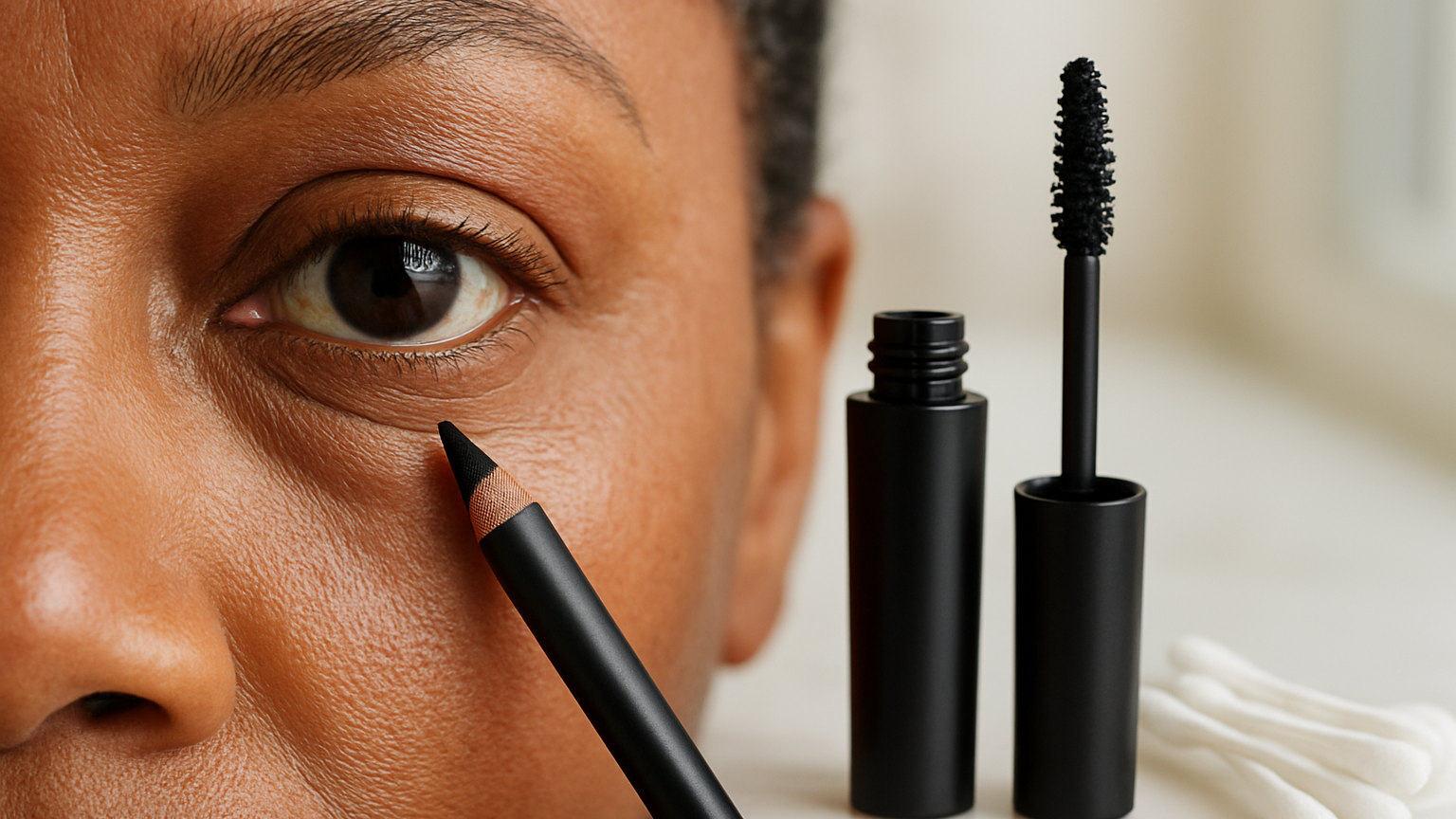
Eye makeup accounts for a disproportionate share of makeup-related problems, because it sits against mucous membrane, near tear ducts, and is applied with tools that go back into a dark warm tube afterwards.
What are the main risks?
Bacterial infection: conjunctivitis, styes and blepharitis.
Corneal abrasion, from a mascara wand or a pencil tip slipping.
Contact dermatitis of the eyelids, from preservatives, fragrance or specific pigments.
Meibomian gland dysfunction, from product blocking the oil gland openings along the lash line.
Lash damage, mostly from removal rather than from wearing.
Why does the three-month rule matter?
The mascara wand carries bacteria from the lashes into the tube with every use, and the environment inside is dark, warm and moist.
Studies swabbing used mascara have found substantial bacterial growth within a few months, and expired eye makeup is the commonest identifiable cause of makeup-related eye infection.
Three months from opening, without exception. Liquid and gel liners the same. Powder shadows last considerably longer, since they contain no water.
Do not pump the wand, which forces air in and accelerates drying and contamination.
Never use testers on your own eyes, and never share.
What is the risk with the waterline?
The waterline contains the openings of the meibomian glands, which produce the oil layer of the tear film.
Product applied there can block those openings, contributing to dry eye and meibomian gland dysfunction over time.
Research has found that eyeliner applied to the inner waterline migrates into the tear film within minutes, in considerably greater quantity than liner applied outside the lash line.
It is not a reason never to do it, and it is a reason to remove it thoroughly, to avoid it if you have dry eye, and to consider lining outside the lash line instead.
Anyone with recurrent styes, blepharitis or dry eye should avoid the waterline entirely.
What is blepharitis and how does makeup contribute?
Chronic inflammation of the lid margins, producing crusting at the lash base, gritty irritation, redness and gradual lash loss.
It is common, frequently undiagnosed, and worsened by product accumulating along the lash line and by incomplete removal.
Treatment is lid hygiene: warm compresses for five to ten minutes, then cleaning the lash line with a dedicated lid wipe or diluted baby shampoo on a cotton bud, daily.
It is managed rather than cured, and anyone with it should be particularly careful about removal and about waterline products.
How should you apply eye makeup safely?
Wash your hands first, which is the simplest measure and rarely done.
Do not apply in a moving vehicle, which is a recognised cause of corneal injury.
Sharpen pencils regularly, which removes the contaminated surface layer as well as giving a clean point.
Keep glitter and loose pigment away from the eye area unless specifically labelled as eye-safe, since cosmetic glitter can cause corneal scratches.
Do not use lip or nail products near the eyes, since the pigment approvals differ.
What about contact lenses?
Insert lenses before applying makeup and remove them before taking it off.
Choose products labelled as suitable for contact lens wearers, and avoid fibre-containing mascaras, which shed and get under lenses.
Avoid powder shadow with loose fallout, or apply it before inserting lenses.
Replace eye makeup more frequently rather than less.
Remove lenses immediately if the eye becomes red, painful or blurred, and see an optometrist rather than waiting.
How should you remove it?
Soak a pad in a bi-phase or micellar remover and hold it against the closed eye for twenty to thirty seconds, then wipe downward in one direction.
Use a cotton bud with remover along the lash line, which is the part that matters most for preventing blepharitis.
Never rub, and never sleep in eye makeup.
Follow with a gentle cleanse, and avoid getting facial cleanser in the eyes.
When should you see someone?
Any eye that is red, painful, light-sensitive or has changed vision, which needs same-day assessment rather than waiting.
A lump on the lid that is growing or not settling within a couple of weeks.
Persistent crusting, grittiness or lash loss, which suggests blepharitis.
Itching and swelling of the eyelids after using a product, which suggests contact dermatitis and means stopping it.
And any lash loss that is patchy or progressive, which has causes beyond makeup and is worth investigating.


