
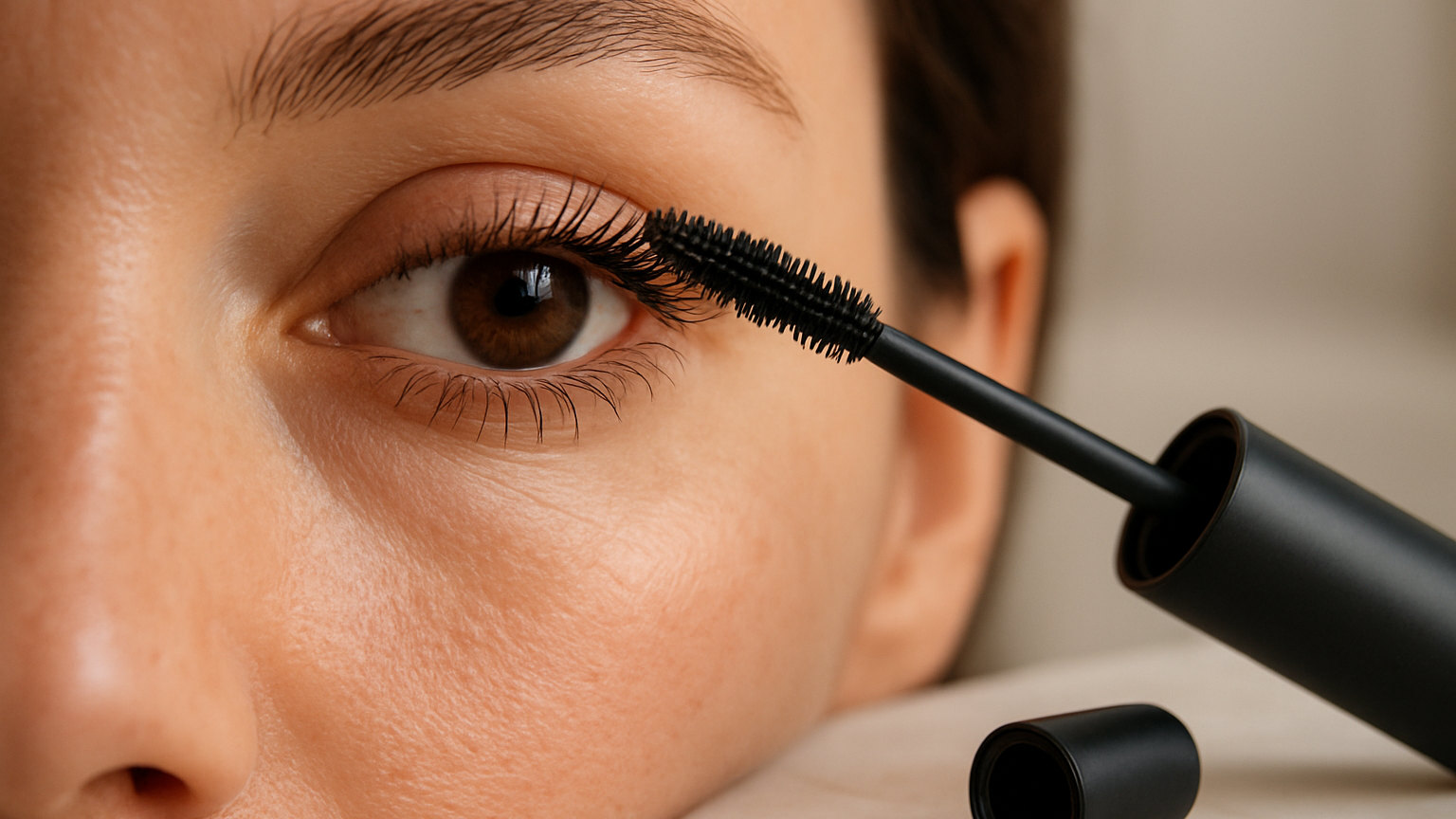
Mascara is the product most people would keep if they could only have one, and it is applied badly more often than any other. The wand shape determines the effect more than the formula does.
What do different wands do?
A large, dense bristle brush deposits the most product and builds volume.
A thin, tapered or comb wand separates lashes and lengthens without adding much bulk.
A curved wand lifts lashes and helps hold a curl.
A small wand suits lower lashes and inner corners, and anyone with short lashes who finds larger wands unwieldy.
Silicone or plastic bristles separate cleanly; natural fibre bristles hold more product and can clump.
If a mascara you like is clumping, the wand is more often the cause than the formula.
How should you apply it?
Wipe excess product off the wand against the neck of the tube rather than pumping, which forces air in and dries the product out.
Start at the base of the lashes and wiggle the wand side to side, which deposits product at the root where it creates the most impact.
Then sweep upward and outward through the length.
Apply a second coat while the first is still slightly wet, since applying over dry mascara is what produces clumps and flaking.
Use the tip of the wand held vertically for the inner corner and the lower lashes.
Should you curl lashes first?
Yes, always before mascara and never after. Clamping stiffened lashes is what snaps them.
Hold at the base for several seconds, release, move slightly along the lash and repeat, rather than forcing a single hard crimp.
Do not pull or tug while clamping.
Replace the rubber pad when it becomes worn or grooved, since a hard edge cuts lashes. Curlers come with spares and almost nobody uses them.
Heated curlers avoid clamping and cause heat damage with daily use.
Why must you replace it every three months?
Because the wand carries bacteria from the lashes into the tube with every use, and the dark moist environment is ideal for growth.
Eye infections, including conjunctivitis and styes, are the commonest consequence of expired eye makeup.
The formula also dries out, which is what makes an older mascara clump regardless of technique.
Three months is the standard recommendation, and it applies from opening rather than from purchase.
Never share mascara, and never use a tester on your own lashes.
What causes clumping?
Old product that has begun to dry out, which is the commonest cause.
Too much on the wand, which excess wiped off resolves.
Applying a second coat after the first has dried.
Pumping the wand, which introduces air and accelerates drying.
A dense natural-bristle wand on lashes that do not need volume.
Combing through with a clean spoolie or a lash comb immediately after applying separates lashes and removes most clumping.
Should you use waterproof?
For specific situations rather than daily.
It holds a curl better, resists tears, sweat and humidity, and is genuinely useful for events, holidays and anyone whose eyes water.
The cost is removal, which requires an oil-based or bi-phase remover and considerably more rubbing, and that rubbing is the main cause of lash damage and thinning.
Tubing mascaras are a useful middle ground: they form polymer tubes around each lash, resist water and sweat, and slide off with warm water and gentle pressure.
How do you remove it without damage?
Soak a pad in remover and hold it against the closed eye for twenty to thirty seconds before wiping. That waiting period does the work.
Wipe downward in one direction rather than back and forth.
Use a cotton bud with remover along the lash line, which is where mascara accumulates and where blepharitis begins.
Never sleep in it, which makes lashes brittle and clogs the lash line.
What if lashes are sparse or short?
Curling makes more visible difference than any mascara.
A lengthening formula with a thin wand rather than a volumising one, which can look heavy on short lashes.
Tightlining the upper waterline creates the impression of density at the root.
A peptide lash serum improves condition and reduces breakage, and only bimatoprost on prescription has strong evidence for increasing growth.
And persistent lash loss is worth a GP appointment, since blepharitis, thyroid disease and alopecia areata all present that way.


