
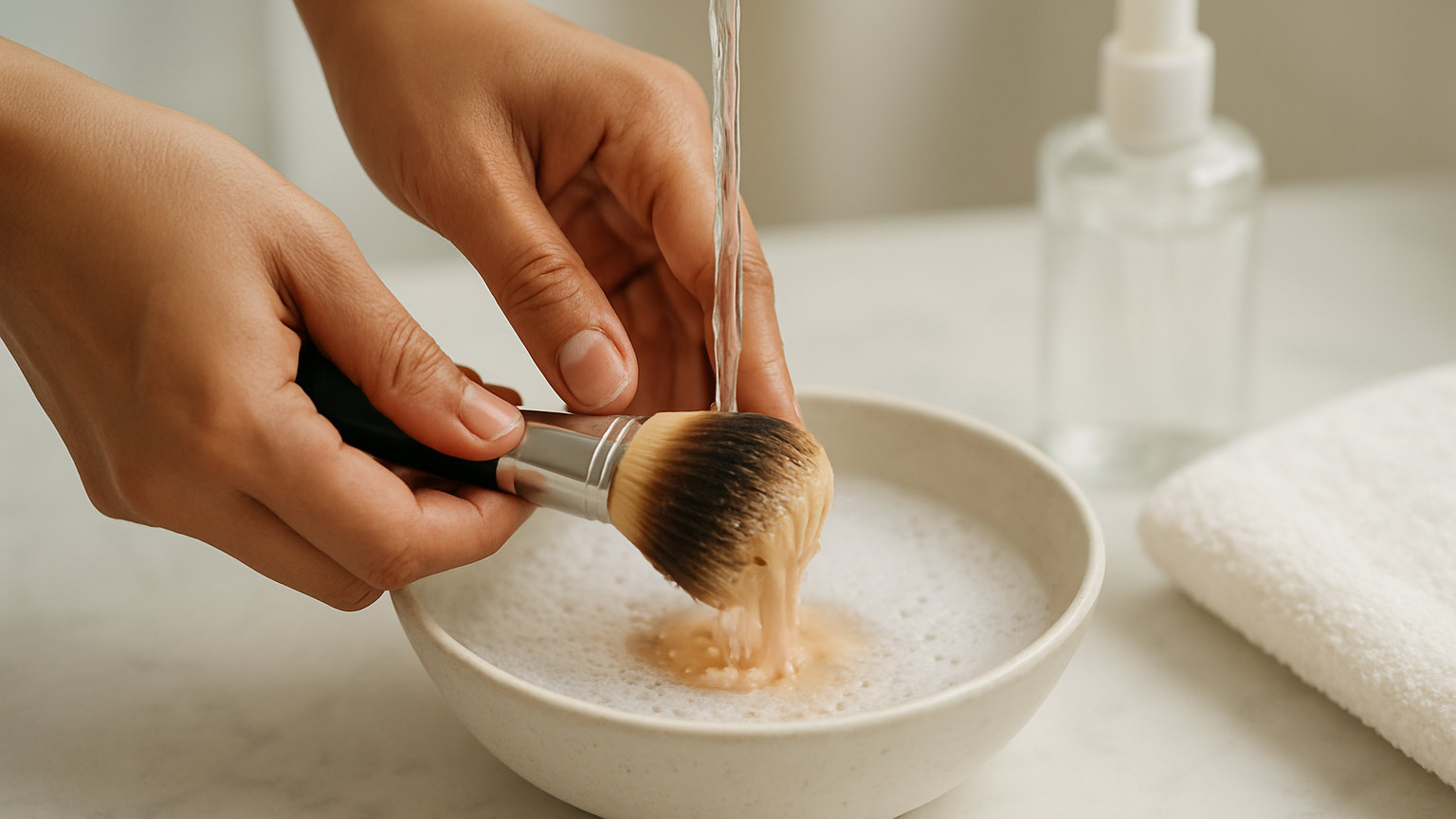
Makeup brushes accumulate product, sebum, dead skin and bacteria. Studies swabbing used brushes and sponges have found substantial bacterial and fungal growth, and unwashed sponges are consistently the worst.
Why does it matter?
Breakouts, since bacteria and old sebum are being reapplied to the face daily.
Eye infections, particularly from eye brushes and anything used near the lash line.
Poor application, since product build-up stiffens bristles and prevents blending.
Product contamination, since a dirty brush introduces bacteria into the pan or bottle it touches.
Skin irritation from accumulated product and preservative residue.
How often should you clean them?
Foundation and concealer brushes and sponges: weekly at minimum, and after every use for sponges if you can.
Eye brushes used with cream products: weekly.
Powder brushes, including blusher, bronzer and setting powder: every two weeks.
Eye brushes used with powder shadows: every two weeks.
Anything used near the eye during an infection: immediately, or discard it.
A spot clean with a spray brush cleaner between full washes extends this and does not replace it.
How do you wash them?
Wet the bristles under lukewarm water, pointing downward so water does not run into the ferrule, the metal part holding the bristles.
Water in the ferrule dissolves the glue over time, which is the main cause of shedding.
Work a small amount of gentle cleanser into the bristles: a dedicated brush shampoo, baby shampoo, or a mild soap. A textured brush cleaning mat helps considerably.
Rinse thoroughly until the water runs clear, still pointing downward.
Squeeze out excess water gently and reshape the bristles with your fingers.
How do you dry them?
Flat on a towel with the bristles hanging over the edge of a surface, or in a brush drying rack, so air circulates and water drains away from the ferrule.
Never dry them standing upright in a pot, which lets water run down into the ferrule and loosens the glue.
Never use a hairdryer or a radiator, which damages natural bristles and can warp synthetic ones.
Allow several hours, ideally overnight. Damp brushes stored in a closed pot grow mould.
How do you clean sponges?
Sponges are the most contaminated item in most makeup bags, since they are damp, porous and frequently stored in a closed container.
Wet thoroughly, work in a solid soap or a gentle cleanser, and squeeze repeatedly under running water until it runs clear.
A microwave method exists, submerging the sponge in soapy water and heating for a minute, and it should be treated cautiously since sponges can be damaged and the water is very hot.
Dry completely in open air rather than in a case.
Replace sponges every one to three months regardless of cleaning, and immediately if they tear, smell or discolour.
Do natural and synthetic brushes differ?
Yes. Natural bristles are hair and behave like it: they need gentler cleansing, benefit from a tiny amount of conditioner occasionally, and are damaged by hot water and harsh detergent.
Synthetic bristles are non-porous, which makes them more hygienic, better for liquid and cream products, and more tolerant of thorough cleaning.
Synthetic brushes have improved considerably and now perform as well as natural ones for most purposes, with no animal welfare question.
When should you replace them?
When bristles shed persistently, splay permanently, or feel scratchy despite cleaning.
When the shape no longer holds after washing.
When the ferrule loosens from the handle.
Good brushes last years with proper care, and cheap ones frequently do not survive a year of regular washing.
What else is worth knowing?
Do not share brushes, particularly for eyes and lips, since infections transfer readily.
Store them dry and uncovered, or in a case with ventilation, rather than sealed in a closed bag.
Wash your hands before doing your makeup, which is the simplest hygiene measure and rarely mentioned.
And never use a brush or sponge on anyone else without washing it in between.


