
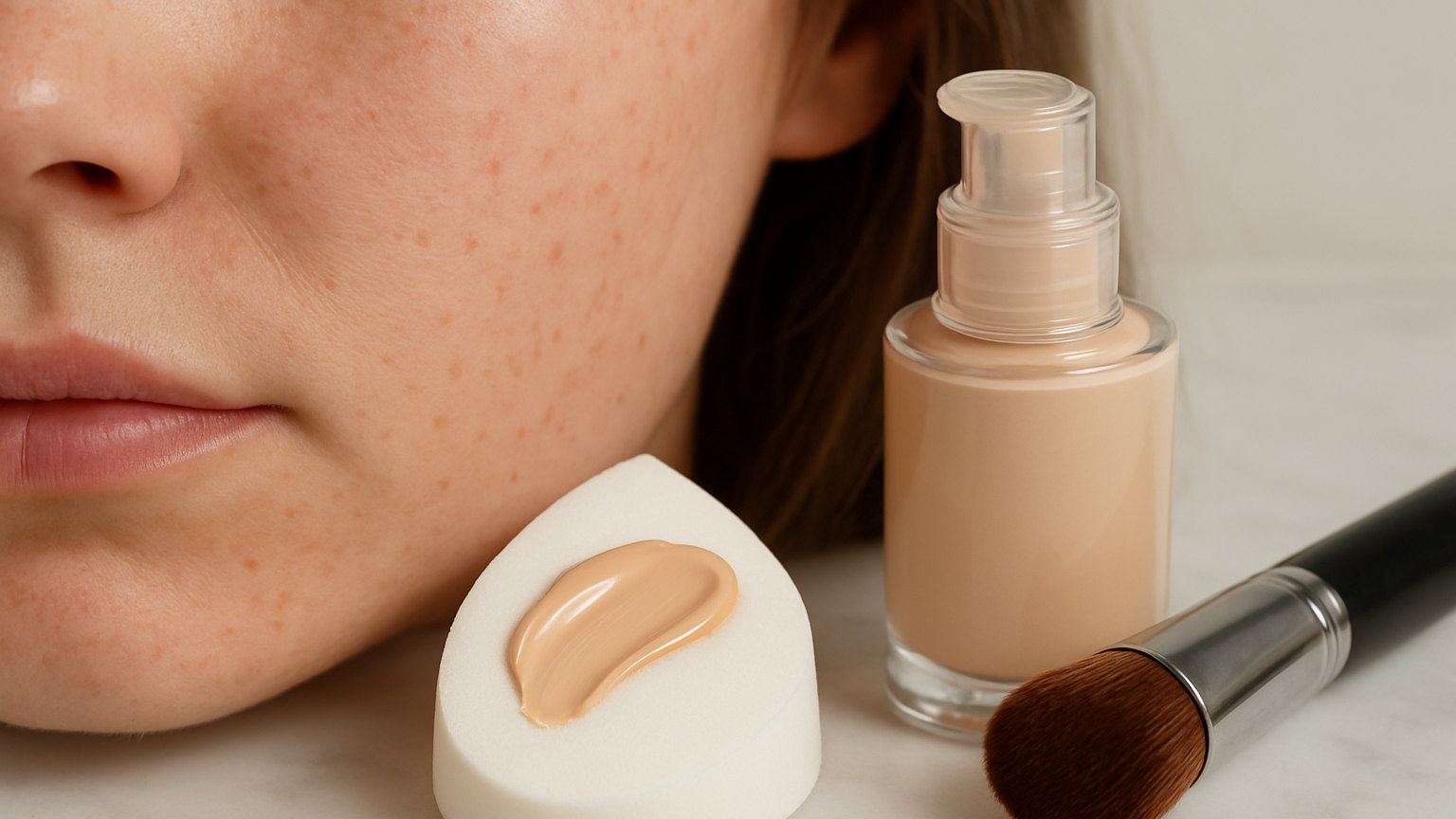
Makeup rarely causes acne on its own and can contribute to it. The recognised phenomenon has a name, acne cosmetica, and identifying which product is responsible is considerably more useful than avoiding makeup.
What is acne cosmetica?
Breakouts caused or worsened by cosmetic products, typically presenting as small, uniform closed comedones rather than large inflamed spots.
It appears in the areas where product is applied, most often the cheeks, jawline, forehead and hairline.
It develops gradually over weeks rather than immediately, which is why the connection is frequently missed.
It resolves when the product is stopped, which is the diagnostic test.
Which ingredients are implicated?
Comedogenicity testing is dated and imperfect, based largely on rabbit ear studies from decades ago, so ingredient lists should be treated as a guide rather than a rule.
Frequently implicated: isopropyl myristate and related esters, coconut oil and its derivatives, cocoa butter, algae extract, lanolin derivatives and heavy waxes.
Silicones, which are often blamed, have limited evidence for causing acne and are largely inert.
The concentration and the whole formulation matter more than any single ingredient, which is why a product containing something on the list may cause no problem at all.
Is non-comedogenic meaningful?
Only loosely. The term is unregulated, there is no standard test a product must pass, and manufacturers apply it at their own discretion.
It suggests the formulation was considered with acne-prone skin in mind, which is worth something.
It is not a guarantee, and plenty of people break out from products carrying the label.
Your own skin over two to four weeks is a more reliable test than anything on the packaging.
What else about makeup contributes?
Not removing it properly, which is a larger factor than the product itself for most people.
Dirty brushes and sponges, which reapply bacteria and old sebum daily.
Old products past their period after opening.
Heavy occlusive layers worn for long periods, particularly during exercise or in heat.
Touching the face repeatedly during application and throughout the day.
Sharing products, which transfers bacteria.
How do you identify the culprit?
Stop everything introduced in the previous two months and return to a minimal routine.
Reintroduce one product at a time, leaving two to four weeks between each, since comedones take that long to form and become visible.
Note where the breakouts appear, which frequently points directly at the product: forehead and hairline suggest hair products or primer, cheeks suggest foundation or a brush, and the jawline suggests foundation not blended and removed properly.
Keep the packaging so you have the ingredient list to compare across products that caused problems.
What if it is not acne?
Worth distinguishing, since the treatments differ entirely.
Fungal folliculitis produces uniform itchy bumps without blackheads, often on the forehead and jawline, and worsens in heat. It responds to antifungal treatment rather than acne products, and certain oils and fatty acids in cosmetics feed the yeast involved.
Perioral dermatitis produces small red bumps around the mouth, nose and eyes, and is associated with heavy occlusive products and topical steroids. It needs specific treatment and worsens with the usual acne approach.
Contact dermatitis is itchy and appears where the product was applied.
What should you use if you are acne-prone?
Lighter coverage, since heavy occlusive layers are the main mechanical contributor.
Oil-free liquid or mineral powder foundations. Mineral formulations containing zinc oxide can be soothing.
Fewer products overall, which reduces both the number of variables and the total load on the skin.
Clean brushes weekly, replace sponges regularly, and remove everything properly each night.
Some people find that a product with salicylic acid in the base helps, though the contact time is short.
Should you stop wearing makeup?
Not usually, and it is frequently the first advice given.
For most people the issue is one specific product, the removal routine or the tools, all of which are fixable.
Makeup also has a genuine role in how people feel about visible skin conditions, and telling someone to stop wearing it while their skin clears is rarely realistic or necessary.
If breakouts persist after identifying and removing likely culprits, that points toward acne needing treatment rather than a cosmetic cause, and a GP or pharmacist can help.


