
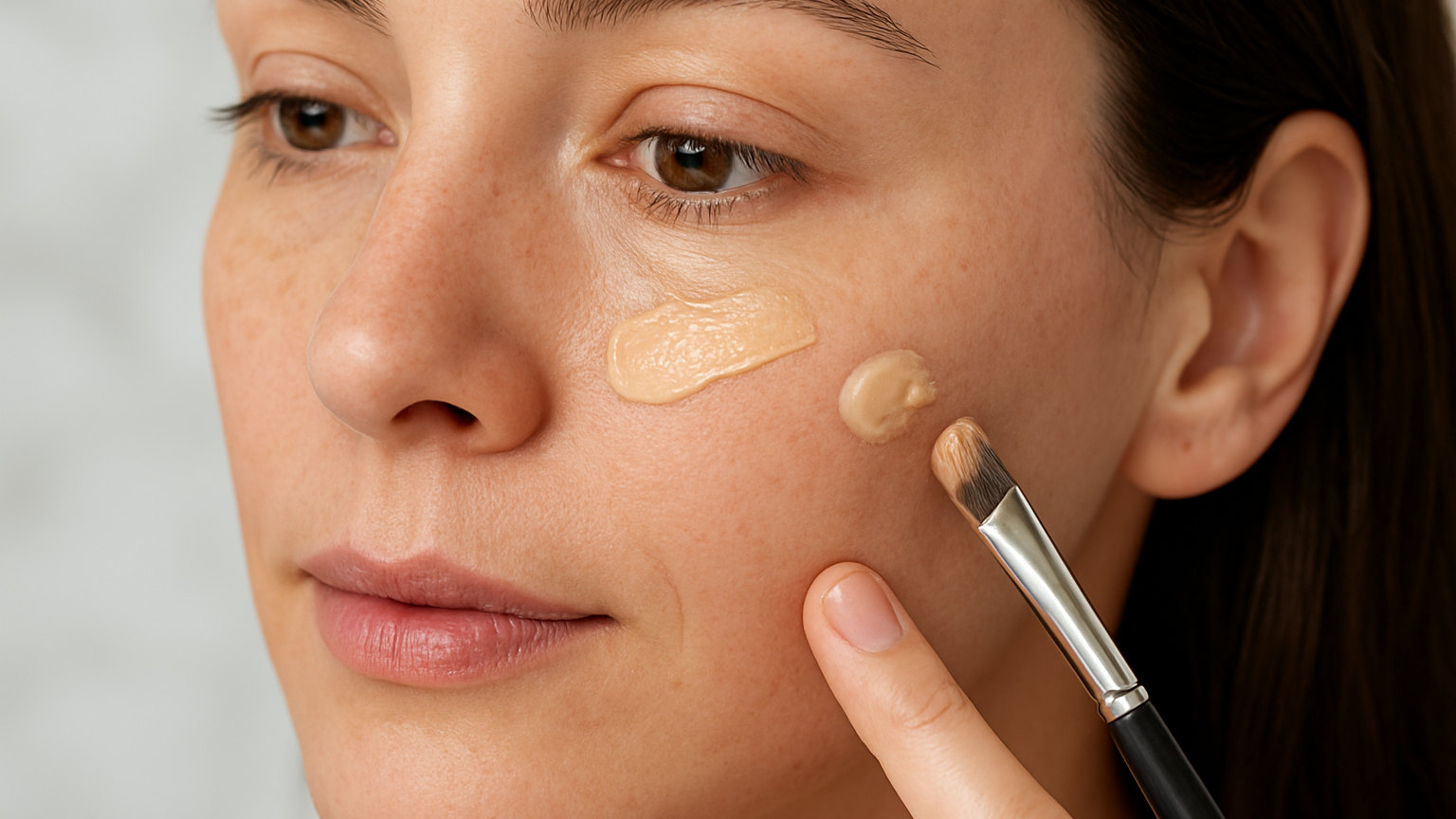
Concealer is asked to do two quite different jobs: brightening the under-eye area and covering blemishes. They need different shades, different textures and different placement, which is why one product used for both usually disappoints at one of them.
What shade should you use under the eyes?
Half a shade to one shade lighter than your foundation, which brightens the area rather than simply matching it.
Too light produces the pale reverse-panda effect, which is more noticeable than the darkness it was meant to fix.
A slightly warm or peach-toned concealer counteracts the blue and purple of shadowing better than a neutral one.
Deeper skin tones generally need an orange-based corrector rather than a peach one, since the underlying tone to counteract is deeper.
What shade should you use on blemishes?
An exact match to your foundation, or to your skin if you are not wearing foundation.
Lighter concealer on a spot draws attention to it, which is the commonest error in this whole area. A raised spot is already catching light, and lightening it makes it more prominent rather than less.
A slightly yellow-toned concealer counteracts redness effectively.
Full coverage and a drier texture works better here, since it stays put over a raised area.
How does colour correcting work?
Using the opposite colour on a colour wheel to neutralise unwanted tone before covering it.
Green cancels red, which suits rosacea, spots and general redness.
Peach and orange cancel blue and purple, which suits under-eye shadowing, and the deeper your skin tone the more orange the corrector should be.
Yellow cancels purple and brightens dullness. Lavender counteracts sallow yellow tones.
Use a very thin layer and cover with foundation or concealer over the top. Colour correctors are not meant to be visible or used generously.
Where should you apply under-eye concealer?
Not in a semicircle directly under the lash line, which is where most people put it and where it creases most.
An inverted triangle from the inner corner down toward the cheek, with the base under the eye and the point down, brightens the area and lifts the whole face.
The inner corner is usually the darkest part and needs the most.
Blend the edges thoroughly and leave the area immediately under the lashes lighter on product, which is where creasing starts.
How do you stop it creasing?
Use less. Product volume is the main cause of creasing.
Set with a very small amount of finely milled translucent powder, pressed rather than swept, which is the single most effective step.
Choose a hydrating formula on dry or mature skin, since dry concealer cracks into lines.
Prepare the area with a light eye cream, absorbed fully before applying. Too much eye cream causes sliding.
Baking, leaving a thick layer of powder for several minutes before brushing it away, is a photography technique and usually looks heavy in daylight.
Should concealer go before or after foundation?
After, in most cases. Foundation frequently covers more than expected, so applying it first shows you where concealer is genuinely needed and reduces how much you use.
The exception is colour correcting, which goes underneath foundation.
Some people prefer concealer first under the eyes, then a light layer of foundation over the top, which works well for a natural finish.
What about dark circles that do not respond?
Under-eye darkness has several causes and not all are pigment.
Shadowing from a hollow or from prominent under-eye structure is a shadow rather than a colour, and no concealer fills a hollow. Light-reflecting formulas help a little.
Visible blood vessels through thin skin produce blue-purple tones, which peach correctors address.
Genuine pigmentation, which is common in deeper skin tones and responds to azelaic acid, vitamin C and sunscreen over months.
Knowing which you have determines whether makeup or skincare is the right tool.
What else is concealer useful for?
Tidying the edges of brows, used very sparingly rather than as an outline.
Covering redness around the nose, which is one of the most common needs and rarely mentioned.
Neutralising discolouration on the eyelids as a base for eyeshadow.
Correcting a lip line. A small amount blurs the edge and lets lipstick sit more precisely.


