
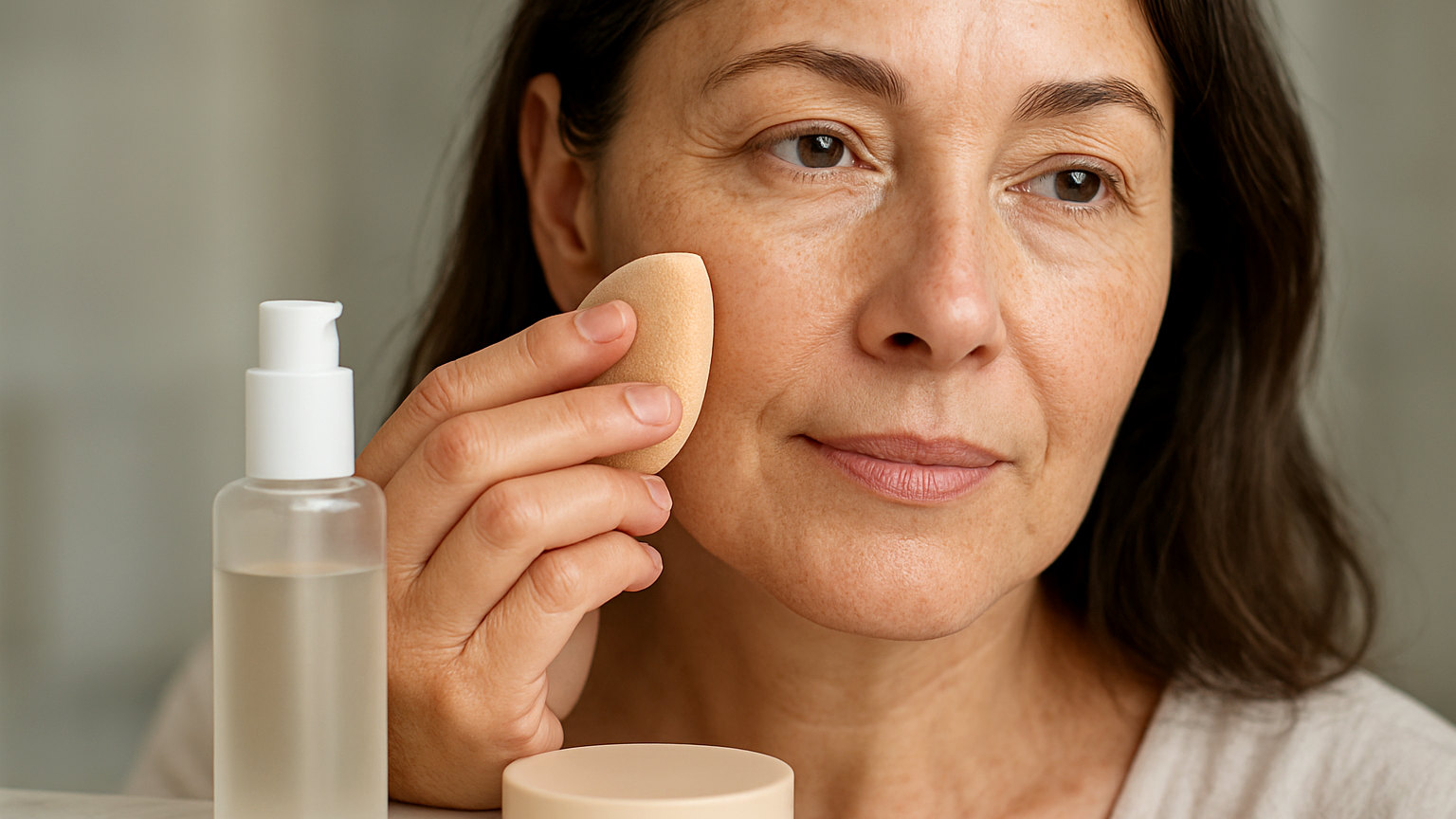
Skin becomes drier, thinner and less even over decades, and texture becomes more visible. The instinct is to increase coverage, which almost always makes the changes more apparent rather than less.
What actually changes?
Sebum production declines, so skin is drier and makeup clings to any flaking.
Fine lines and wrinkles develop, and powder settles into them.
Skin thins and loses elasticity, so texture reads more readily.
Pigmentation becomes more uneven, and redness is more common.
Lips lose volume and definition, eyelids become less taut, and brows and lashes thin.
Why does heavy coverage stop working?
Full-coverage matte foundation sits on the surface and emphasises everything underneath it: lines, texture and dryness.
A thin layer of light to medium coverage with a satin finish reflects light and reads as skin. A thick matte layer absorbs light and reads as a mask.
The most effective single change most people can make is using half as much foundation and adding concealer only where needed.
Which formulas suit better?
Hydrating liquid, cream and cushion foundations with a satin or luminous finish.
Cream blusher, bronzer and highlighter rather than powder, since cream melts into skin and powder sits on it.
Cream eyeshadows can crease on less taut lids, so a light powder shadow over a primer sometimes works better there. This is the one place powder frequently wins.
Pencil and cream products for brows and lips rather than anything dry or long-wear.
Avoid heavy powder, matte long-wear foundations and anything with visible glitter.
How should you use powder?
Sparingly and selectively. Finely milled translucent powder pressed only on the sides of the nose, the chin and anywhere that gets oily.
Not under the eyes beyond the smallest amount, and not across the cheeks.
A setting spray over the top melts any powdery look back into the skin, which matters more here than at any age.
Many people find they need no powder at all beyond the T-zone.
What about the eyes?
Softer definition works better than sharp lines. A pencil smudged along the lash line rather than a crisp liquid liner.
Matte and satin shadows rather than glitter, which catches in the crepey texture of the lid.
Tightlining, applying liner between the lashes rather than above them, defines the eye without adding a visible line.
Curling lashes and using a lengthening rather than volumising mascara opens the eye.
A lighter shade on the inner corner and under the brow lifts the eye visually.
What about lips?
Lip liner becomes more useful, since the natural border softens and colour bleeds into fine lines around the mouth.
Line just at or very slightly outside the natural edge, and fill the whole lip with the liner before adding colour, which anchors it.
Creamy and satin finishes rather than matte, which emphasises dryness and lines.
Mid-tone shades and soft berries generally flatter more than very dark or very pale, which can be draining.
Exfoliating and balm at night makes considerably more difference than the lipstick.
What about brows?
Brows thin and lose pigment, and filling them softly frames the face and lifts it more than most other steps.
Use a shade lighter than you think, in a taupe or soft grey-brown for grey hair rather than trying to match an original colour.
Short light strokes and a tinted gel rather than a heavy drawn line.
Letting the tail sit slightly higher rather than following any natural drop lifts the eye area.
What is worth remembering?
Skincare underneath does more than any change of makeup. Well-moisturised skin takes makeup better at any age, and it is the step that matters most from the forties onward.
Less product, lighter texture, and light-reflecting rather than matte finishes cover almost all of the useful adjustments.
And none of this is compulsory. A great deal of advice in this area implies that makeup must change to conceal, when the practical point is simply that different formulas behave differently on different skin.


