
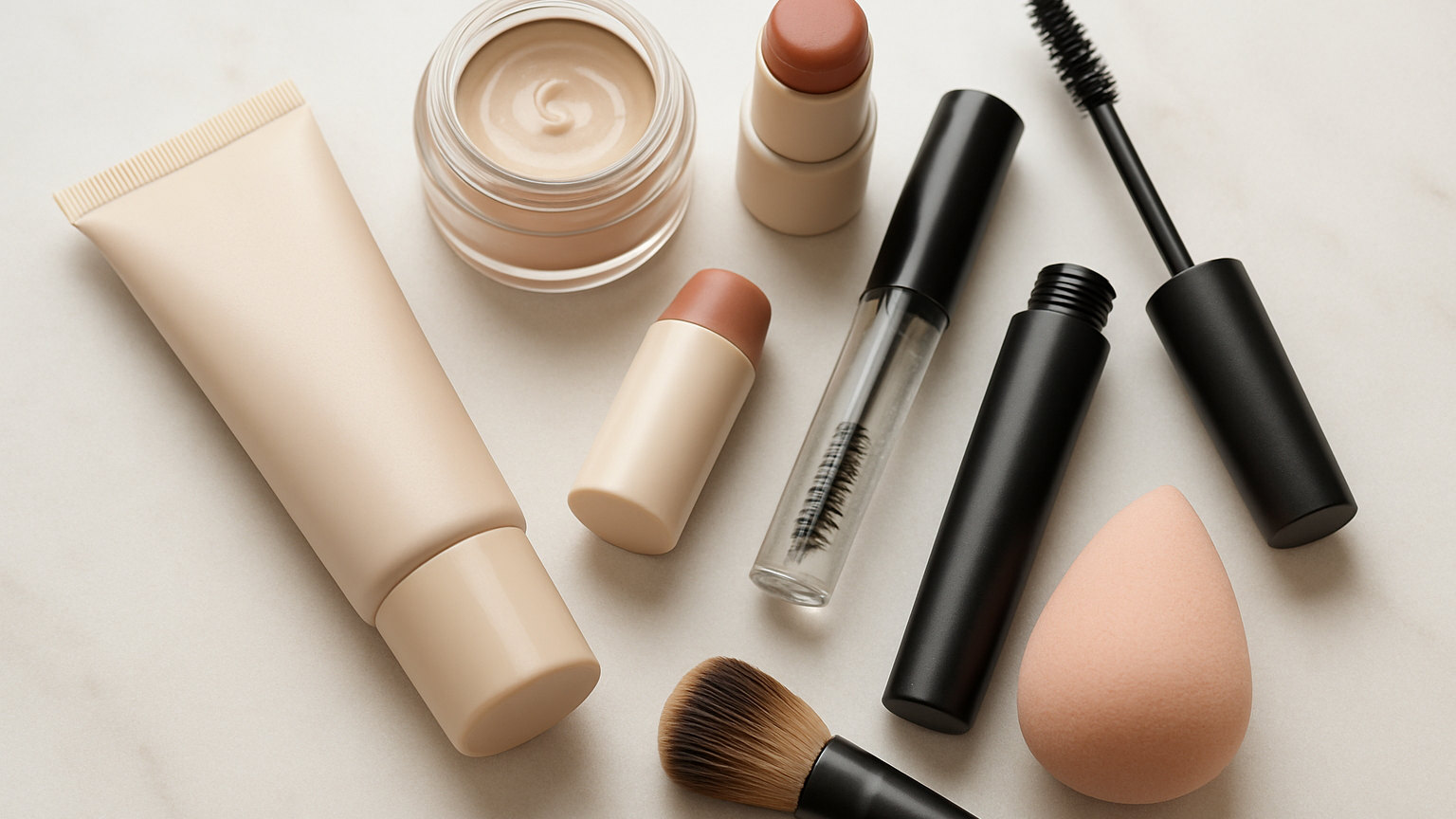
Makeup accumulates faster than almost any other category, largely because products are bought for effects rather than for problems. A short list covers most of what most people do daily.
What does a minimal kit contain?
Something for the base: a tinted moisturiser, skin tint or light foundation.
A concealer, which does more per pound than anything else in the bag.
A blusher, which does more for looking well than any other single product.
Something for brows: a pencil, powder or tinted gel.
Mascara.
A lip product in a shade close to your own.
That is six items and a five-minute face.
What is worth adding?
A translucent powder if you get oily.
A bronzer for warmth, which is more wearable than contour for daily use.
A neutral eyeshadow palette, ideally four or five matte shades rather than twelve you will never use.
An eyeliner if you wear one.
A setting spray if your makeup slides or looks flat.
Each of these should answer a problem you actually have rather than filling a gap in a collection.
Which tools do you need?
A damp sponge or your fingers for base products, which suits most people.
A fluffy brush for powder and blusher.
A small flat brush for concealer, or your ring finger.
A spoolie for brows and lashes.
A blending brush if you wear eyeshadow.
Five items, and brush sets containing twenty are largely padding.
Where is spending more justified?
Foundation and concealer, where shade range, undertone accuracy and formula quality genuinely differ and where a mismatch is visible.
Brushes, which last years and where cheap ones shed and apply poorly.
Mascara, arguably, though good budget options are plentiful and it needs replacing every three months regardless, which caps how much it is worth spending.
Where it is rarely justified: powder, eyeshadow, eyeliner, lip products and setting spray, where budget ranges have improved enormously and the pigments are the same commodity ingredients.
How long do products last?
The period-after-opening symbol on the packaging gives the answer in months.
Mascara: three months, without exception. The wand carries bacteria into the tube each use, and eye infections are the commonest consequence of expired makeup.
Liquid foundation and concealer: around twelve months.
Cream products: twelve to eighteen months.
Powders, including eyeshadow and blusher: two years or more, since they contain no water for bacteria to grow in.
Lipstick: around a year to eighteen months.
Anything that has changed colour, texture or smell has gone regardless of the date.
What causes most of the accumulation?
Buying for an effect seen elsewhere rather than for a problem, which produces products used twice.
Palettes, where two shades are used and ten are not.
Buying a new product rather than learning to use one you own, which is the commonest pattern of all.
Sales and sets, which are cheaper per item and more expensive overall.
How do you build a kit that works?
Start with the six items, use them for a month, and note what you actually reach for.
Add one thing at a time, for a reason you can articulate.
Buy small or travel sizes when trying anything unfamiliar, particularly base products.
Review annually: discard anything expired, anything you have not used in a year, and anything you cannot explain the purpose of.
What is the honest summary?
A well-matched base, concealer, blusher, brows and mascara covers the large majority of daily makeup, and doing those five things well looks considerably better than doing twelve things adequately.
The rest is enjoyment rather than necessity, which is a perfectly good reason to own it as long as that is what you are buying it for.
What should you buy first?
A base product matched properly to your skin, since a mismatched shade is the one error visible from across a room and no technique corrects it.
Then concealer, then mascara, then brows, then blusher. That order reflects how much difference each makes for the money.
Does any of it need to be expensive?
Very little. Pigments, waxes and film formers are commodity ingredients, and budget ranges use the same suppliers as premium ones for many products.
What money buys reliably is shade range, formula sophistication in base products, and packaging. What it does not buy is better eyeshadow pigment or a more effective mascara, both of which are as good at supermarket prices as anywhere.
A complete working kit from a pharmacy comes to considerably less than one premium foundation, and applied well it looks the same.


