
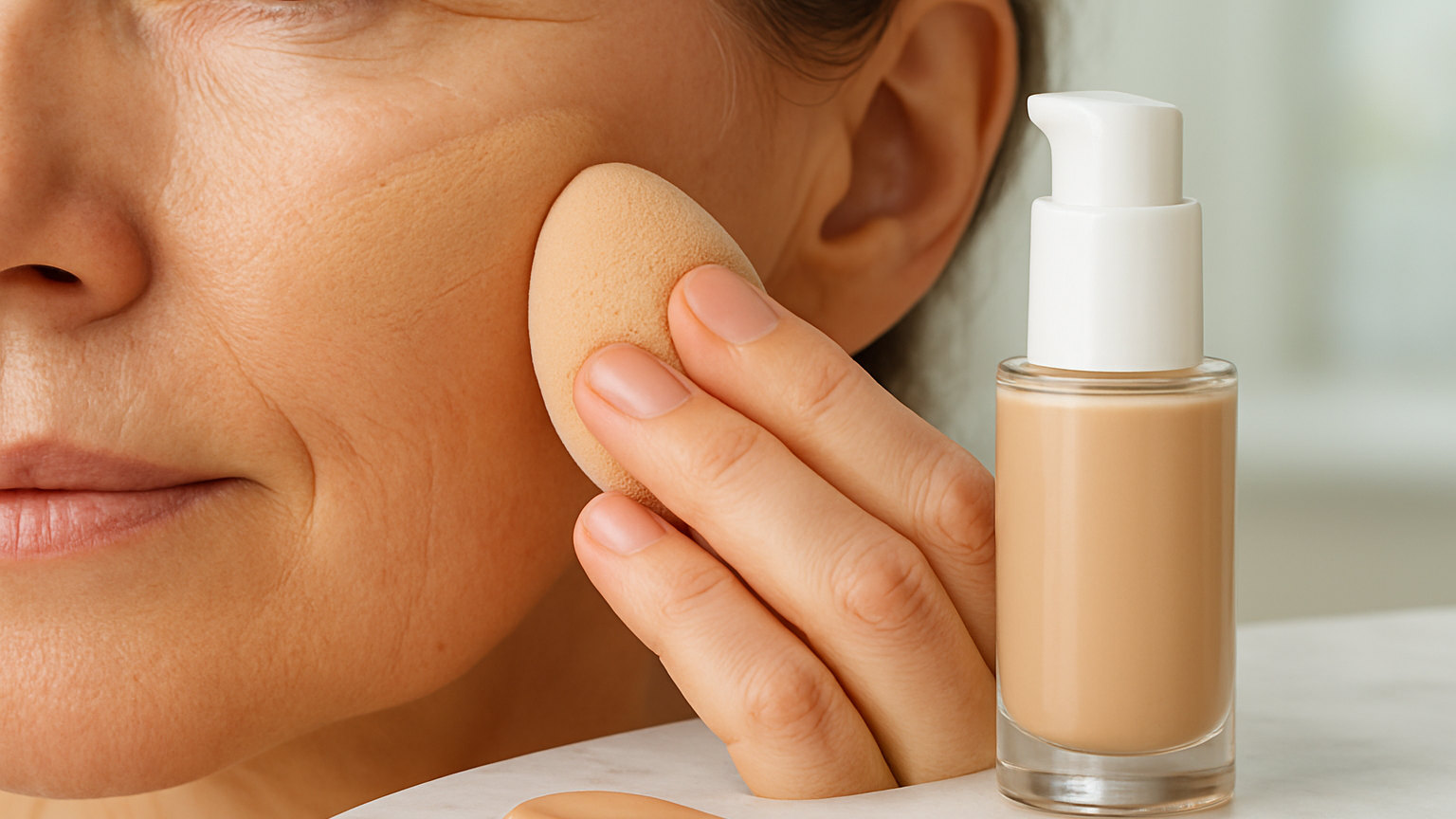
Makeup breaking down is usually blamed on the products and is more often about how much went on and what went underneath. Thin, well-set layers outlast thick ones regardless of what the packaging claims.
Why does makeup break down?
Sebum, which dissolves and lifts foundation from underneath. This is why oily skin sees the worst of it and why it starts in the T-zone.
Sweat and humidity, which do the same from the surface.
Friction: touching the face, phones, hair and clothing.
Skincare that has not absorbed, which prevents the makeup adhering.
Too much product, which cannot bond to the skin properly and slides as a layer.
What should you do to the skin first?
Cleanse, moisturise appropriately and let it absorb fully, which takes at least five minutes and longer with sunscreen.
Match the moisturiser to the skin: a heavy cream under makeup on oily skin guarantees sliding, and skipping it on dry skin guarantees clinging and flaking.
Blot any excess with a tissue before starting if the skin still feels tacky.
Exfoliate the night before rather than the morning, which gives a smoother base without the irritation.
Does primer help?
For this specific problem, genuinely yes, if you choose the right kind.
A gripping or mattifying primer on oily skin extends wear measurably.
A hydrating primer on dry skin stops foundation clinging to texture.
Match the base to the foundation: silicone under silicone, water under water, since mismatched bases pill and separate.
Applying primer only where you need it, usually the T-zone, works better than all over.
How much foundation should you use?
Less than you think. A pea to five-pence sized amount for the whole face, built only where needed.
Thin layers bond to the skin; thick layers sit on top and move as a sheet.
Two thin layers with a moment between outlast one thick one considerably.
Using concealer where you need coverage rather than more foundation everywhere is both longer-wearing and more flattering.
How do you set it?
A finely milled translucent powder, pressed rather than swept, and only where you get oily.
Powdering the whole face on dry skin is what makes it look cakey by lunchtime.
A setting spray over the top, which melts the powder into the skin and removes any flat powdery look while adding hold.
For very long days, some people set in layers: foundation, powder, spray, then a light second powder, which is genuinely effective and easy to overdo.
What lasts longest by product?
Long-wear and transfer-proof foundations, which are formulated with polymers that resist sebum. They are less comfortable and harder to blend.
Cream products set with powder, rather than powder alone, which grips better.
Waterproof mascara and long-wear liner for anyone whose eye makeup smudges.
Lip stains and liquid lipsticks over creamy bullets, and lip liner underneath either.
Cream blusher under powder blusher, which anchors it.
How should you touch up?
Blot first, always, using tissue or blotting paper. This removes oil without removing makeup, and it is the step people skip.
Then powder, lightly and only where you blotted.
Adding powder to an oily face without blotting first mixes the two and produces a thick, patchy layer, which is what makes touch-ups look worse than leaving it alone.
For dry skin, press a hydrating mist or a small amount of moisturiser over the top with clean fingers rather than adding more product.
What else affects it?
Touching your face, which is the largest single cause of disturbance and is largely unconscious.
Heat, since foundation softens and moves in warm conditions.
Skincare with high oil content underneath.
Not letting each layer set before applying the next.
And expecting eight hours from a sheer tinted moisturiser, which is not what it was made to do.
Does it differ in summer?
Considerably, since heat and humidity work against everything above. Sebum production rises measurably in warm weather, so a base that lasted all day in January slides by lunchtime in July.
The adjustments are lighter coverage rather than more, a mattifying primer where you get oily, and blotting papers carried rather than a compact of powder.
Waterproof mascara and long-wear liner earn their place in hot weather even for people who never need them otherwise, and setting spray does more in humidity than in cold dry air.


