
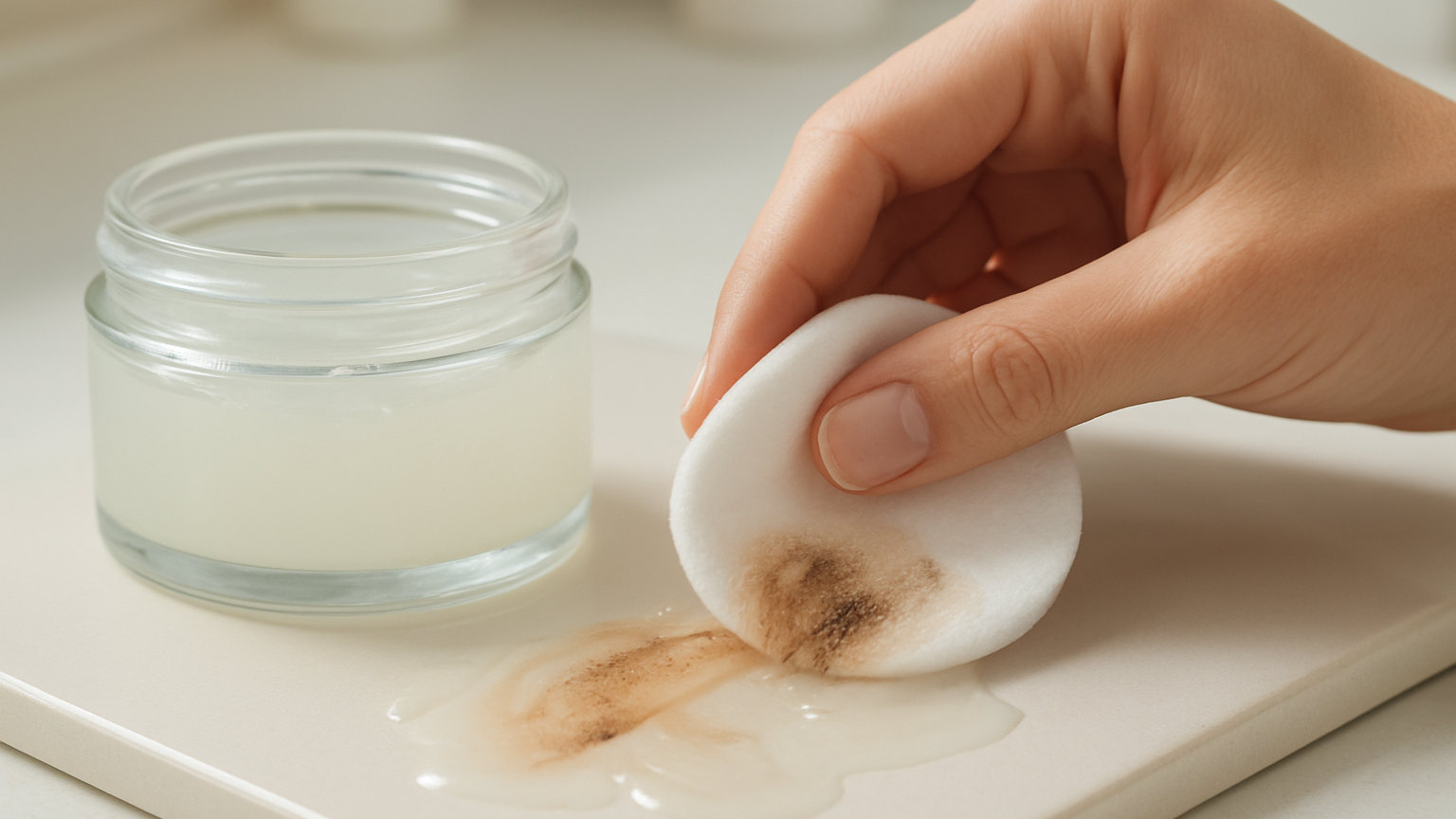
More skin and lash damage comes from removing makeup than from wearing it. The principle that fixes almost all of it is dissolving rather than scrubbing.
Why does removal matter?
Makeup left overnight traps sebum, dead cells and bacteria against the skin for eight hours, which contributes to congestion and breakouts.
Mascara left on makes lashes brittle and clogs the lash line, which is a route to blepharitis.
The mechanical damage is the larger issue: rubbing at waterproof mascara with a dry pad snaps lashes and pulls at the thinnest skin on the body.
Foundation itself does not damage skin. What surrounds it does.
What is double cleansing?
An oil-based first step to dissolve makeup, sunscreen and sebum, followed by a water-based second step to clean the skin underneath.
Oil dissolves oil, which is why a balm or oil removes waterproof products that water-based cleansers cannot touch.
The second cleanse removes the residue and actually cleans the skin.
It is genuinely useful for anyone wearing makeup or sunscreen, and unnecessary on a day wearing neither.
What should you use for the first step?
A cleansing balm or oil, massaged onto dry skin for thirty to sixty seconds before adding water, which emulsifies it into a milky texture that rinses away.
Massaging on dry skin is the part most often skipped and the part that does the work.
Micellar water on a pad, which is convenient and less thorough on heavy or waterproof makeup.
Cleansing milk or cream, which suits dry and sensitive skin.
What about the second step?
A gentle water-based cleanser suited to your skin type: a cream or gentle gel for dry, a gel for oily.
Lukewarm water, not hot. Thirty to sixty seconds.
Skin should feel comfortable afterwards rather than tight or squeaky, which indicates the cleanser is too harsh.
Pat dry rather than rubbing, and moisturise within a few minutes.
How do you remove eye makeup safely?
Soak a pad in a bi-phase remover or micellar water and hold it against the closed eye for twenty to thirty seconds. That waiting period does the work.
Wipe downward in one direction rather than back and forth.
Repeat with a fresh pad rather than scrubbing with the same one.
Use a cotton bud with remover along the lash line, which is where mascara and liner accumulate and where blepharitis starts.
Never pull at lashes or rub the eyelids, which is the main cause of lash loss and contributes to laxity of the thinnest skin on the body.
Are makeup wipes a problem?
As an occasional convenience, no. As a daily method, several problems.
They smear rather than dissolve, leaving residue behind.
They require rubbing, which is exactly what damages the eye area.
The preservatives and fragrance in many of them are common causes of contact dermatitis.
They are also an environmental problem, since most are not biodegradable and are a significant contributor to sewer blockages.
If you use them, follow with a proper cleanse rather than treating them as the whole routine.
What if you cannot face it?
Have a minimum standard rather than an all-or-nothing one. Micellar water and a pad by the bed, or a cleansing wipe followed by moisturiser, is considerably better than sleeping in a full face.
The pattern that damages skin is not the occasional missed night but treating a missed night as a reason to abandon the routine.
Keeping the removal products where you actually end up, rather than in the bathroom, makes the difference for most people.
What should you not do?
Use hot water, which strips the barrier further.
Scrub with a flannel or a cleansing brush over makeup, which abrades rather than dissolves.
Use a facial cleanser on the eyes unless it says it is suitable, since most sting considerably.
Remove makeup in the shower with the water running directly on the face, which is hotter and more forceful than the skin needs.
And leave mascara on because it is nearly gone anyway, which is how lash line build-up accumulates over months.


