
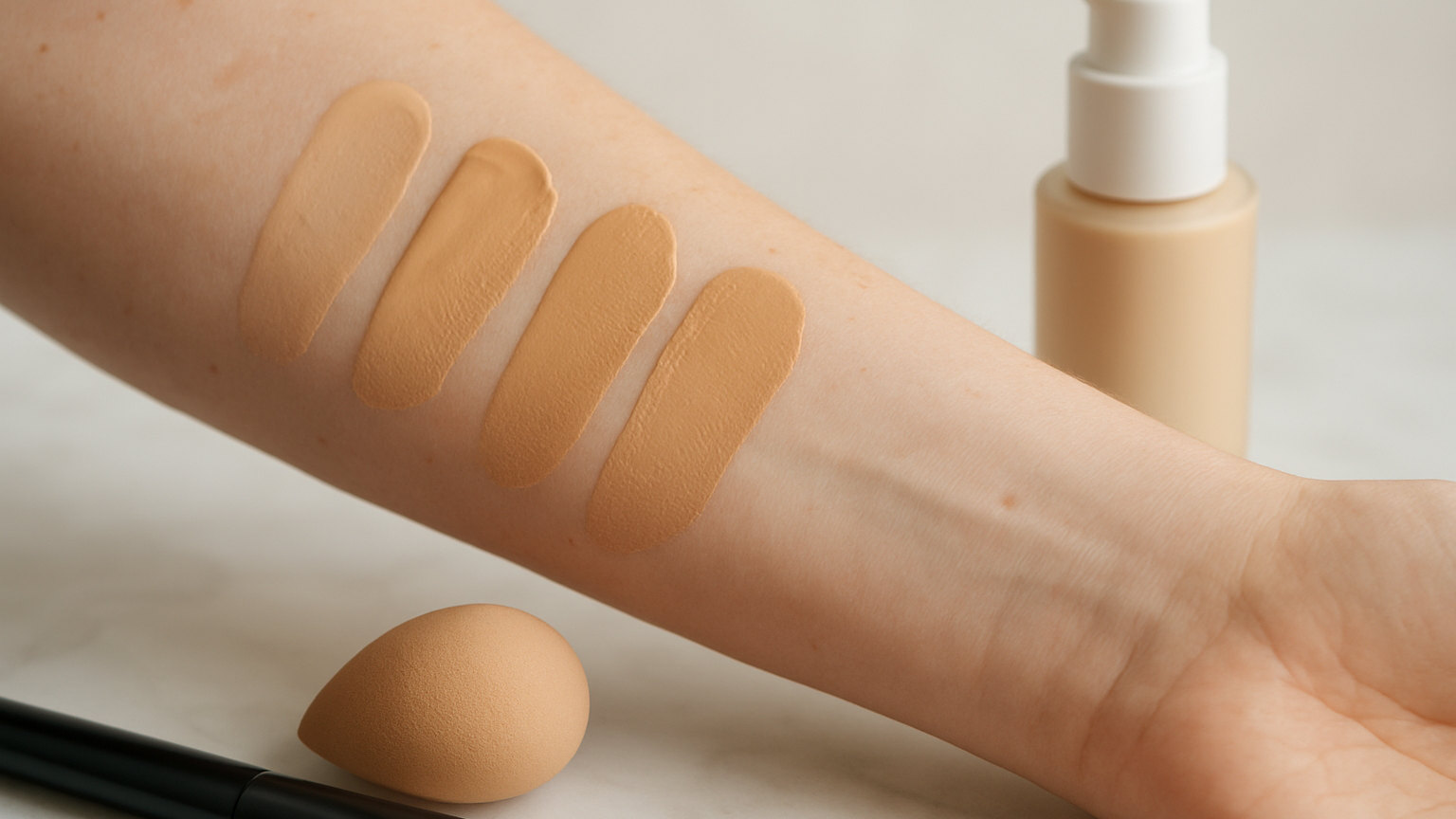
Foundations differ more by formula than by brand, and matching the formula to your skin type does more for the result than any amount of blending technique.
What are the main types?
Liquid, the most versatile, available in every coverage level and finish. Suits most skin types depending on formulation.
Powder, which is quick, buildable and controls oil. Can look dry or emphasise texture on dry or mature skin.
Stick, which is convenient and usually higher coverage, and useful for targeted application as well as all over.
Cream and compact, typically fuller coverage and richer, suiting dry skin.
Cushion, a liquid formula held in a sponge in a compact, applied with an applicator. Light to medium coverage and very easy to reapply.
Serum and skin tint, which are the lightest, offering sheer coverage with skincare ingredients.
Tinted moisturiser and BB creams, which sit between skincare and makeup.
What suits oily skin?
Oil-free liquid or powder formulas with a matte or natural finish.
Look for terms like long-wear, oil-control or shine-control. Silicone-based formulas often perform better, since they resist sebum breaking them down.
Powder foundation genuinely suits oily skin better than most, since it absorbs rather than sitting on top.
Avoid heavy dewy formulas and anything described as hydrating or luminous, which will look greasy within hours.
Setting with powder in the T-zone extends wear considerably.
What suits dry skin?
Hydrating liquid, cream or cushion formulas with a dewy or satin finish.
Look for glycerin, hyaluronic acid and oils in the ingredient list.
Avoid powder foundation, matte formulas and long-wear products, all of which emphasise dryness and flaking.
Preparation matters more here than for any other skin type: moisturiser properly absorbed, and a hydrating primer if you use one.
Applying with fingers or a damp sponge gives a more natural finish on dry skin than a dense brush.
What suits combination skin?
A natural or satin finish liquid, which is the most forgiving across different areas.
Powder applied only where you get oily, usually the T-zone, rather than all over.
Some people use two formulas, a matte one on the T-zone and a hydrating one elsewhere, which sounds elaborate and works well.
What suits mature skin?
Light to medium coverage with a satin or luminous finish, since heavy matte foundation settles into fine lines and emphasises texture.
Hydrating formulas, applied thinly and built only where needed.
Avoid heavy powder, which sits in lines, and full-coverage matte formulas.
Less product does more. The instinct to increase coverage as skin changes usually makes texture more visible rather than less.
What suits acne-prone skin?
Non-comedogenic where stated, though the term is unregulated and not a guarantee.
Oil-free liquid or mineral powder formulas.
Mineral powder foundations containing zinc oxide can be soothing and are worth trying.
Avoid heavy occlusive formulas, and remove makeup thoroughly every night, which matters more than the product choice.
Anything that causes breakouts within a week or two of starting is worth stopping, whatever the label says.
How much coverage do you actually need?
Less than most people buy. Sheer to medium coverage applied well looks more like skin than full coverage applied thinly.
A lighter foundation with concealer where you need it is more flattering than full coverage everywhere.
Full coverage has its place for events and photography, and it is a poor default for daily wear.
What about SPF in foundation?
Useful as a supplement and inadequate on its own.
The stated SPF is measured at a thickness far greater than anyone applies foundation, so real-world protection is a fraction of the number on the label.
Use a proper sunscreen underneath and treat foundation SPF as a bonus rather than your protection.
How long does foundation keep?
The period-after-opening symbol on the packaging gives the answer in months, usually twelve for liquid formulas and considerably longer for powders, which contain no water for bacteria to grow in.
Liquid foundation in a pump is more hygienic than one in an open bottle, since fingers never enter the product. A doe-foot applicator returned to the bottle repeatedly is the least hygienic format.
Anything that has changed colour, separated, thickened or smells different has gone regardless of the date, and using it on acne-prone skin is a plausible cause of breakouts.


