
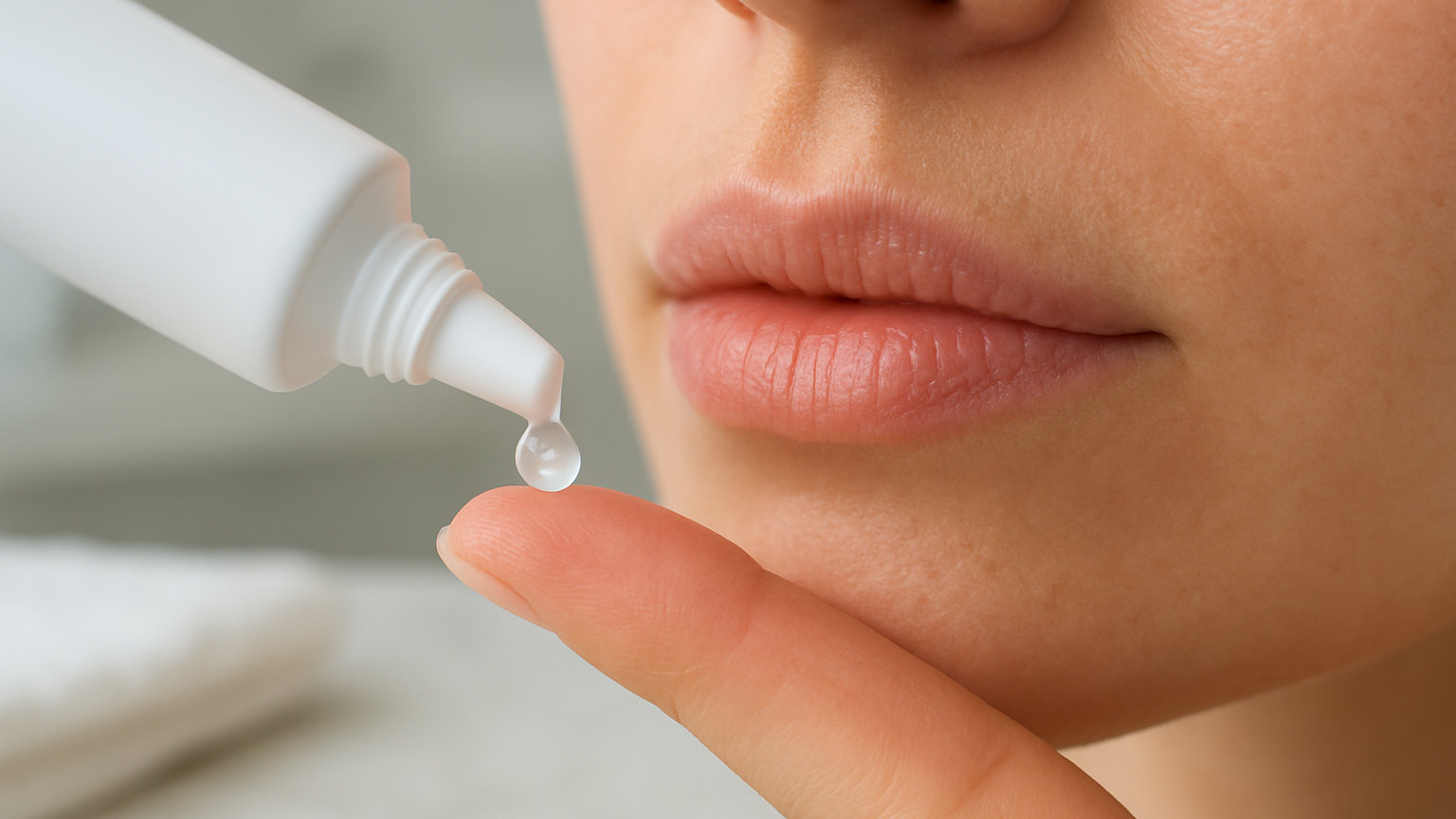
Cold sores are caused by the herpes simplex virus, usually type one, which the majority of adults carry. It remains dormant in a nerve near the site and reactivates periodically, and treatment works best before anything is visible.
What are the stages?
Tingling, itching or burning at the site, twelve to twenty-four hours before anything appears. This is the prodrome and the critical treatment window.
A small red swelling, followed by fluid-filled blisters over a day or two.
The blisters burst and weep, which is the most contagious stage.
A scab forms and the area heals, typically over seven to ten days in total.
Recognising the tingle rather than waiting for the blister is the single most useful thing in this article.
Why does early treatment matter so much?
Antiviral creams such as aciclovir and penciclovir stop the virus replicating. By the time blisters appear, replication has largely finished, so the cream has considerably less to do.
Applied at the tingle stage, treatment can shorten the episode by a day or two and sometimes prevent the blister forming at all.
Applied once the blister has formed, the effect is modest.
Keeping a tube at home rather than buying one when a sore appears is what makes early treatment possible.
What treatments are available?
Antiviral creams from a pharmacy, applied five times a day for five days, starting at the first symptom.
Hydrocolloid cold sore patches, which protect the area, reduce transmission, absorb fluid and can be worn under makeup. They do not treat the virus and they do help healing and appearance.
Oral antiviral tablets, prescribed by a GP, which are more effective than creams and are usually reserved for frequent or severe episodes.
Painkillers and a plain balm for comfort.
What triggers them?
Sunlight and ultraviolet exposure, which is one of the commonest and most preventable triggers.
Illness, fever and anything that lowers immunity, which is where the old name of fever blister comes from.
Stress and exhaustion.
Hormonal changes, particularly around menstruation.
Trauma to the lip: dental work, chapping, cosmetic procedures and lip fillers.
Cold weather and wind.
How do you prevent them?
SPF lip balm daily, which is the most effective single measure for anyone whose sores are sun-triggered.
Keeping lips moisturised, since chapping and cracking are a trigger.
Managing stress and sleep where possible.
For anyone having lip filler, laser or significant dental work, a prophylactic course of antiviral tablets can be prescribed beforehand, which is worth asking about if you get sores frequently.
Frequent recurrences, meaning six or more a year, warrant a GP appointment, since suppressive antiviral treatment is available.
How contagious is it?
Highly, particularly when blisters are weeping.
Avoid kissing, sharing cups, cutlery, towels, lip products and razors while a sore is present.
Wash hands after touching it, and do not touch your eyes, since herpes keratitis is a serious eye infection.
Avoid contact with newborn babies entirely while a sore is active, since neonatal herpes is a rare and serious infection.
The virus can also be transmitted when no sore is visible, which is why most people acquire it in childhood without knowing.
Can you wear makeup over one?
Not over an open, weeping blister, since that introduces bacteria and spreads the virus to brushes and products.
Once it has scabbed, a hydrocolloid patch with makeup applied over the top is the practical approach.
Use disposable applicators rather than your usual brushes, and discard anything that touched the area.
Do not use a lipstick bullet directly on the lip while a sore is present, since the virus survives on the surface. Apply with a disposable wand or discard the product afterwards.
When should you see a GP?
Sores lasting more than ten days, or that are unusually large or painful.
Frequent recurrences, six or more a year.
Any sore near or in the eye, or eye pain and redness alongside a cold sore, which needs same-day attention.
Sores in anyone with a weakened immune system, eczema, or in babies and young children.
And any lip lesion that does not heal within three weeks, which needs assessing rather than assuming it is a cold sore.


