
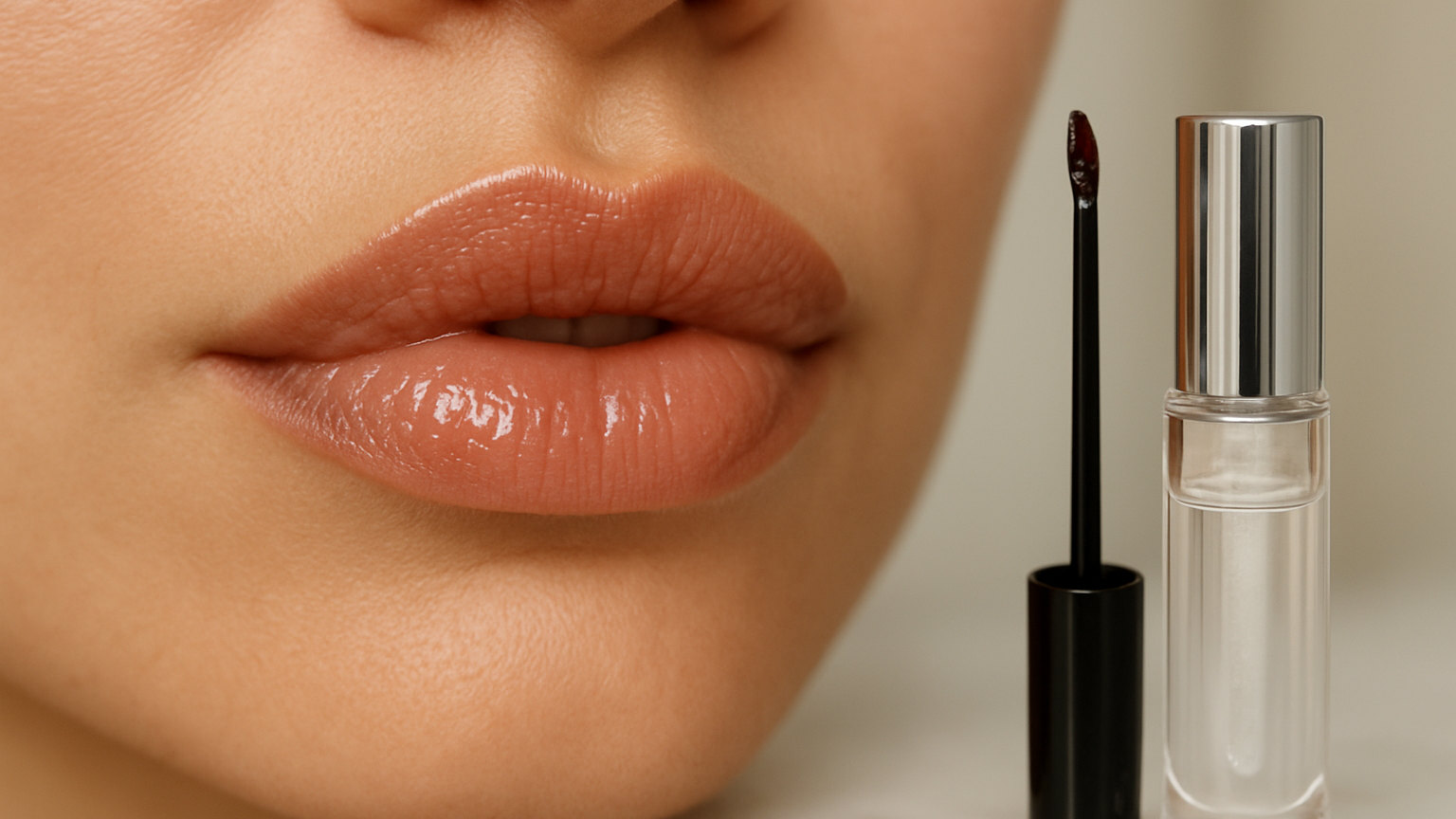
Making lips look fuller with makeup works through light and shape rather than through colour. Light-reflecting finishes bring the lip forward, and careful lining adjusts the outline, and both have a point beyond which they read as obvious.
What does the most?
Gloss or a satin finish at the centre of the lower lip, which catches light and creates the impression of projection.
A lighter shade or a touch of highlighter at the centre of the lower lip, blended into the surrounding colour.
Lip liner used to define and very slightly extend the natural line.
A highlight on the cupid's bow, which defines the upper lip shape and lifts it visually.
Those four together do more than any single dramatic technique.
How much overlining works?
A millimetre or so beyond the natural line, at most, and only where the lip is thinnest rather than all the way round.
Beyond that it is visible in daylight and in photographs even when it looks acceptable in a bathroom mirror.
Colour also migrates back to the true lip line as it wears, leaving a visible outline above it, which is what makes heavy overlining look worse after a few hours.
Blending the liner inward so there is no hard boundary is what makes a small extension convincing.
The centre of the upper lip and the centre of the lower are the areas where slight extension reads most naturally.
Which finishes help and which do not?
Gloss, satin and cream finishes reflect light and make lips look fuller.
Matte finishes absorb light and make lips look flatter and thinner. This is the most reliable finish effect in the category.
Metallic and frosted finishes reflect strongly and can emphasise texture.
If you like matte, applying a small amount of gloss to the centre of the lower lip only preserves most of the matte look while adding dimension.
Does shade matter?
Yes. Darker shades recede and make lips appear smaller; lighter and brighter shades come forward.
Mid-tones close to your natural lip colour are the most flattering for fullness, since very pale shades wash out and very dark ones shrink.
An ombre effect, with a slightly deeper shade at the outer edges and a lighter one at the centre, creates dimension. Blend thoroughly, since a visible boundary looks dated.
Do lip plumpers work?
Temporarily, and through irritation rather than through any lasting change.
Most contain cinnamon, capsaicin, menthol, ginger or peppermint, which irritate the lip and cause mild inflammation and swelling. That is the plumping effect.
It lasts between twenty minutes and a couple of hours.
Repeated use of irritant plumpers dries and sensitises the lips, and can cause contact dermatitis, so they are a poor daily habit.
Hyaluronic acid plumpers work by drawing water into the lip surface, which is gentler and considerably more modest.
What about lip fillers?
Hyaluronic acid filler injected into the lip is the only non-surgical approach that genuinely changes volume, lasting six to twelve months.
It is a medical procedure and should be carried out by a qualified healthcare professional. The UK regulation of cosmetic injectables is limited, and complications including vascular occlusion, which can cause tissue death, are serious and require someone able to manage them.
Check the practitioner's medical registration, ask what product is used, and ask what happens if there is a complication.
It is not the subject of this article beyond noting the distinction between makeup and a procedure.
What preparation helps?
Well-moisturised lips look fuller than dry ones, and flaking makes any technique look worse.
Gentle exfoliation and overnight balm in the days before, rather than on the day.
Blotting excess balm before applying colour, since a wet surface prevents anything sitting evenly.
What makes lips look thinner?
Very dark or very matte shades. Concealing the natural lip line entirely with foundation before applying colour.
Lining inside the natural line. Skipping the lower lip highlight.
Overlining so heavily that the eye reads the true lip line underneath, which is the effect most people are trying to avoid and the commonest result of trying too hard.


