
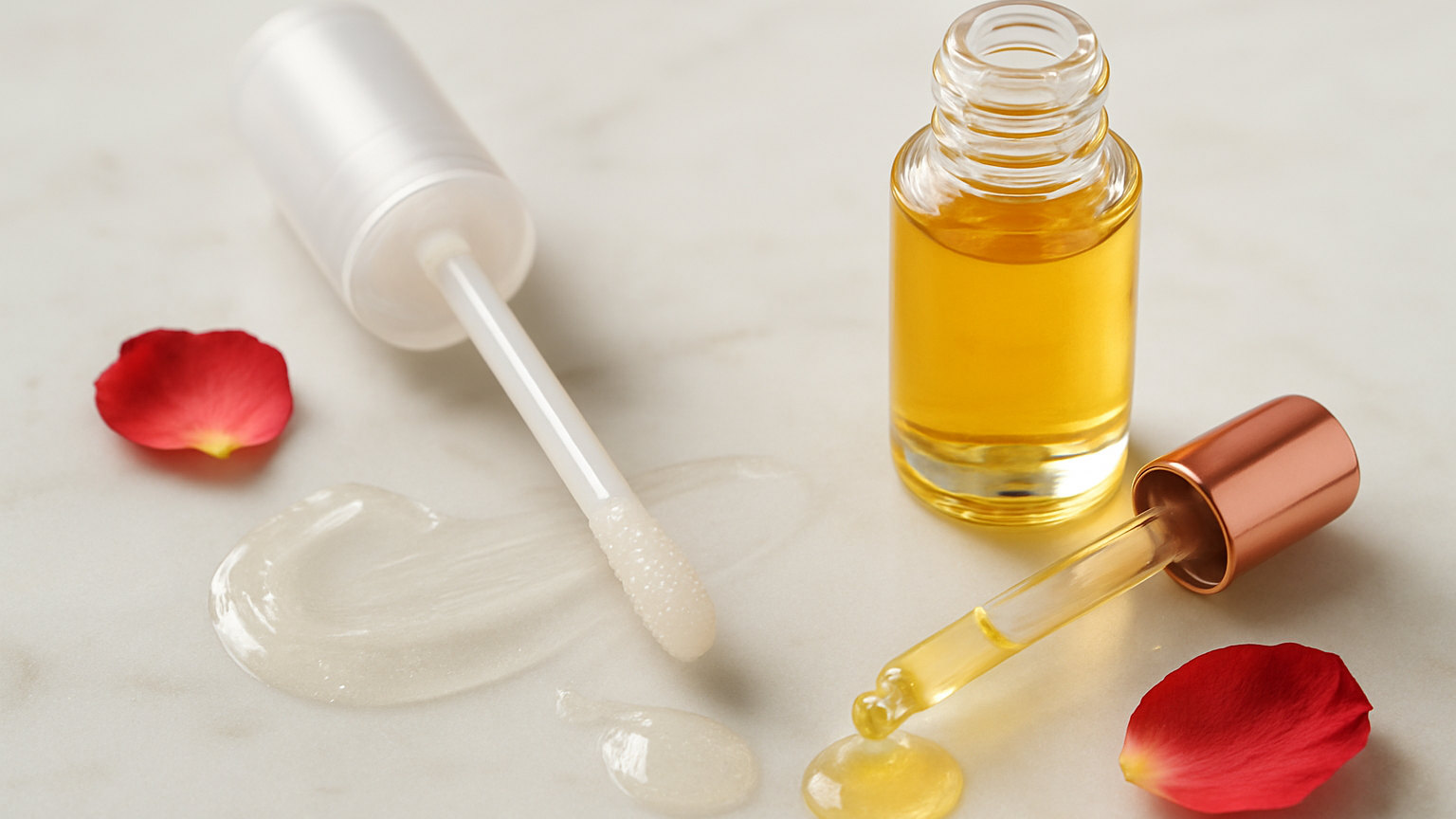
Gloss and lip oil look similar in the tube and do different things. Gloss is primarily cosmetic; lip oil sits between makeup and treatment. Neither replaces a proper balm for genuinely dry lips.
What does gloss actually do?
Adds shine, which reflects light and makes lips look fuller.
Adds sheer colour, which blends with your natural lip rather than covering it.
Adds dimension over a matte lipstick, particularly applied only to the centre of the lower lip.
What it does not do is moisturise meaningfully, despite the impression that a wet-looking product must be hydrating.
Does gloss dry your lips?
Most glosses are neutral rather than actively drying: they neither add nor remove moisture, and lips feel dry when it wears off because they were dry underneath.
Some glosses do dry, particularly those containing menthol, cinnamon or capsaicin for plumping, or high alcohol content.
The sensible arrangement is balm underneath and gloss over the top, which gives the shine and the moisture.
Anyone whose lips feel worse after gloss should check the ingredient list for plumping agents.
What is lip oil?
A hybrid of gloss and treatment, usually based on jojoba, coconut, castor or plant oils, often with a sheer tint.
It gives shine like a gloss with genuine conditioning, and it is considerably less sticky.
It suits anyone who wants a low-effort tint with comfort, and anyone whose lips are dry but who dislikes the weight of balm.
It is not occlusive enough for genuinely chapped lips, which need petrolatum or an ointment.
How do they compare?
Gloss is shinier and usually stickier, with more pigment options and a shorter wear time.
Oil is lighter, less sticky, more comfortable and more conditioning, with sheerer colour.
Gloss layers better over lipstick; oil works better worn alone.
For anyone put off gloss by the texture, oil is the version worth trying.
Why is gloss sticky?
Polymers, most commonly polybutene, which create the thick, cushiony, adhesive texture and make the gloss cling rather than sliding off.
Stickiness correlates with longevity: the least sticky glosses wear off fastest.
Non-sticky formulas exist and generally need reapplying more often.
Applying a thinner layer reduces both the stickiness and the wear time.
Do plumping glosses work?
Temporarily, and through irritation.
Cinnamon, capsaicin, ginger, menthol and peppermint cause mild inflammation, which produces swelling lasting twenty minutes to a couple of hours.
Repeated use dries and sensitises the lips and can cause contact dermatitis, so it is a poor daily habit.
Hyaluronic acid plumpers draw water into the surface and are gentler and more modest.
How should you apply them?
Balm first, absorbed and blotted, if your lips are dry.
A thin layer, since more product means more stickiness and more transfer without more shine.
Over lipstick, apply only to the centre of the lower lip if you want dimension without losing the lipstick's definition.
Blot the lipstick first, since gloss over unset lipstick moves the colour around.
What are the practical drawbacks?
Hair sticking to the lips in wind, which is the commonest complaint.
Transfer onto cups, glasses and anything the lips touch.
Short wear time, generally an hour or two.
And on anyone with fine lines around the mouth, gloss travels more readily than other formulas, so a liner underneath matters.
How long do they last, and how should you store them?
Around twelve to eighteen months from opening for most glosses and oils, and the doe-foot applicator returning to the tube repeatedly makes them among the less hygienic formats in a makeup bag.
Anything that has thickened, separated, changed colour or smells rancid has gone, and oils in particular can go off before the stated date if kept somewhere warm.
Store away from heat and direct sunlight, and do not share, since lip products transmit cold sores readily.
Are they worth owning?
A lip oil, for most people, yes. It covers comfort and a sheer tint in one product and is the easiest thing to wear on a day you cannot face anything else.
A gloss is worth having if you like the finish or want dimension over a matte, and it is genuinely optional rather than a basic.


