
Lips are the one place where a proportion of what you apply is genuinely ingested, which makes ingredient questions more reasonable here than elsewhere. The picture is generally reassuring, with a few specifics worth knowing.
What is in a lipstick?
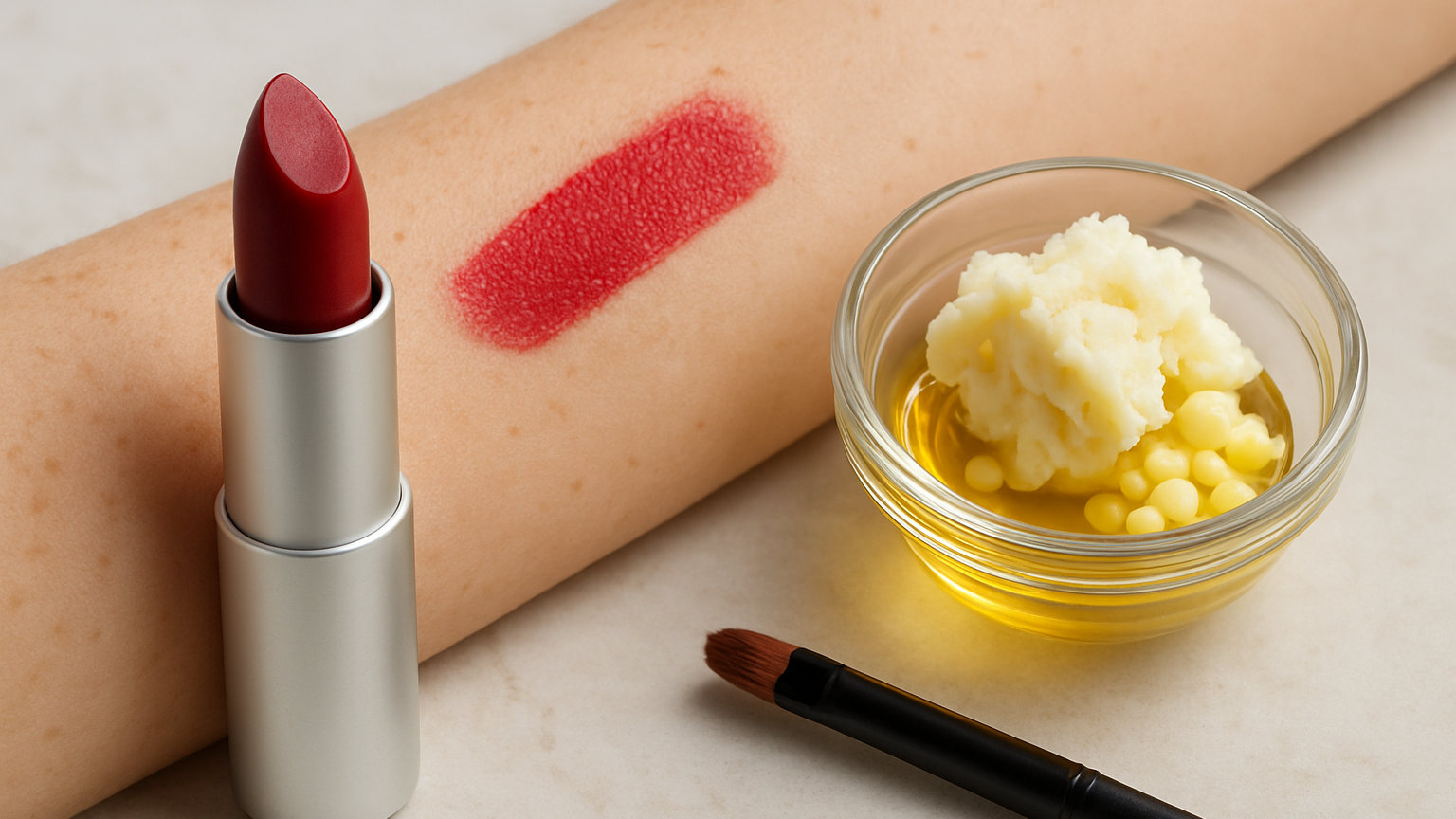
Waxes, which give structure: beeswax, candelilla, carnauba.
Oils and emollients, which give slip and comfort: castor oil is the traditional base, alongside jojoba, shea and various esters.
Pigments, which give colour: iron oxides, titanium dioxide, and approved organic colourants.
Film formers and silicones in long-wear formulas, which create the transfer-resistant layer.
Preservatives, antioxidants and fragrance.
Do you actually eat it?
Some of it, yes. Estimates of how much lipstick is ingested over a lifetime circulate widely and vary enormously, and the direction is correct even if the figures are unreliable.
This is why lip products are regulated more tightly than other cosmetics in some respects, and why colourants approved for lips are a narrower list than those approved for eyes or skin.
It is also why you should not use eye or nail products on lips, since the pigment approvals differ.
What about lead in lipstick?
This recurs periodically and deserves a measured answer.
Lead is not added to lipstick. It occurs as a trace contaminant in mineral pigments, since it is present in the earth those minerals come from.
Regulatory testing in the UK, EU and US has found trace levels well below limits considered safe, and the amounts are considerably lower than typical dietary exposure.
Products bought from unregulated sources, including some imported and counterfeit products, are a different matter, and heavy metal contamination has been documented in those.
Buying from reputable retailers is the practical response rather than avoiding lipstick.
Which ingredients cause reactions?
Fragrance and flavouring, which are the commonest causes of lip contact dermatitis.
Certain colourants, particularly some reds. Carmine, derived from cochineal insects, causes reactions in a small number of people.
Lanolin, which is a recognised allergen.
Propyl gallate and some preservatives.
Sunscreen filters in SPF balms.
Symptoms are itching, burning, swelling, dryness and sometimes darkening afterwards. Stopping the product and using a plain balm resolves most cases, and persistent reactions warrant patch testing through a GP referral.
What is carmine?
A red pigment made from cochineal insects, used widely in cosmetics and food.
It is not vegan or vegetarian, which is the commonest reason people look for it on a label. It appears as carmine, cochineal, CI 75470 or E120.
It causes allergic reactions in a small number of people, occasionally severe.
Vegan alternatives use synthetic or mineral pigments to achieve similar reds.
What about parabens and other flashpoints?
Parabens are preservatives with a long safety record and are permitted at regulated concentrations. The concerns raised have not been supported by regulatory reviews, and paraben-free products use alternative preservatives that are not automatically safer.
Titanium dioxide is safe topically and the concern relates to inhalation of the powdered form, which is not relevant to a lipstick bullet.
Mineral oil and petrolatum in cosmetics are highly refined and safe, and the concern relates to unrefined grades not used in cosmetics.
What about vegan and cruelty-free?
Vegan means no animal-derived ingredients: no beeswax, lanolin, carmine or silk proteins.
Cruelty-free means not tested on animals, which is a separate claim. Animal testing for cosmetics has been banned in the UK and EU for years, so the claim means less here than the labelling implies.
A product can be cruelty-free and not vegan, and the reverse.
Neither term is tightly regulated, so certification schemes are more meaningful than the words alone.
What is worth checking?
The ingredient list if you have known allergies, particularly to fragrance, lanolin or carmine.
The period-after-opening symbol, since lipstick lasts around a year to eighteen months.
Whether a product has changed smell or texture, which indicates it has gone regardless of the date.
And the retailer, since counterfeit cosmetics are common online and are where genuine contamination problems occur.


