
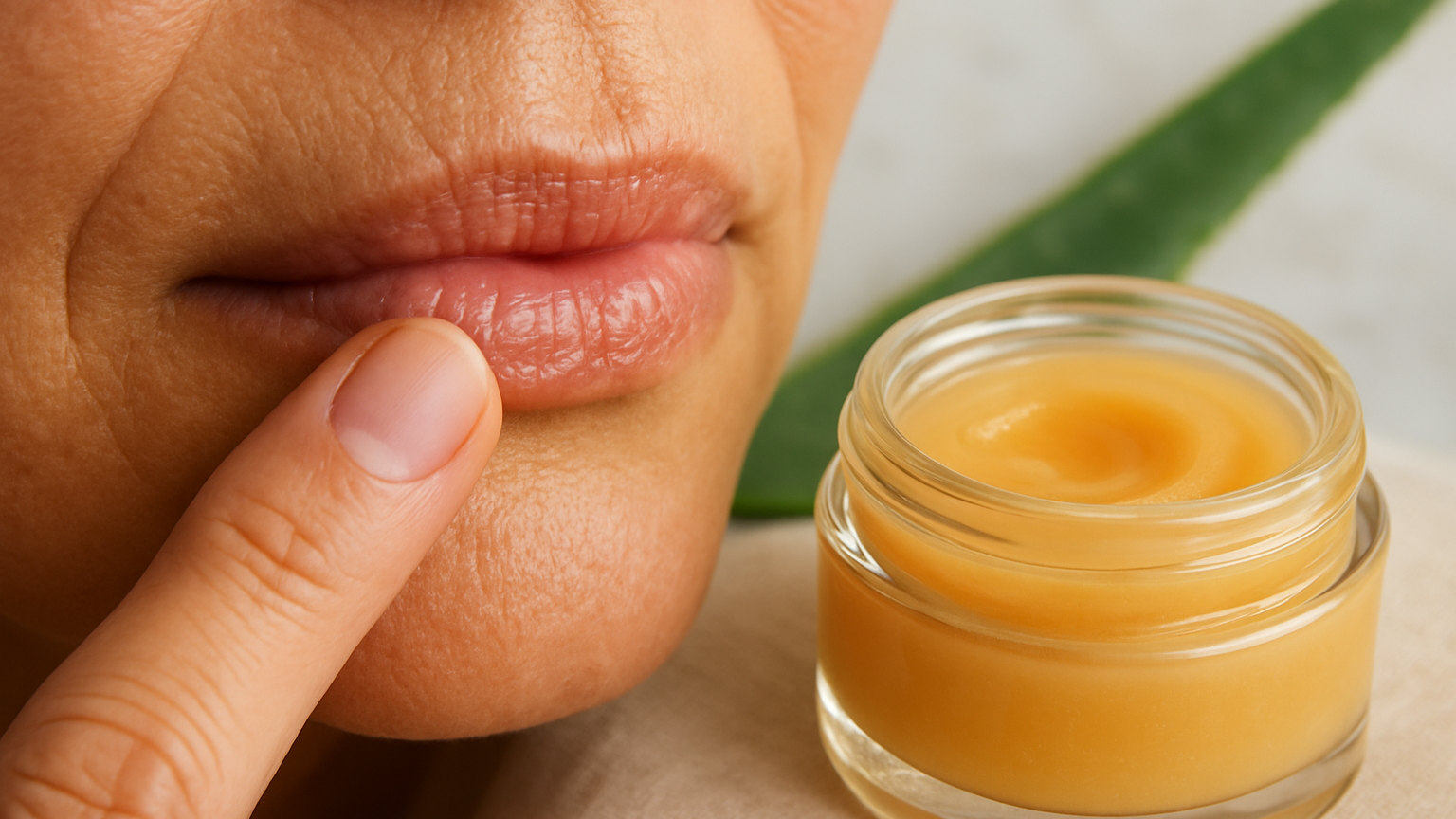
Lip skin is around three to five cell layers thick against fifteen or more elsewhere on the face, has no sebaceous glands and almost no melanin. That combination explains why lips dry out first, burn readily and show neglect immediately.
What makes lip skin different?
No oil glands, so no natural barrier against water loss and complete dependence on what you apply.
A very thin outer layer, which is why blood vessels show through and give lips their colour.
Almost no melanin, which means minimal natural protection from ultraviolet.
No sweat glands, so no cooling and no natural moisturising factors of the kind the rest of the skin produces.
What is the daily routine?
A plain occlusive balm applied whenever lips feel dry, without waiting for them to chap.
An SPF balm during daylight hours, reapplied through the day.
A thick layer of ointment or petroleum jelly overnight, which is where most of the repair happens.
Not licking, which is the single most damaging habit and requires having balm to hand rather than willpower.
That is genuinely the whole routine.
Do lips need sun protection?
More than most people apply. The lower lip in particular receives direct overhead sun and has minimal melanin.
Actinic cheilitis, a precancerous change producing persistent roughness, scaling or a whitish appearance on the lower lip, results from cumulative exposure and is frequently mistaken for chronic chapping.
Lip cancers occur, are strongly associated with sun and smoking, and are found late because the early changes look like dry lips.
An SPF 30 balm reapplied through the day is the practical answer, and any persistent rough or white patch lasting more than three weeks warrants a GP appointment.
Should you exfoliate?
Only when there is loose flaking, and gently.
A damp flannel, a soft toothbrush or a fine sugar scrub, used with light pressure for a few seconds.
Apply balm first and let it soften the flakes for several minutes, which does most of the work.
Never pick or peel, which removes living tissue and creates raw patches that chap worse.
Once or twice a week at most. Daily scrubbing keeps lips permanently raw.
Which ingredients help?
Occlusives, which prevent water leaving: petrolatum, lanolin, beeswax, shea butter and dimethicone.
Humectants such as glycerin and hyaluronic acid, which need an occlusive over them to work.
Ceramides and squalane, which support the barrier.
Plain petroleum jelly overnight is one of the most effective and cheapest options available.
Which ingredients cause problems?
Menthol, camphor, phenol and eucalyptus, which produce a cooling sensation that reads as soothing and are irritants.
Fragrance and flavouring, which are common causes of contact dermatitis on lips and encourage licking.
Salicylic acid in exfoliating balms, which dries further.
Alcohol high in the ingredient list.
If lips feel worse as a balm wears off than before you applied it, one of these is the reason.
What else affects them?
Mouth breathing, particularly overnight, which dries them considerably. Nasal congestion is a common underlying cause.
Central heating and air conditioning, both of which reduce humidity.
Dehydration, though drinking water alone does not fix chapped lips.
Some medications, particularly oral retinoids such as isotretinoin, which cause severe dryness as a predictable effect and need heavy ongoing balm use.
Smoking, which affects both colour and texture.
When should you see a GP?
Chapping not improving after two weeks of a plain occlusive balm.
Persistent cracking at the corners of the mouth, which is usually angular cheilitis and needs an antifungal or antibacterial cream rather than balm.
Any sore, ulcer, lump, white patch or rough area that has not healed within three weeks.
Swelling of the lips, which needs urgent attention if it affects breathing.
And recurrent cold sores, which have effective treatments that work best applied at the first tingle.
Does the season change anything?
Considerably. Winter combines cold air, wind and central heating, all of which dry lips, and it is when chapping peaks for almost everyone.
Summer brings sun exposure, which is the bigger long-term risk, and an SPF balm is worth carrying rather than relying on facial sunscreen, which rarely reaches the lip.
The practical adjustment is a heavier ointment through winter and an SPF balm through summer, with plain balm year-round.


