
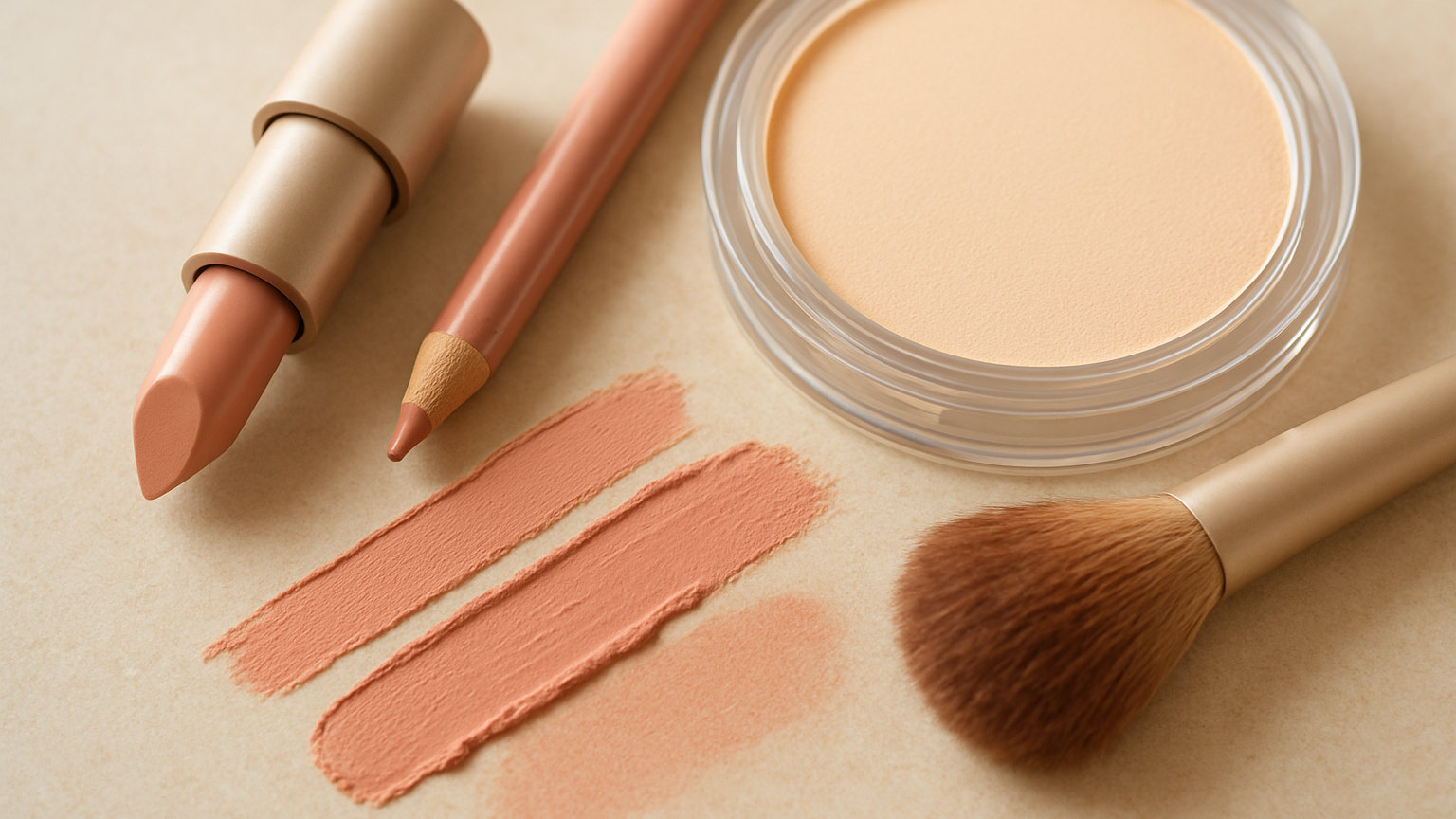
Lipstick lasting well is a matter of layers rather than of formula alone. A satin bullet applied properly outlasts a liquid matte applied badly, and the technique costs nothing.
What is the layering method?
Balm applied and given several minutes to absorb, then blotted so no wet layer remains.
Lip liner filled across the entire lip surface, not just the outline. This is the step that matters most and the one most often skipped.
A thin first layer of lipstick, applied and blotted with a tissue.
A second thin layer over the top.
Optionally, a translucent powder pressed lightly through a single-ply tissue between layers for very long wear.
Two thin layers with a blot between them outlast one thick layer by hours.
Why does liner make such a difference?
It creates a dry, slightly waxy base that the lipstick grips, rather than sitting on the natural moisture of the lip.
It also means that as the lipstick wears away from the centre, the colour underneath remains, so there is no visible ring at the edges.
A liner matched to the lipstick is invisible as it wears; one darker than the lipstick produces a distinct outline.
For anyone who wants longevity from a comfortable formula, this single step does more than switching to a drying one.
Why does blotting work?
It removes the oils and excess product that would otherwise transfer, leaving only the pigment bound to the lip.
The first layer blotted becomes a base; the second layer sits on it rather than on bare lip.
Blot by pressing a tissue between the lips rather than wiping, which removes colour rather than excess.
What breaks lipstick down?
Oil, from food, balm applied over the top, and the natural moisture of the lip.
Eating and drinking, particularly anything greasy. Drinking from a glass transfers more than a straw.
Licking or pressing the lips together repeatedly.
Applying too much product, which cannot bond properly and moves as a layer.
Applying over unabsorbed balm, which is the commonest single error.
How do you touch up properly?
Blot first with a tissue, which removes what has broken down and leaves a cleaner base.
Then apply a thin layer to the centre of the lips and press together, rather than reapplying the full shape.
Reapplying over eight hours of product without blotting is what produces a thick, uneven result and colour outside the natural line.
Carry the liner as well as the lipstick if you want a clean edge, since the edge is what wears first at the inner lip.
Does formula change what is possible?
Considerably. Liquid mattes and stains last through meals; satins and creams do not, regardless of technique.
The layering method extends every formula, and it will not turn a gloss into an eight-hour product.
Choosing a formula appropriate to the day is more effective than trying to make a comfortable one behave like a long-wear one.
What about transfer?
Transfer-proof and liquid matte formulas resist it best once fully set, which takes a few minutes.
Blotting and powdering reduce transfer on any formula.
A setting spray designed for lips exists and does something modest.
Nothing prevents transfer entirely on a comfortable formula, and expecting it is the source of most disappointment.
What are the trade-offs?
Everything that extends wear reduces comfort. Powder between layers is drying. Liquid mattes are drying. Stains are drying.
For an ordinary day, a satin over liner with one blot is a reasonable balance: several hours of wear with no discomfort.
For an event or a long day, the full method with a long-wear formula and balm in your bag for afterwards is the honest arrangement.
And treating lips well between wears, with overnight balm and gentle exfoliation, does more for how lipstick sits than any application technique.
Does it last differently in different conditions?
Considerably. Heat softens wax-based bullets, so a satin that lasts four hours in February may need reapplying twice as often in July.
Cold and wind dry the lips, which makes matte formulas crack and flake sooner even though they technically stay put.
Masks, scarves and anything against the mouth transfer everything except the most transfer-proof formulas.
Choosing a stain or a liquid matte for those situations, and a comfortable satin the rest of the time, is more practical than expecting one product to cover both.


