
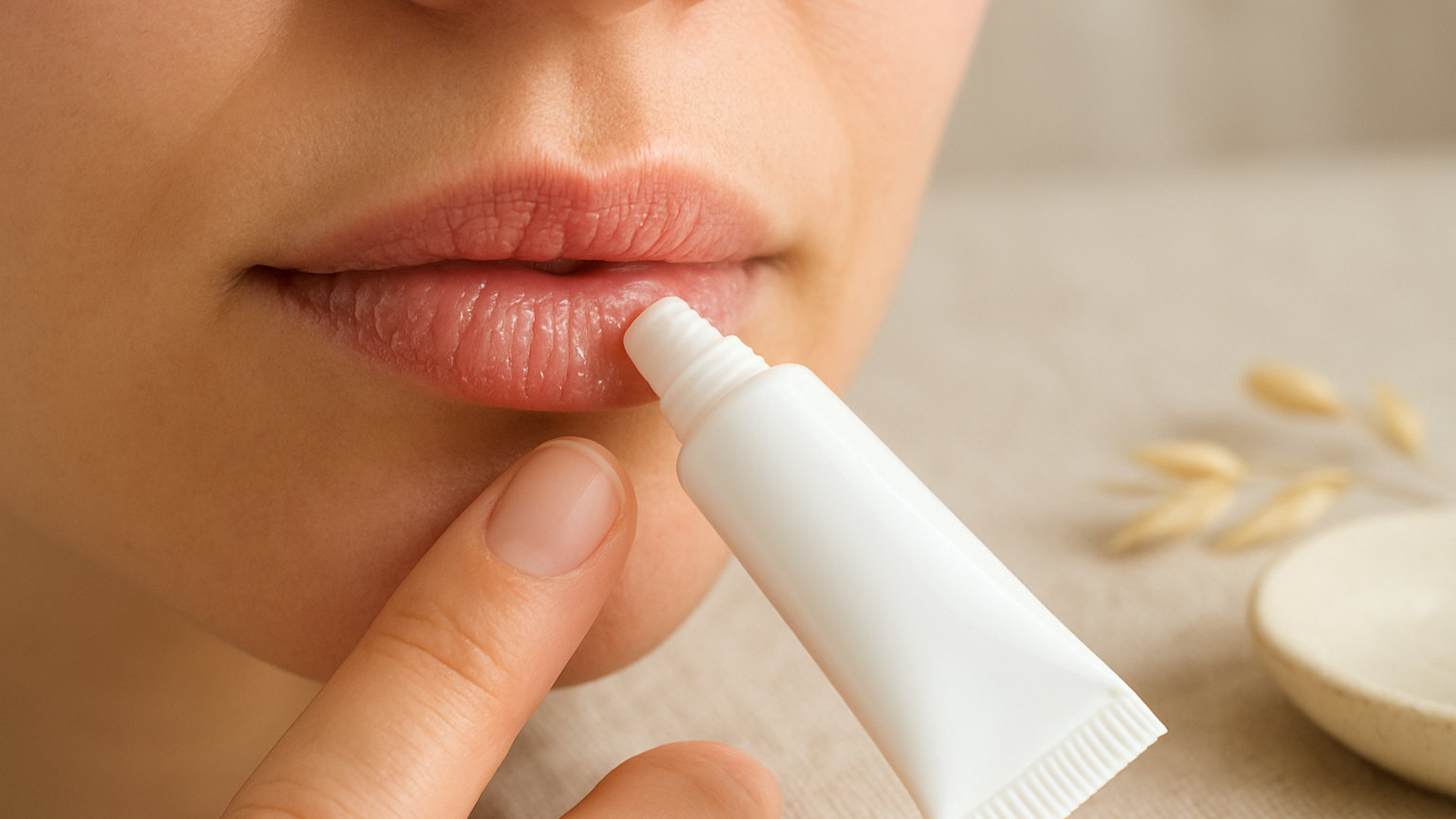
Lips have no sebaceous glands, a very thin outer layer, and no ability to retain moisture on their own. They are permanently dependent on what you put on them, which is why they chap so readily.
Why do lips dry out?
No oil glands, so no natural barrier against water loss.
A thin stratum corneum, which loses water considerably faster than the skin around it.
Constant exposure: cold, wind, sun, indoor heating and air conditioning.
Licking, which is the most self-defeating habit in this area. Saliva evaporates rapidly and takes moisture with it, and the digestive enzymes it contains irritate the skin.
Mouth breathing, particularly overnight, and dehydration.
Which balm ingredients help?
Occlusives, which prevent water leaving: petrolatum, lanolin, beeswax, shea butter and dimethicone. These are the ones that actually work.
Humectants such as glycerin and hyaluronic acid, which draw water in and need an occlusive over them.
Ceramides and squalane, which support the barrier.
Plain petroleum jelly is one of the most effective and cheapest options available, particularly overnight.
Which ingredients make it worse?
Menthol, camphor, phenol and eucalyptus, which produce a cooling or tingling sensation that reads as soothing and are irritants. They also encourage reapplication, which is why they appear in so many products.
Fragrance and flavouring, which are common causes of contact dermatitis on lips and prompt licking.
Salicylic acid, which some balms include to exfoliate flaking and which dries further.
Alcohol high in the ingredient list.
If your lips feel worse when the balm wears off than before you applied it, one of these is usually the reason.
Is lip balm addiction real?
Not in a physiological sense. There is no dependency, and lips do not stop producing anything because they never produced it.
What is real is a cycle: an irritating balm causes discomfort as it wears off, which prompts reapplication, which continues the irritation.
Switching to a plain, fragrance-free occlusive breaks it within a week or two.
Constant reapplication of a good balm is not a problem, which is worth saying to anyone who has been told to stop using it.
What is the routine that works?
A plain occlusive balm applied through the day, whenever lips feel dry, without waiting.
A thick layer of petroleum jelly or an ointment overnight, which is where most of the repair happens.
Gentle exfoliation only if there is loose flaking: a damp flannel or a soft toothbrush, lightly. Do not pick or peel, which removes living tissue and creates raw patches.
SPF on the lips in daylight, since they burn readily and lip skin cancer is a genuine risk.
Stop licking, which requires having balm to hand rather than willpower.
Do lips need sun protection?
More than people assume. The lower lip in particular receives direct sun and has almost no melanin to protect it.
Actinic cheilitis, a precancerous change producing persistent roughness and scaling on the lower lip, is caused by cumulative sun exposure and is frequently mistaken for chronic chapping.
A balm with SPF 30, reapplied through the day, is the practical answer.
Any persistent rough or white patch on the lower lip that does not settle warrants a GP appointment.
What is angular cheilitis?
Cracking, redness and soreness at the corners of the mouth specifically, rather than on the lips themselves.
It is usually a fungal or bacterial infection developing where saliva pools, and it does not respond to lip balm.
Contributing factors include licking, ill-fitting dentures, iron or B vitamin deficiency, and anything that deepens the folds at the mouth corners.
It needs an antifungal or antibacterial cream from a GP or pharmacist, and recurrence warrants checking for deficiency.
When should you see a GP?
Chapping that does not improve after two weeks of a plain occlusive balm.
Persistent cracking at the corners of the mouth.
Any sore, ulcer, white patch or rough area that does not heal within three weeks, particularly on the lower lip.
Severe chapping alongside dry eyes and mouth, which can indicate Sjogren's syndrome.
Swelling of the lips, which can indicate an allergic reaction and needs urgent attention if it affects breathing.


