
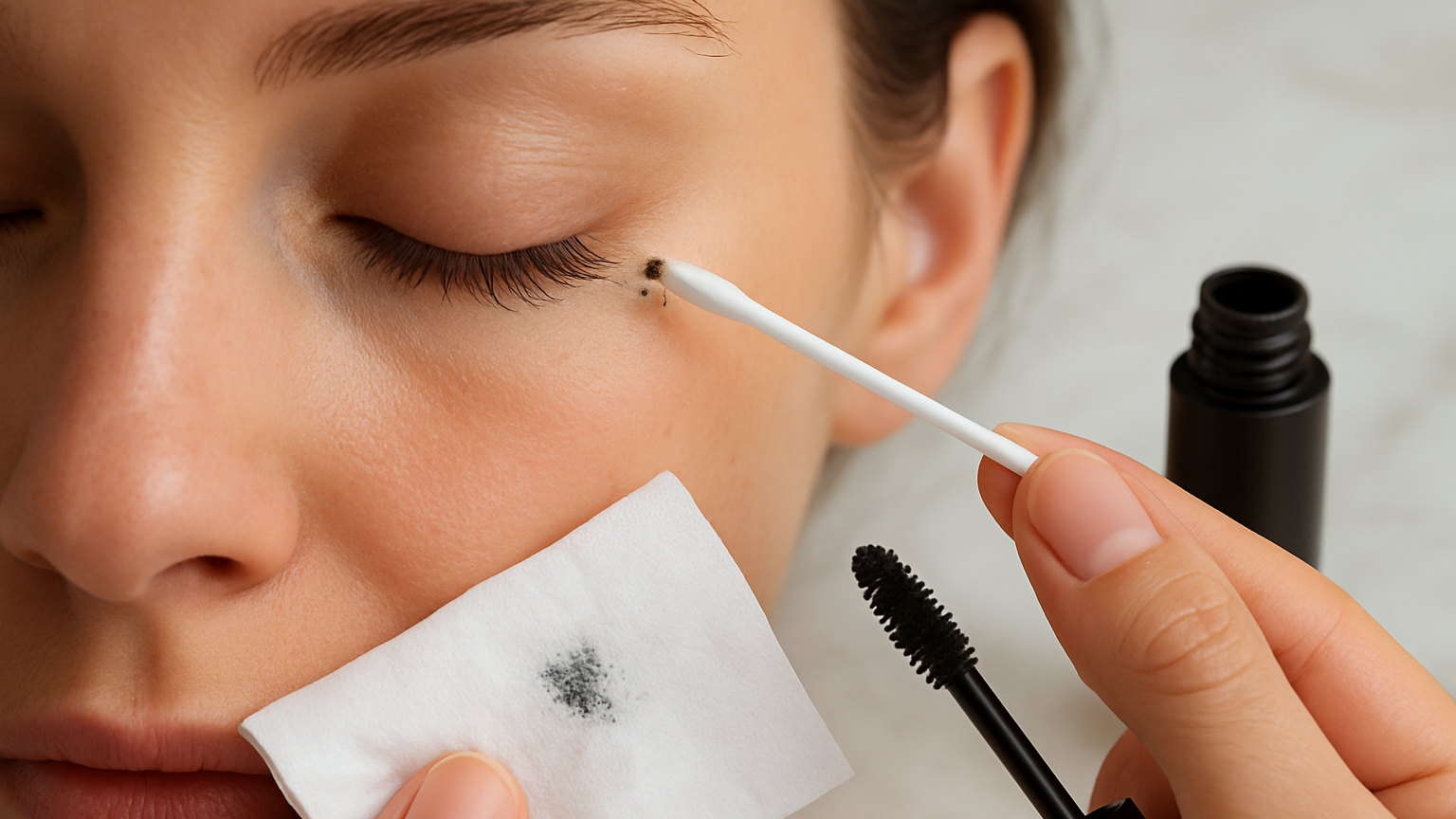
Most makeup errors are corrected by removing rather than adding, and the instinct to balance a mistake by applying more elsewhere is what turns a small problem into a face that looks heavy.
What is the general principle?
Take away before adding. A clean brush, a clean sponge or a tissue fixes more than another product.
A clean fluffy brush buffed over an area softens and diffuses without removing the base underneath.
A damp sponge pressed over an area sheers it out.
Translucent powder over something too intense mutes it.
Only after those have failed is starting again worth considering.
How do you fix too much blusher or bronzer?
Buff with a clean fluffy brush, which spreads and reduces the intensity.
A clean damp sponge pressed over the area, which lifts product without disturbing foundation.
A light dusting of translucent powder, or a small amount of foundation stippled over the top with a sponge.
Do not add foundation heavily on top, which produces a thick patchy layer.
How do you fix patchy foundation?
Identify the cause, since the fix differs. Patchiness from dry skin needs moisture; patchiness from pilling needs removal.
For dry patches, press a small amount of moisturiser or a hydrating mist over the area with clean fingers, then stipple foundation back with a sponge.
For pilling, where product rolls into small balls, gently roll it away with a fingertip, then reapply thinly. Pilling is caused by incompatible bases, so the underlying fix is skipping the primer or matching formulas next time.
For general unevenness, a damp sponge pressed over the whole area redistributes it.
How do you fix creased concealer?
Do not add more, which is the commonest response and makes it worse.
Press a clean fingertip or a damp sponge over the crease, which lifts the gathered product and smooths it.
Then set with the smallest amount of finely milled powder, pressed rather than swept.
If it creases repeatedly, the cause is usually too much product or too much eye cream underneath rather than the concealer itself.
How do you fix eye makeup errors?
A cotton bud dipped in micellar water for precise correction, which removes without disturbing the surrounding area.
A small flat brush with concealer to clean up the edge of a wing or a shadow that has gone too far.
For muddy eyeshadow, apply a matte shade close to your skin over the whole area and start the blending again, rather than adding more of what caused it.
For fallout under the eye, sweep it away with a large clean brush before touching it with anything wet, since water turns fallout into a smear.
How do you fix lipstick?
A cotton bud with micellar water for a line that has gone outside the natural edge.
A small flat brush with concealer to sharpen the outer edge, used sparingly since a visible pale outline is worse than a soft edge.
For colour that has bled into fine lines, blot, then reline and apply a thinner second layer.
For a shade that is too dark, blot heavily and press a fingertip over it, which sheers it into a stain.
How do you fix brows?
Brush through firmly with a clean spoolie, which removes a surprising amount of excess product.
A clean fluffy brush over the top to soften the edges.
A light dusting of translucent powder to lighten.
For a brow that is genuinely too dark, removing it and starting again with a lighter hand is faster than correcting it.
When should you start again?
When the base has broken down rather than simply gone wrong, which is usually obvious.
When multiple corrections have left a thick layer, since further work on top compounds it.
When the shade is wrong rather than the application, which no technique fixes.
Starting again takes five minutes and frequently less time than the third attempt at correcting, which is worth remembering before persevering.


