
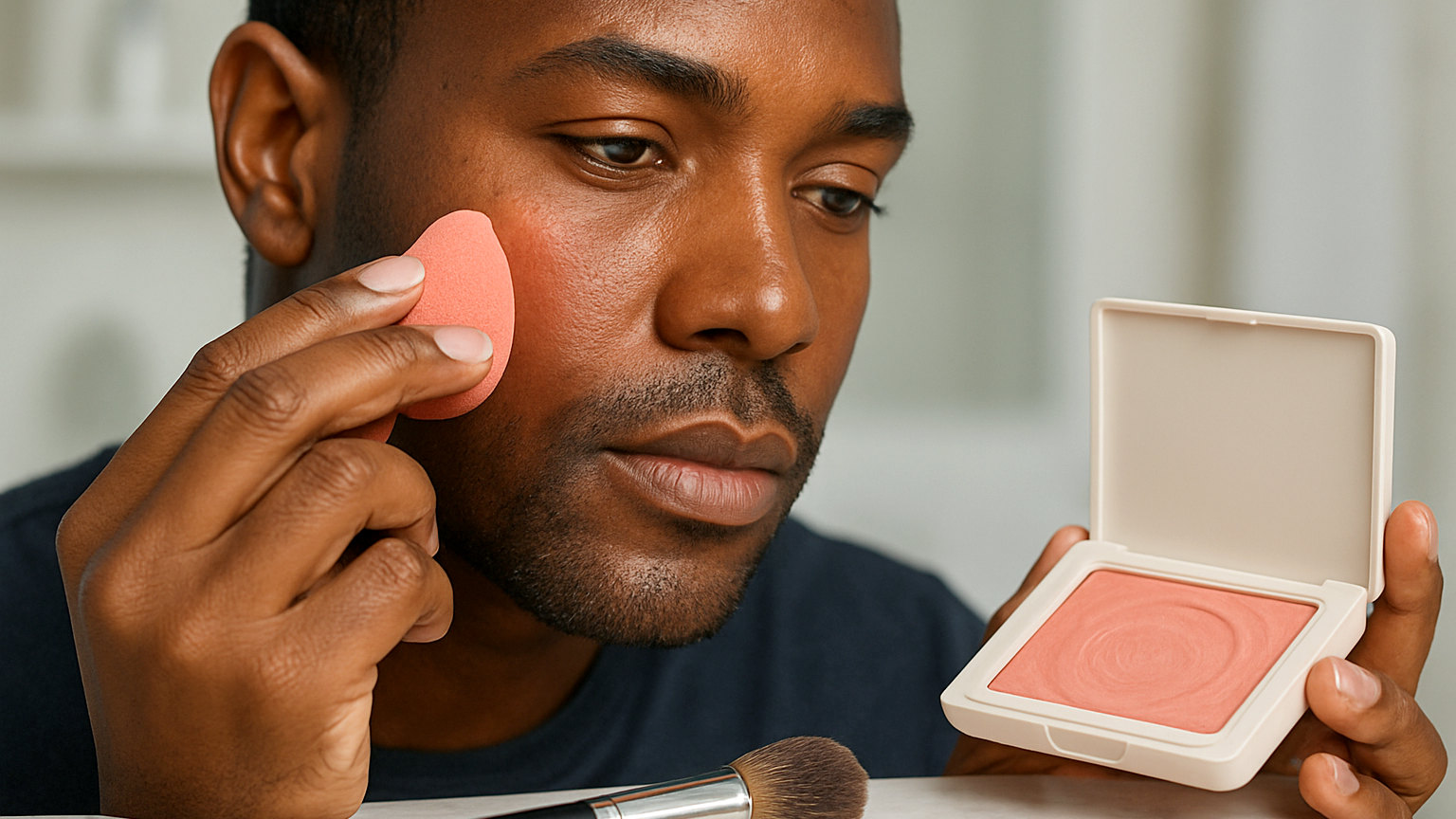
Makeup is a manual skill learned through repetition, and most people attempt it in the worst possible conditions: copying an unfamiliar look, under time pressure, before leaving the house. Concluding from that that you are bad at it is understandable and usually wrong.
Where should you start?
Skin, brows and lashes, in that order. Those three do most of the work and are the hardest steps to skip.
Even skin, groomed brows and curled lashes with mascara reads as a finished face, and every other skill builds on that base.
Colour comes later. Eyeshadow and bold lips are the most visible skills and the least essential.
Learning in this order means you look better throughout rather than only at the end.
Why do tutorials mislead?
They are usually filmed under controlled lighting, frequently edited, and demonstrated on a specific face.
The same placement behaves differently on a different eye shape; the same shade behaves differently on a different undertone.
Videos also compress time, so a twenty-minute blend becomes thirty seconds and the viewer concludes it should be quick.
The useful part of a tutorial is the mechanism rather than the result: what the person is doing and why, rather than what it looks like on them.
How should you practise?
On a day when it does not matter, with time to remove it and start again.
One new skill at a time rather than a full look.
Repeat it several times in a session, since the third attempt teaches more than the first.
Photograph the result, which shows what a mirror hides because the image is reversed.
Practise on yourself rather than on a hand, since the shape and the angle are the difficult parts.
What order do skills come in?
Applying and blending a base evenly, including down the neck.
Placing concealer and setting it without creasing.
Brows: mapping, filling and softening.
Blusher placement, which is quick to learn and makes a large difference.
Eyeshadow: transition shade, then crease, then lid.
Liner, which is the hardest and worth leaving until last.
What is worth knowing early?
That less product is almost always the answer when something looks wrong.
That the tool matters less than consistency, and that fingers work for most cream products.
That a clean brush with no product on it fixes more than another layer.
That checking in daylight before leaving catches most errors.
And that shade matching is a bigger determinant of the result than any technique.
Where can you get help in person?
Beauty counters will apply makeup and demonstrate techniques free, and it is worth using for learning rather than only for buying. Say what you want to learn rather than what you want to buy.
Makeup lessons from an independent artist, which are more useful than they sound because they are tailored to your face.
Look Good Feel Better run free workshops in the UK for people undergoing cancer treatment.
Friends who are good at it, which costs nothing.
How long does it take?
A workable everyday routine takes a few weeks of occasional practice.
Blending eyeshadow well takes months rather than sessions, and it is the skill people most often expect to acquire immediately.
Liner takes longer still and is genuinely difficult, which is worth knowing before deciding you cannot do it.
Speed comes from repetition rather than from skill, so doing the same routine daily is what makes it fast.
What should you not do?
Buy a large amount before knowing what you use, which is the commonest and most expensive mistake.
Judge a result in a magnifying mirror, which makes everything look worse and leads to over-application.
Compare yourself to edited images, which are not achievable in a bathroom and frequently not achievable at all.
Give up on a product after one attempt, since most take several to use well.
And treat any of it as compulsory, since makeup is optional and the point of learning it is that you want to.


