
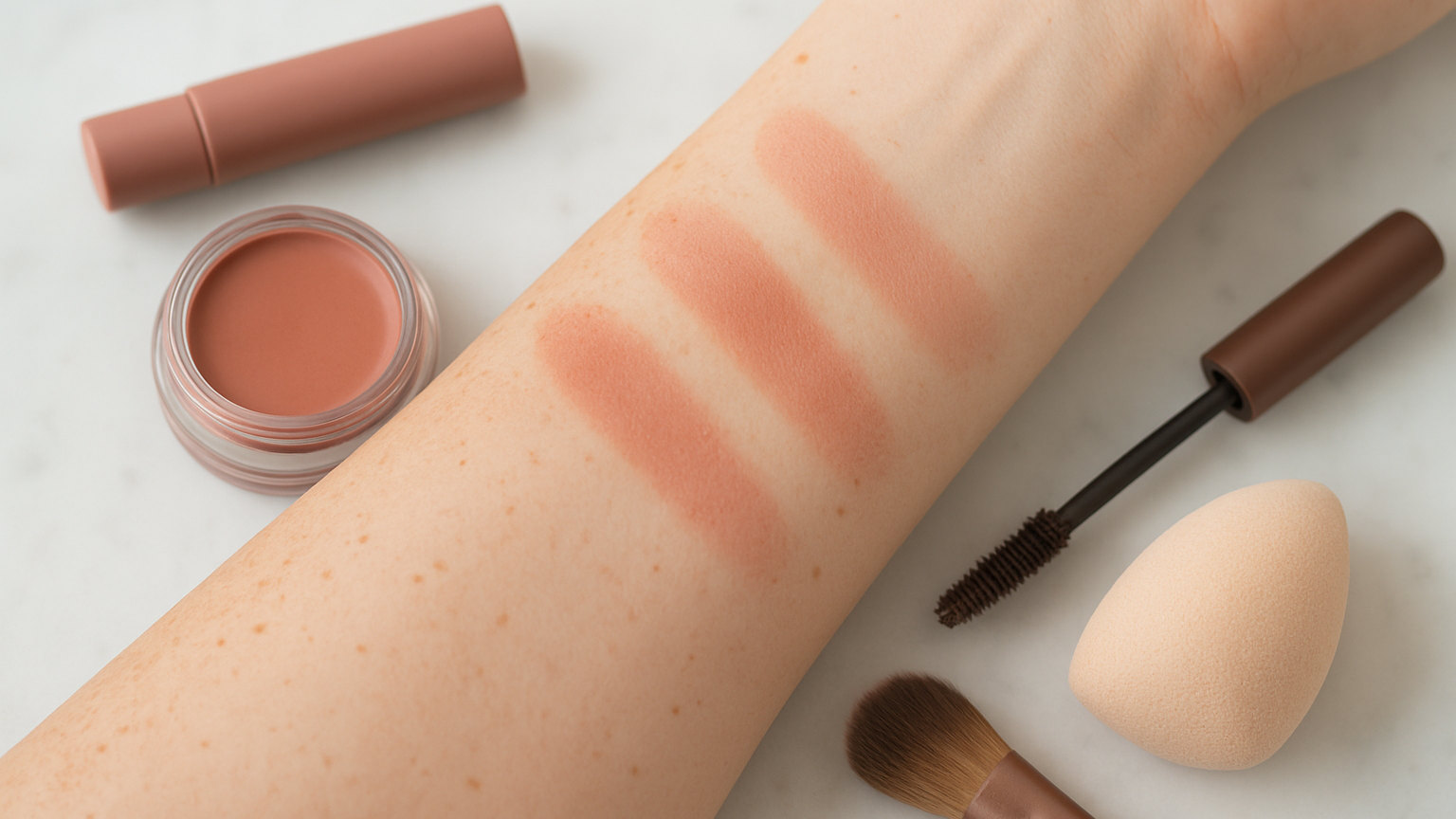
Beginner makeup is marketed as a full kit and works better as three or four things. Starting small costs less, looks better, and makes it far easier to work out what you actually want.
What should a first kit contain?
A concealer matched to your skin, for spots and under the eyes.
A brow product, ideally a tinted gel.
Mascara.
A tinted lip balm.
Four items, and it reads as a finished face.
A cream blusher is a worthwhile fifth.
Why skip foundation at first?
Because young skin is usually even in tone and does not need it, and full coverage on skin that did not require it reads as makeup rather than as skin.
Concealer where you need it looks considerably better than foundation everywhere.
Heavy bases also contribute to breakouts on skin already prone to them.
If you want something, a tinted moisturiser or skin tint is a better starting point than a full-coverage foundation.
What matters more than makeup?
Skincare, which at this age means very little: a gentle cleanser, a moisturiser, and sunscreen.
Removing makeup properly every night, which prevents most makeup-related breakouts.
Not picking at spots, which causes the marks and scarring that people then spend years covering.
Sunscreen, which does more for how skin looks at forty than any product bought at fifteen.
Elaborate anti-ageing routines are unnecessary and frequently irritating on young skin, whatever is being marketed.
What about acne?
Makeup does not usually cause acne and can contribute, and covering it is entirely reasonable.
Choose lighter coverage, oil-free or mineral formulas, and remove everything thoroughly at night.
Clean brushes weekly and replace sponges regularly, since dirty tools reapply bacteria daily.
Match concealer exactly to your skin for spots rather than going lighter, since a lighter shade draws attention to something already catching light.
Persistent acne is worth seeing a pharmacist or GP about, since effective treatments exist and early treatment prevents scarring.
What should you not buy yet?
Full-coverage foundation, contour kits and highlighter palettes, which are the products marketed hardest at beginners and the least useful.
Large eyeshadow palettes, where three shades get used.
Anti-ageing serums and retinoids, which young skin does not need and frequently reacts to.
Lash extensions and semi-permanent treatments, which are difficult to undo.
Anything bought because of a video rather than because you have a use for it.
What about eyebrows?
Leave them alone, which is the single most valuable piece of advice here.
Brow hair regrows slowly and repeated plucking over years can be permanent. A generation who thinned their brows as teenagers spent the following decades drawing them back on.
Brushing them through and setting with a clear or tinted gel does everything that is needed.
If you want them shaped, have it done professionally once rather than experimenting at home.
How do you learn?
Practise on a day when it does not matter rather than before school or an occasion.
One skill at a time, repeated, rather than a full look from a video.
Photograph the result, which shows what a mirror hides.
Remember that tutorials are filmed under controlled lighting and frequently edited, and that the same technique behaves differently on a different face.
What is worth saying plainly?
Makeup is optional and nobody needs it, and enjoying it is a perfectly good reason to wear it.
Comparison with edited images is the main reason people conclude they need more than they do.
Skin at this age is doing what skin does, and most of what people try to correct settles on its own.
And spending less at the start is better, since taste changes considerably and most of a first large collection ends up unused.
Does it need to be expensive?
No, and the beginner end of the market is where budget products compete best.
Pigments, waxes and film formers are commodity ingredients, and supermarket and pharmacy ranges use the same suppliers as premium brands for many products.
Mascara in particular needs replacing every three months regardless of price, which caps how much it is worth spending.
Where money makes a genuine difference is base products, where shade range and undertone accuracy vary, and brushes, which last years.
What about hygiene?
Worth learning early, since the habits stick. Mascara replaced every three months, brushes washed weekly, and nothing shared.
Sharing mascara and lip products is how eye infections and cold sores spread between friends, which is worth knowing before it happens.
Never use a shop tester on your eyes or lips.


