
Makeup accumulates bacteria from skin, fingers and the air, and the products most at risk are the ones used nearest the eyes. The consequences are usually eye infections and breakouts rather than anything dramatic, and both are avoidable.
How long do products last?
The period-after-opening symbol on the packaging, an open jar with a number, gives the answer in months from first use rather than from purchase.
Mascara: three months, without exception.
Liquid and gel liner: three to six months.
Liquid foundation and concealer: around twelve months.
Cream products: twelve to eighteen months.
Lipstick: twelve to eighteen months.
Powders including eyeshadow and blusher: two years or more, since they contain no water for bacteria to grow in.
Why is mascara the strictest?
Because the wand travels from the lashes into a dark, warm, enclosed tube with every use, carrying bacteria with it.
Studies swabbing used mascara have found substantial bacterial growth within a few months.
Expired eye makeup is the commonest identifiable cause of makeup-related eye infection, including conjunctivitis and styes.
Do not pump the wand, which forces air in and accelerates both drying and contamination.
What are the signs a product has gone?
A change in smell, which is the most reliable indicator.
Separation, thickening, or a change in texture.
A change in colour.
Dragging or difficulty applying, which frequently means the formula has dried rather than that the technique has changed.
Any of these means the product has gone regardless of the date on it.
Why are testers a problem?
Because they have been used by an unknown number of people, frequently applied directly to skin and lips.
Studies sampling in-store testers have repeatedly found bacterial contamination, with lip and eye products the worst.
Never use a tester on your lips, your eyes or an open spot.
Use disposable applicators, apply to the back of the hand or the jawline for base products, and ask for a sample rather than testing a lipstick directly.
Sanitising sprays at counters reduce surface contamination and do not sterilise the product.
Why should you not share makeup?
Eye infections transfer readily through mascara and liner.
Cold sores transfer through lip products, and the virus survives on a bullet.
Skin infections and acne-causing bacteria transfer through brushes and sponges.
If you must share, use disposable applicators and never for eyes or lips.
Never share anything during or after an infection, and discard products used at the time.
How should you store it?
Cool, dry and out of direct sunlight, which rules out most bathroom windowsills.
Bathrooms are humid, which encourages bacterial growth, so a bedroom drawer is better.
Keep lids on and closed properly, since air is what dries products out.
Never leave makeup in a car, where temperatures rise far higher than people assume and emulsions separate.
Cream products and anything containing oil are the most vulnerable to heat.
What about brushes and sponges?
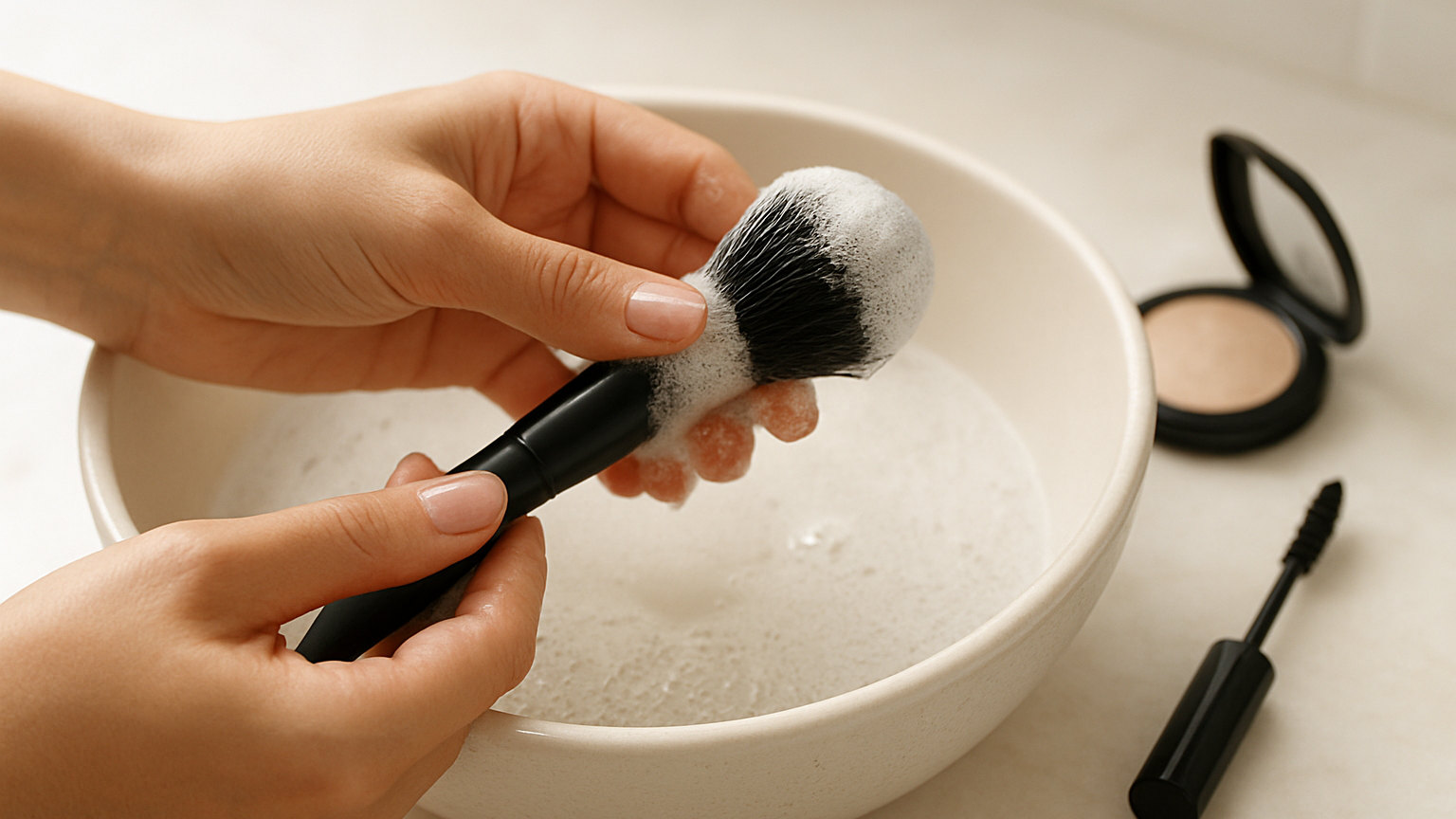
Wash brushes used with liquid or cream weekly, and powder brushes fortnightly.
Sponges are the most contaminated item in most makeup bags, since they are damp, porous and frequently stored closed. Wash after every use and replace every one to three months.
Dry brushes flat with the bristles over an edge, never upright, since water running into the ferrule dissolves the glue.
Wash your hands before applying makeup, which is the simplest measure and rarely done.
When does it become a medical matter?
Any eye that is red, painful, light-sensitive or has changed vision needs same-day attention.
A lump on the eyelid that is growing or has not settled within a couple of weeks.
Persistent crusting or grittiness at the lash line, which suggests blepharitis.
Itching and swelling after using a product, which suggests contact dermatitis and means stopping it.
And discard any eye product used during an infection rather than reusing it afterwards.
Does natural or preservative-free makeup change this?
It shortens the timescales rather than improving them, which is the opposite of what people usually assume.
Preservatives exist to prevent bacterial and fungal growth, so a preservative-free or minimally preserved product spoils faster and needs replacing sooner.
The same applies to anything homemade or decanted, which loses whatever protection the original packaging provided.
What about the makeup bag itself?
Rarely cleaned and frequently the dirtiest item involved. Loose powder, spilled product and damp sponges accumulate in it.
Wash or wipe it out monthly, and choose one that can be cleaned rather than a fabric lining that cannot.
Store it somewhere dry rather than in a bathroom, and do not keep damp sponges or brushes inside it.


