
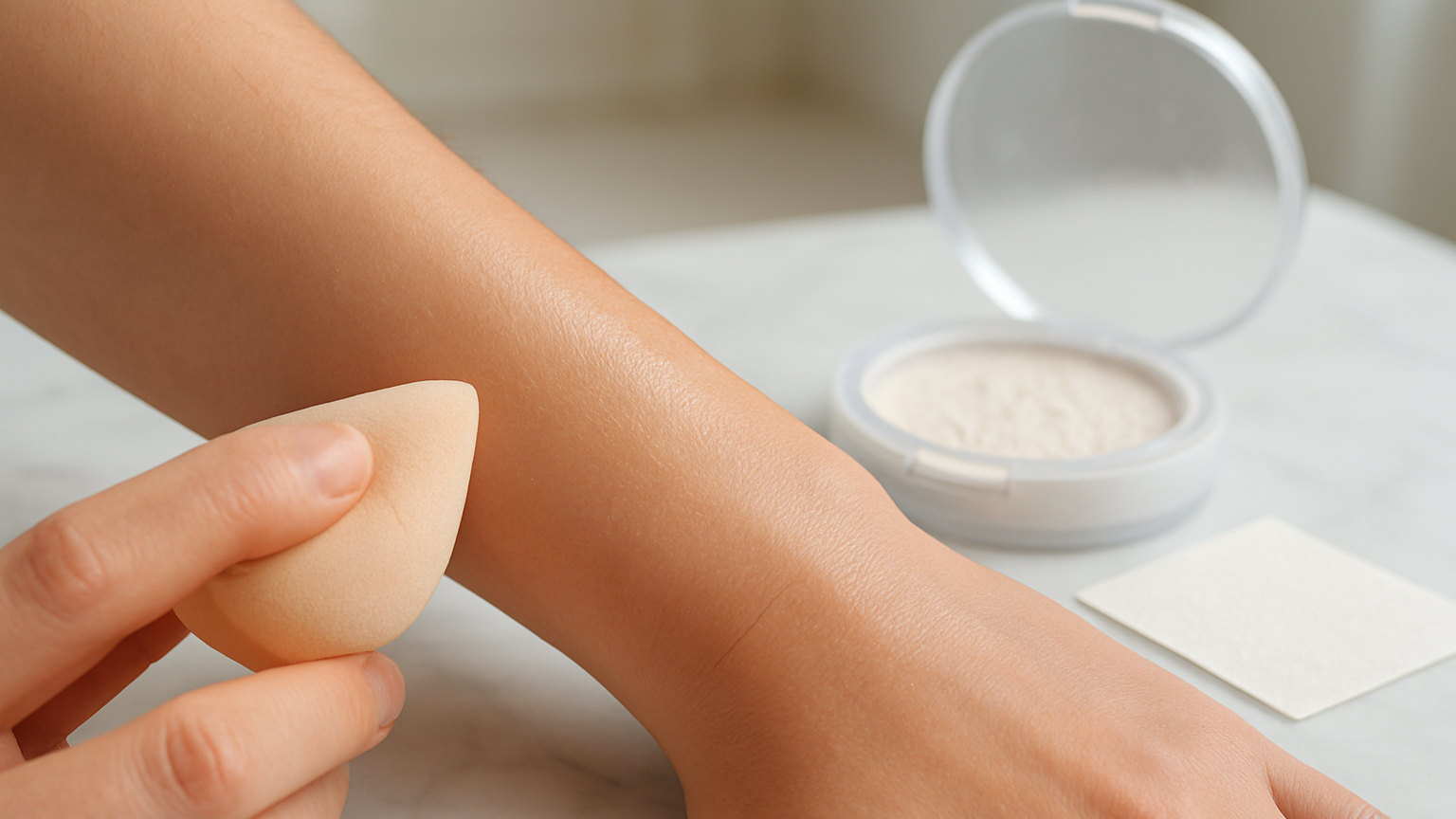
Heat raises sebum production measurably, sweat lifts product from the surface, and humidity prevents anything setting. A base that lasts all day in February can slide by lunchtime in July.
Why does heat break makeup down?
Sebum production increases with temperature, so more oil is dissolving the base from underneath.
Sweat lifts product from the surface and carries it away.
Humidity prevents water and volatile ingredients evaporating, so formulas that need to set never fully do.
Wax-based products, including many bullet lipsticks and cream blushers, physically soften.
Touching the face more, wiping the forehead and pushing hair back all add mechanical disturbance.
What should you change first?
Use less. Thick layers slide as a sheet; thin layers bond to the skin.
Switch to lighter coverage: a skin tint or tinted moisturiser rather than a full-coverage foundation.
Concealer only where needed rather than foundation everywhere.
Skipping foundation entirely on the hottest days is a legitimate option and frequently looks better than a base that has half melted.
Which formulas survive?
Long-wear, transfer-proof and waterproof formulations, which are built with polymers resisting sebum and water.
Powder blusher and bronzer over cream, which is the reverse of the usual advice for a natural finish and holds up considerably better.
Cream products only if set with powder.
Tubing or waterproof mascara, which matters more in heat than at any other time.
Lip stains and liquid mattes over bullet lipsticks, which soften and bleed.
What about primer and setting?
A mattifying or gripping primer where you get oily, applied thinly.
Setting powder pressed into the T-zone and anywhere that shines.
Setting spray, which does more in humidity than in cold dry air and is worth using even if you skip it otherwise.
Some people set in layers for very hot days: foundation, powder, spray, then a light second powder.
How does sunscreen fit in?
It comes first and it is not optional, which is the awkward part since it adds a layer under everything.
Choose a fluid, gel or fluid-cream texture rather than a thick cream, which is less occlusive and less likely to contribute to heat rash.
Let it absorb fully, which takes longer in humidity, before applying anything over it.
Reapplication is the genuine problem. A powder or stick sunscreen over makeup is the practical answer, and it is less effective than reapplying properly, which is worth knowing rather than assuming otherwise.
How do you touch up?
Blot, always, before adding anything. Blotting papers are more useful than a powder compact in heat.
Powder only where you blotted, pressed rather than swept.
Adding powder to a sweaty face without blotting mixes the two into a thick patchy layer, which is the commonest hot-weather touch-up error.
A facial mist for cooling rather than for makeup, applied and allowed to dry.
What suits a holiday?
Waterproof mascara, a brow tint or a waterproof brow product, and a lip stain, which between them mean you have features without a base.
A tinted moisturiser with SPF for days when you want something.
Cream blusher for cooler evenings and powder for hot days.
Considering a lash and brow tint before travelling, which removes the two steps most likely to be missed and survives swimming entirely.
What should you avoid?
Heavy foundation, which has nowhere to go when it breaks down.
Thick occlusive primers and creams, which contribute to heat rash and blocked pores in hot weather.
Heavy powder all over the face, which mixes with sweat.
Shimmer across the T-zone, which reads as sweat rather than glow.
And expecting the same routine to perform identically in different conditions, which is the underlying assumption causing most of the frustration.
What about the skin underneath?
Heat brings its own skin problems, and makeup interacts with all of them.
Heat rash comes from blocked sweat ducts, and thick occlusive products contribute directly, which is a practical reason to lighten the routine rather than an aesthetic one.
Breakouts increase with sweat and heat, so removing makeup promptly after being outdoors matters more than usual.
Skin also holds more water in humidity and looks plumper, so less coverage is genuinely needed rather than merely advisable.
How should you store makeup in hot weather?
Out of direct sunlight and away from windows and cars, where temperatures rise far higher than most people assume.
Heat separates emulsions, softens bullets and shortens the life of any product containing oil. A lipstick left in a car in July is usually finished.
Cream and liquid products are the most vulnerable; powders tolerate heat better.
Keeping a cream blusher or a lipstick in the fridge in a heatwave is entirely reasonable and makes application easier as well.


