
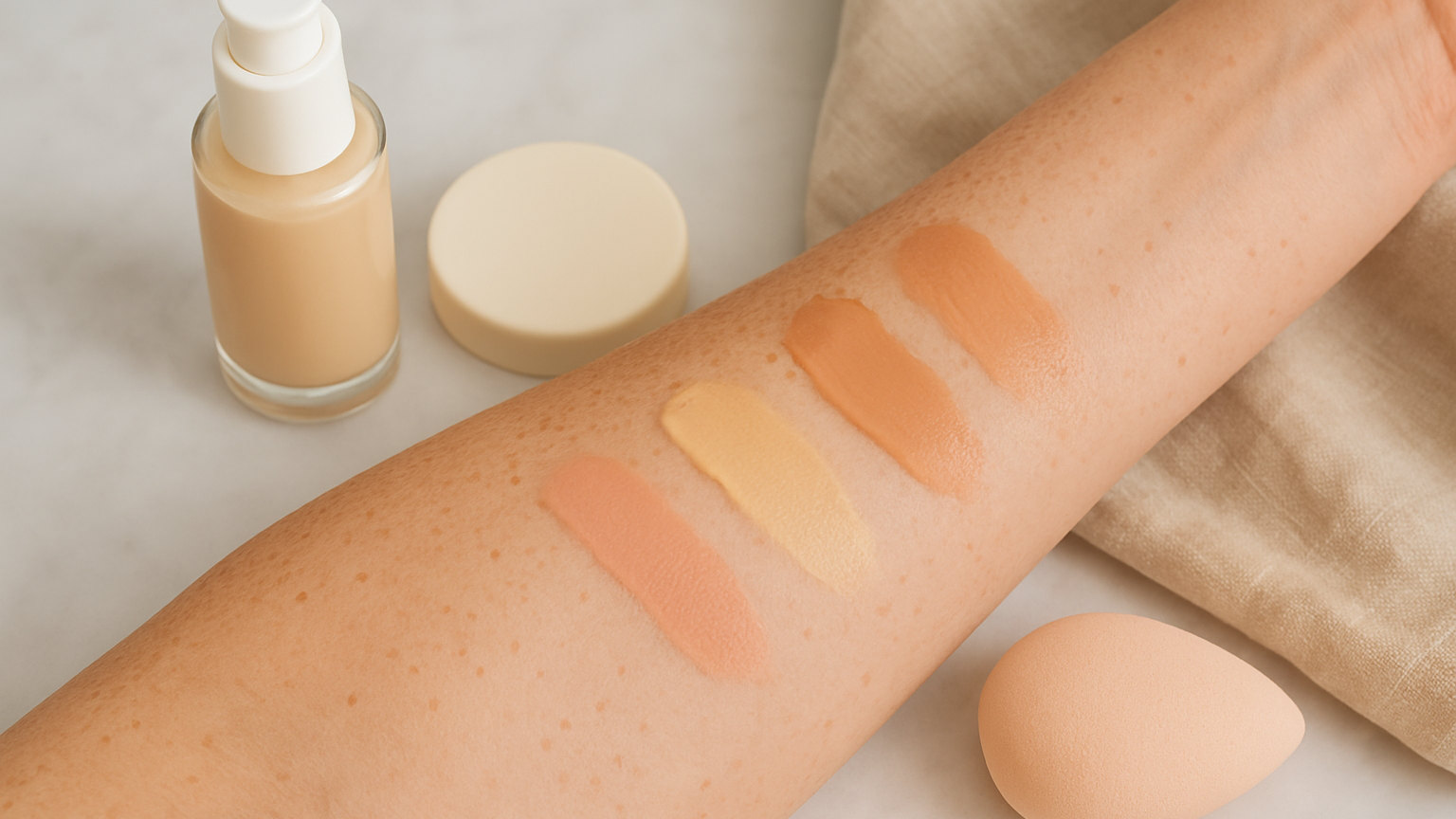
Skin darkens and lightens over the year, produces more or less oil, and holds moisture differently. A routine that works in January frequently does not in July, and the transitions catch people out more than the extremes.
What actually changes?
Skin tone, which can shift by a shade or more between summer and winter.
Sebum production, which rises with temperature.
Hydration, since central heating and cold wind dry skin in winter, and humidity holds water in it in summer.
Sun exposure, which affects both pigmentation and how much protection is needed.
Undertone does not change, which is why the adjustment is depth rather than a different product family.
How do you handle the shade shift?
Own two shades and mix them, which is more economical than buying a full bottle twice.
Mix on the back of the hand in varying proportions as the year moves.
Adjusting drops, concentrated pigment added to foundation, do the same job in one bottle.
Check the match against the neck and chest rather than the face, since those tan differently.
The face frequently tans less than the chest if you wear sunscreen properly, which is worth allowing for.
What changes in summer?
Lighter coverage, since heavy bases slide and heat makes them unnecessary.
Powder blusher and bronzer over cream, which is the reverse of the usual advice and holds up better.
Waterproof or tubing mascara, and long-wear or stain formulas for lips.
A mattifying primer where you get oily, and blotting papers rather than a powder compact.
Considerably more sunscreen, applied properly under everything and reapplied.
What changes in winter?
Richer, more hydrating base formulas, since matte and long-wear products cling to dry patches.
Cream blusher and bronzer, which melt into drier skin better than powder.
Less powder overall, or none beyond the sides of the nose.
More attention to lips, which chap in cold wind, so satin and cream lipsticks over matte.
Hand cream, which becomes a daily necessity rather than an occasional one.
Why are the transitions harder?
Because the change is gradual and the routine is not, so people carry a summer base into October and a winter one into May.
Skin also behaves inconsistently in spring and autumn, oily one week and dry the next as the weather moves.
Following the skin rather than the calendar works better: change the moisturiser when skin feels tight, change the foundation when the match looks off.
Checking the shade match at a window every few weeks catches the drift.
Does the skincare underneath matter more?
Considerably, and it is where most seasonal problems originate.
Foundation clinging to flaking skin in winter is a moisture problem rather than a foundation problem.
Makeup sliding in summer is frequently a moisturiser that is too heavy rather than a base that is wrong.
Adjusting the moisturiser first and the makeup second resolves more than the reverse.
What stays the same?
Undertone, so your shade family does not change.
Brow shade and technique.
Sunscreen, which is needed year round in the UK, including on overcast winter days, since UVA passes through cloud and glass.
The basic order of application and the principles behind it.
What about holidays out of season?
A week somewhere hot in February leaves you tanned with a winter foundation, which is where adjusting drops earn their place.
Travel with the lighter shade and the drops rather than two bottles.
Allow for the tan fading over two to three weeks afterwards rather than buying anything new.
And a lash and brow tint before travelling covers the two steps most likely to be skipped in heat.
Do colours change with the season?
Less than the industry suggests. Undertone governs what suits you, and that does not move with the calendar.
What does change is the skin behind the colour: a blusher that reads correctly on winter skin can look faint against a tan, and a nude lip matched to winter colouring can look chalky in August.
The adjustment is depth rather than a different family, so a slightly deeper version of what already suits you is usually the answer.
What is worth reviewing twice a year?
The foundation match, checked against the neck at a window.
Anything expired, since a summer product frequently sits unused all winter and is finished by the time it comes out again.
Whether the moisturiser under the makeup still suits the weather, which is where most seasonal problems start.


