
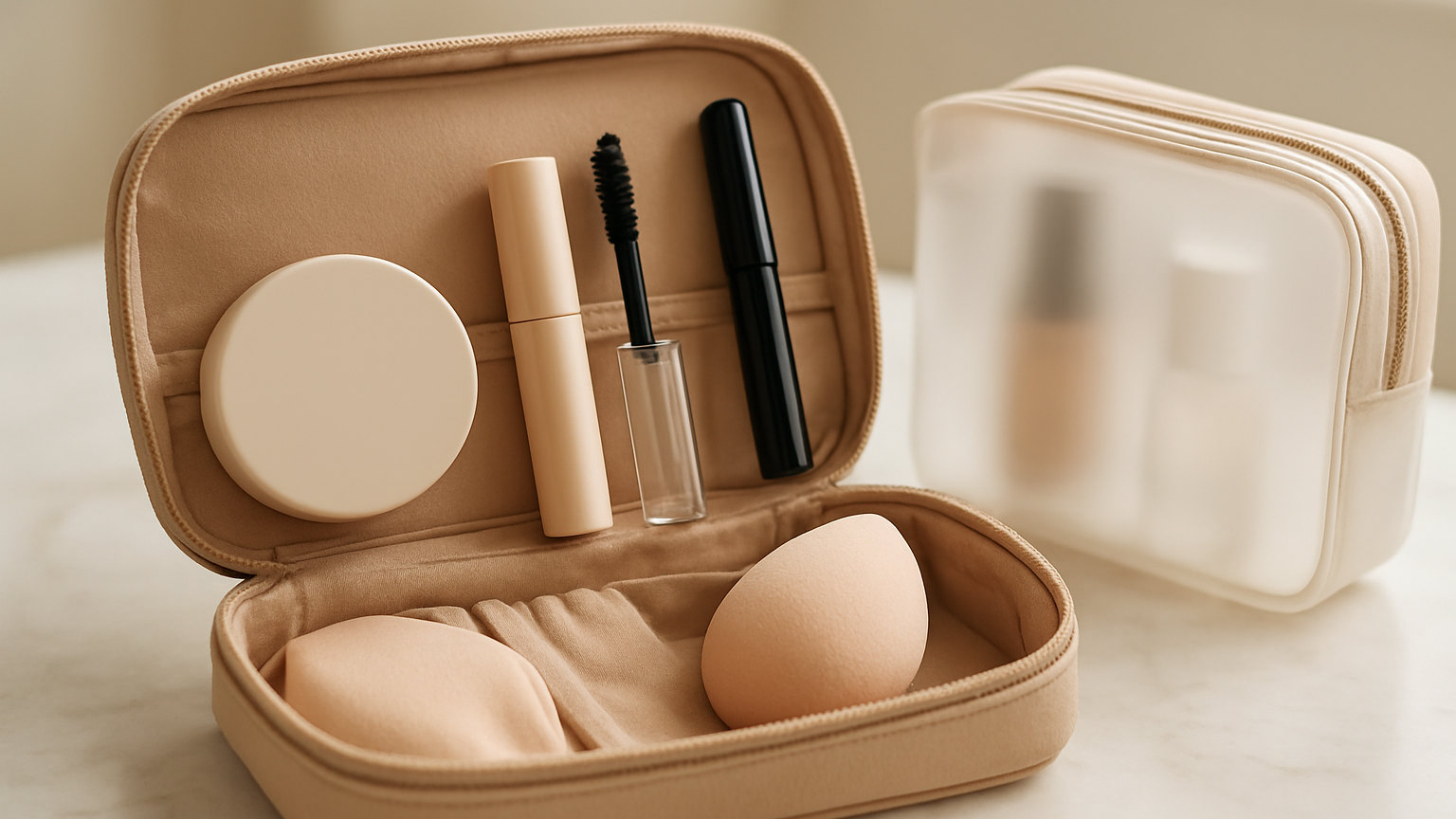
A travel kit is an exercise in deciding what you actually use. Most people pack their whole routine, use four things, and carry the rest for a week.
What is the core kit?
A tinted moisturiser or skin tint, ideally with SPF.
A concealer, which does more per gram than anything else.
A multi-use cream stick for cheeks and lips.
A brow product, ideally a tinted gel.
Mascara.
A tinted lip balm.
Six items, all small, and a complete face.
What tools?
A sponge, which packs flat and handles base products.
One fluffy brush, which does powder and blusher.
A spoolie.
Fingers for everything else, which is faster and needs no cleaning.
Full brush sets are the largest and least necessary thing in most travel bags.
What multi-use products are worth it?
A cream stick that works on cheeks and lips, which removes an item and a decision.
A tinted balm, which covers lips and cheeks in a pinch.
A brow pencil that doubles as a soft liner.
A neutral eyeshadow that works as a bronzer, or the reverse.
Cream formulas travel better than powders, which crack when compacts are knocked about.
What do the liquid rules actually say?
Hand luggage restrictions apply to liquids, gels, creams and pastes in containers of one hundred millilitres or less, in a single transparent resealable bag of around a litre.
Solid products are not liquids: lipstick bullets, powder, pencils, solid balms and cream products in stick form all travel outside the bag.
Mascara, liquid foundation, liquid liner and cream products in pots do count.
Rules are changing at some UK airports as new scanners are installed, and they vary by airport and by destination, so it is worth checking before travelling rather than assuming.
What is worth doing before you go?
A lash and brow tint, which removes two steps for several weeks and survives swimming entirely. It is the single most useful travel preparation available.
A brow shape, five to seven days before rather than the day of.
Any new product tested at home rather than discovered on holiday.
A gel manicure or similar if you want nails that survive the trip.
How do you pack it?
Powders in the middle of a case, cushioned by clothing, since compacts crack readily.
Anything liquid in a sealed bag regardless of hold or hand luggage, since pressure changes cause leaks.
Brushes in a roll or a case, not loose, since bristles bend permanently.
Keep the products you will want on arrival in hand luggage rather than the hold.
A cracked powder can be salvaged with a few drops of alcohol, pressed flat and left to dry.
Should you decant?
Less often than people do. Decanting introduces contamination, and most products lose their period-after-opening protection once transferred.
Buying travel sizes of things you use constantly is cleaner, and many brands sell them.
Where decanting makes sense, use a clean sealed container, decant immediately before travelling and use it up.
Samples and sachets are useful for short trips and are worth keeping for exactly this.
What should you leave behind?
Palettes, which are heavy, fragile and mostly unused.
Anything you have not used in the past month at home.
Duplicate formats of the same product.
Anything precious or expensive, which is the thing that gets lost or left in a hotel bathroom.
And a full brush set, which is the single biggest weight saving available in most bags.
Does the destination change the kit?
Considerably. Hot and humid destinations want long-wear and waterproof formulas, powder over cream, and far less coverage.
Cold destinations want richer, more hydrating bases, cream products and a heavier lip balm, since cold wind chaps lips within hours.
High altitude and long flights dry the skin severely, so a plain balm and a heavier moisturiser matter more than anything cosmetic.
What about skincare?
Sunscreen is the one thing not to compromise on, and it takes up the most space, so buying it on arrival is frequently the sensible answer.
Take your usual cleanser and moisturiser rather than trying hotel products, since a reaction on holiday is a poor trade for the space saved.
Do not start anything new while travelling, particularly actives, since sun exposure and unfamiliar water complicate any reaction.


